
Aluminum CNC Machining
Service for Custom Precision Parts
Custom CNC machined aluminum components built to your drawings for electronics, automation, thermal management, robotics, medical equipment and industrial assemblies—from prototype verification to repeat production.
Experience
Machines
Reference*
Production
NDA Available · Engineering Review · Global B2B Supply
*Actual achievable tolerance depends on part geometry, alloy, feature size, machining route, finishing and inspection requirements.
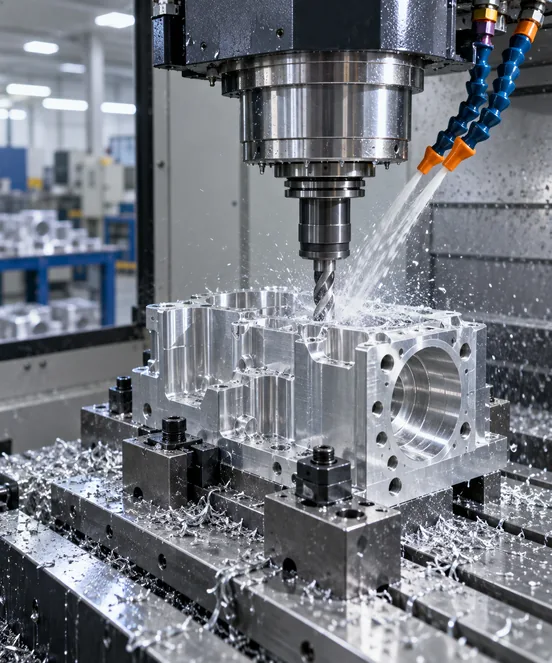
Aluminum CNC Machining at a Glance
Supply Type
Custom Made-to-Drawing Aluminum Parts
Processes
- CNC Milling
- CNC Turning
- Swiss Machining
- Turn-Mill
Common Grades
- 6061
- 6063
- 6082
- 7075
Typical Parts
Housings, Brackets, Thermal Parts, Manifolds, Fixtures, Turned Components
Critical Review
Alloy, Temper, Thin Wall, Datum, Burr, Thread, Anodizing
Production
- Prototype
- Pilot Batch
- Repeat Production
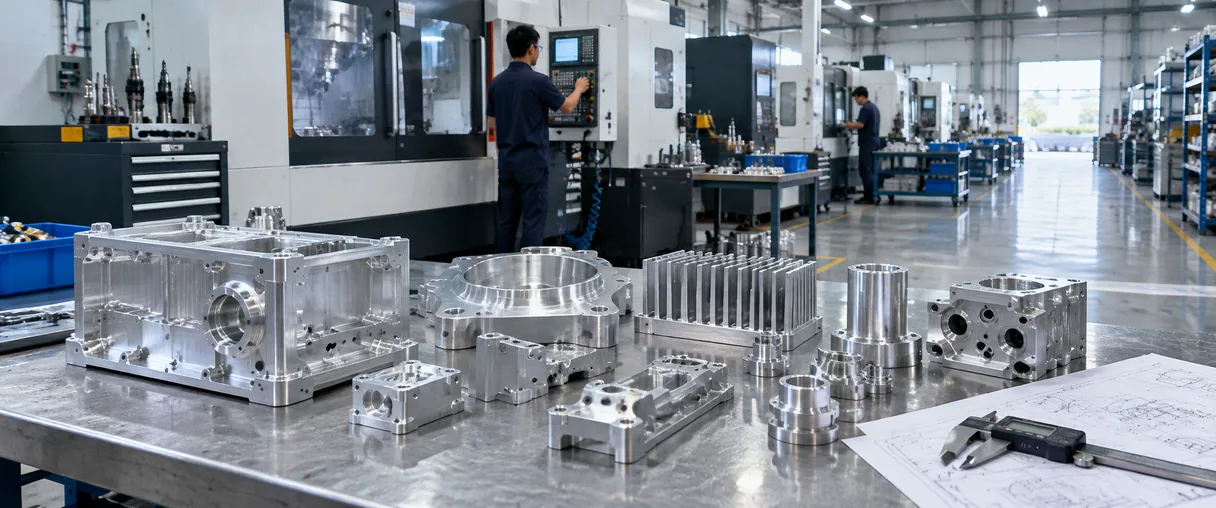
What Is Aluminum CNC Machining?
Aluminum CNC machining uses computer-controlled milling, turning and related subtractive processes to manufacture finished aluminum components directly from engineering drawings and CAD models.
At LuckyHxs
We manufacture custom aluminum components from customer drawings—not standard catalogue products and not CNC machines.
CNC Milling
Best for: Housings, Brackets, Heat Sinks, Manifolds, Plates, Fixtures
CNC Turning / Swiss
Best for: Shafts, Pins, Sleeves, Bushings, Spacers, Adapters
Turn-Mill
Best for: Round components with flats, cross holes, radial ports, slots and off-axis features.
"Select the manufacturing route around the geometry and critical relationships—not simply around the most advanced machine."
Upload Drawing for Process Review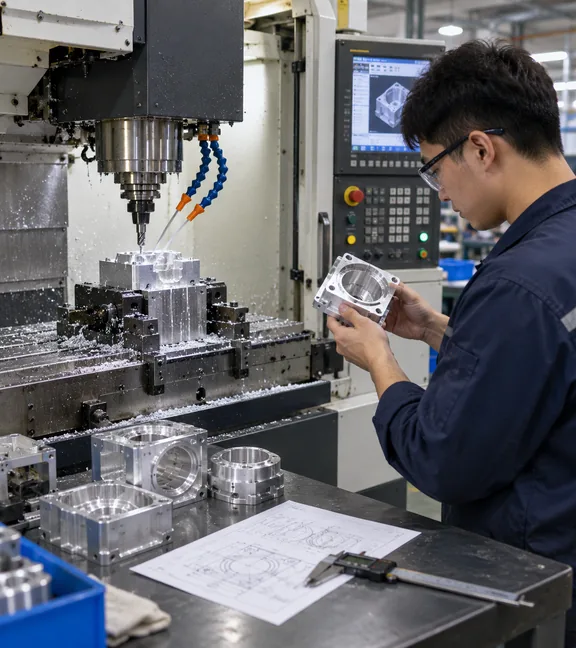
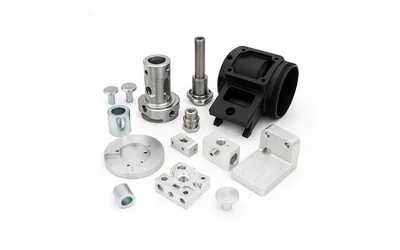
Custom Aluminum Parts We Machine to Your Drawings
Organized by part function and end-use—not simply by alloy grade or machine type.
Aluminum Housings & Enclosures
Typical: Sensor Housings, Motor Housings, Electronic Enclosures, Instrument Housings
Applications: Electronics, Sensors, Medical, Automation
Buyer Watch: Thin Wall, Hole Position, Datum, Flatness, Sealing Surface
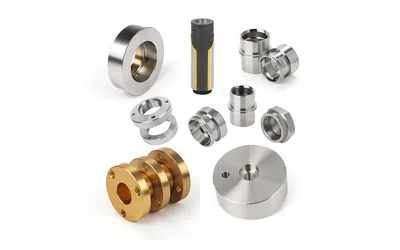
Aluminum Brackets & Mounts
Typical: Motor Mounts, Sensor Brackets, Equipment Brackets, Camera Mounts
Applications: Robotics, Automation, EV, Electronics
Buyer Watch: Hole Position, Flatness, Parallelism, Perpendicularity
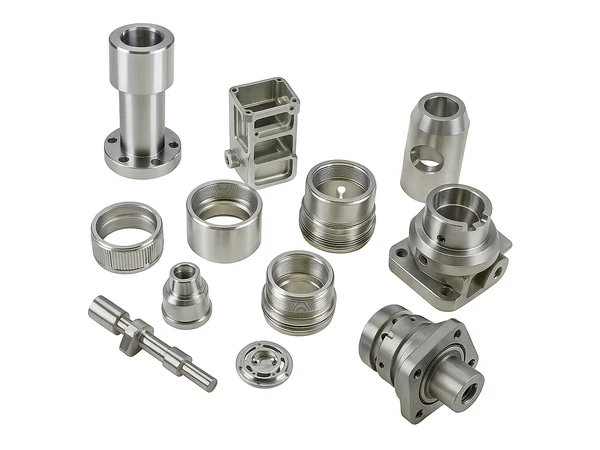
Aluminum Heat Sinks & Thermal Components
Typical: Heat Sinks, Cooling Plates, Cold Plates, Thermal Blocks
Applications: Electronics, EV, Power Electronics, Industrial Control
Buyer Watch: Fin Integrity, Thermal Interface Flatness, Distortion, Surface Finish
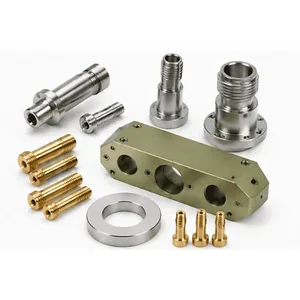
Aluminum Manifolds & Fluid Control Blocks
Typical: Hydraulic Manifolds, Pneumatic Manifolds, Cooling Manifolds, Fluid Blocks
Applications: Automation, EV Cooling, Hydraulics, Pneumatics
Buyer Watch: Port Position, Cross-Hole Burr, O-Ring Groove, Sealing Face
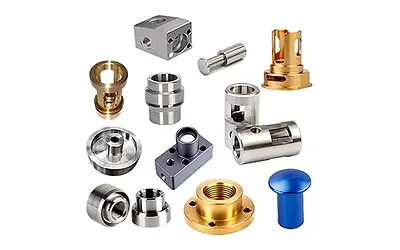
Aluminum Plates, Blocks & Fixtures
Typical: Base Plates, Fixture Plates, Tooling Plates, Precision Blocks
Applications: Automation, Machine Building, Inspection, Tooling
Buyer Watch: Flatness, Hole Position, Parallelism, Datum Stability
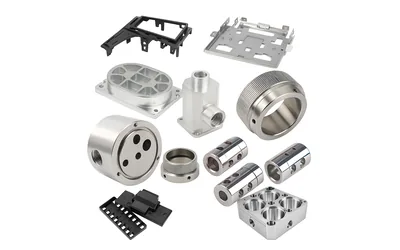
Aluminum Shafts & Precision Pins
Typical: Guide Pins, Locating Pins, Lightweight Shafts, Stepped Shafts
Applications: Automation, Robotics, Instruments
Buyer Watch: OD, Runout, Concentricity, Cross-Hole Position
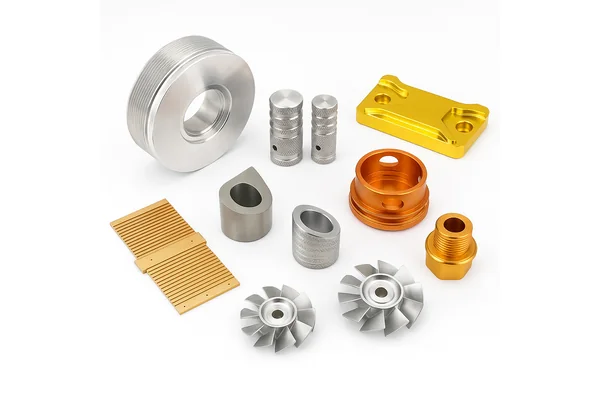
Aluminum Bushings, Sleeves & Spacers
Typical: Guide Sleeves, Spacer Sleeves, Flanged Bushings, Collars
Applications: Mechanical Assemblies, Automation, Instruments
Buyer Watch: ID / OD Fit, Thin Wall, Concentricity, Anodizing Allowance
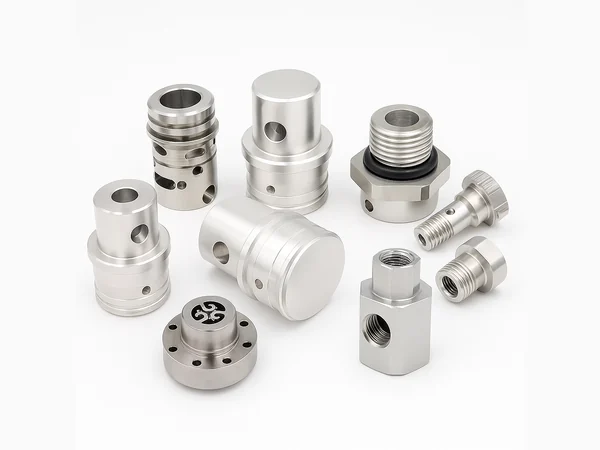
Aluminum Flanges, Adapters & Couplings
Typical: Motor Flanges, Threaded Adapters, Couplings, Interface Flanges
Applications: Motors, Pumps, Automation, Fluid Systems
Buyer Watch: Thread Fit, Bolt Pattern, Face Runout, Bore Alignment
Why Engineers Choose Aluminum for CNC Machined Parts
Do not imply all alloys have identical properties. We look at material property and its direct engineering value.
Lightweight
Helps reduce moving mass and overall assembly weight.
Machinability
Supports efficient production of complex milled and turned geometry.
Strength-to-Weight
Suitable for lightweight structural components when the correct alloy is selected.
Thermal Conductivity
Useful for heat sinks, cooling plates and thermal-management parts.
Electrical Conductivity
Useful in selected electronic applications before insulating finishes are considered.
Corrosion & Finish Options
Anodizing and other finishes can improve surface performance according to the application.
Why Aluminum CNC Parts Fail Even When the Drawing Looks Simple
Aluminum machines efficiently, but alloy selection, distortion, finishing, burr control and production consistency still determine whether the final part actually fits and performs.
Wrong Alloy & Temper Compromise Performance
Consequence: Appearance may look correct while strength, distortion or finishing response changes.
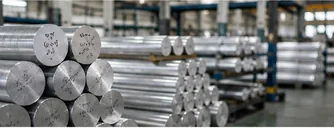
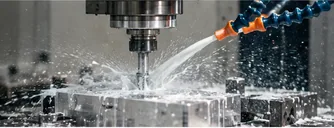
Thin Walls Warp After Machining
Consequence: Part PASS while clamped → FAIL in free state.
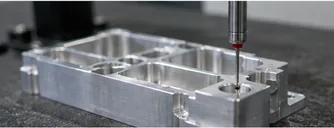
Anodizing Changes Critical Fits
Consequence: Bores, threads or mating interfaces become too tight.
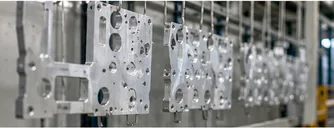
Anodizing Color Varies Between Batches
Consequence: Engineering PASS → Cosmetic Inspection FAIL.
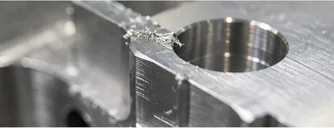
Burrs & Chips Remain in Critical Features
Consequence: Assembly, sealing, fluid flow or cleanliness problems.
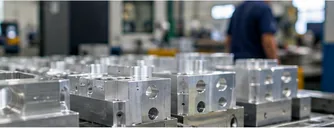
Prototype-to-Batch Consistency Drifts
Consequence: Dimensions, texture and anodized appearance change between lots.
Start With the Aluminum Alloy—and the Temper
Two aluminum parts can look identical while behaving very differently in machining, finishing and service.
6061
Balanced General-Purpose
6063
Finish / Profile-Oriented
6082
Structural Option
7075
Higher Strength
Material substitution must never be made simply because two aluminum alloys look similar.
Choose the CNC Process Around Your Aluminum Part Geometry
CNC Milling
Best For: Housing, Bracket, Heat Sink, Manifold, Plate, Fixture
CNC Turning
Best For: Shaft, Pin, Bushing, Sleeve, Flange
Swiss Machining
Best For: Small, Slender, Feature-Dense Parts
Turn-Mill
Best For: Round Geometry + Cross Hole / Flat / Slot
5-Axis
Best For: Complex Multi-Face Geometry, Angled Features, Reduced Re-Clamping Where Appropriate
The best machine is not automatically the machine with the most axes. The correct route is the one that protects the required geometry and datums with the least unnecessary handling.
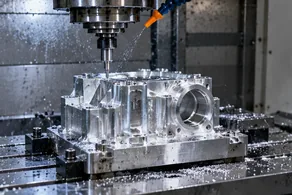
Ask Which Process Fits Your Aluminum PartSee How LuckyHxs Aluminum CNC Parts Are Actually Machined
Real production footage—not a rendered manufacturing animation.
CNC Milling
Housing / Bracket / Manifold
CNC Turning
Shaft / Sleeve / Adapter
Swiss Machining
Small Precision Components
Turn-Mill
Rotational Parts With Off-Axis Features
Thin-Wall Aluminum Parts
Need a Machining Strategy
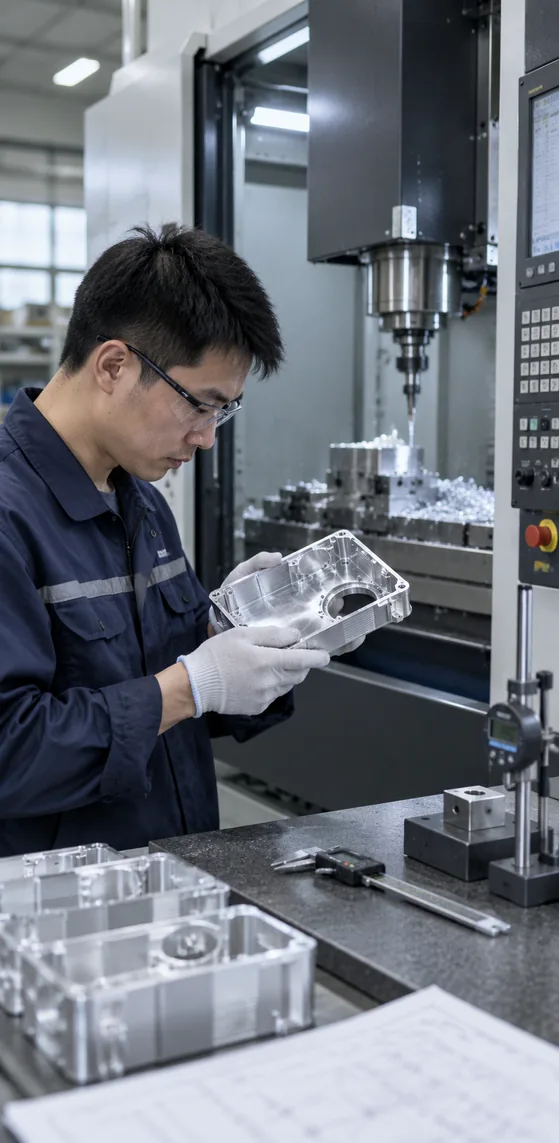
Low material stiffness, heavy stock removal, residual stress and workholding force can change geometry after the part leaves the fixture.
Typical Thin-Wall Risks
Control Strategy
- Workholding Review
- Balanced Material Removal
- Machining Sequence
- Toolpath Planning
- Reduced Re-Clamping
- Free-State Inspection
- CTQ Measurement
CLAMPED GEOMETRY ≠ FINAL FREE-STATE GEOMETRY
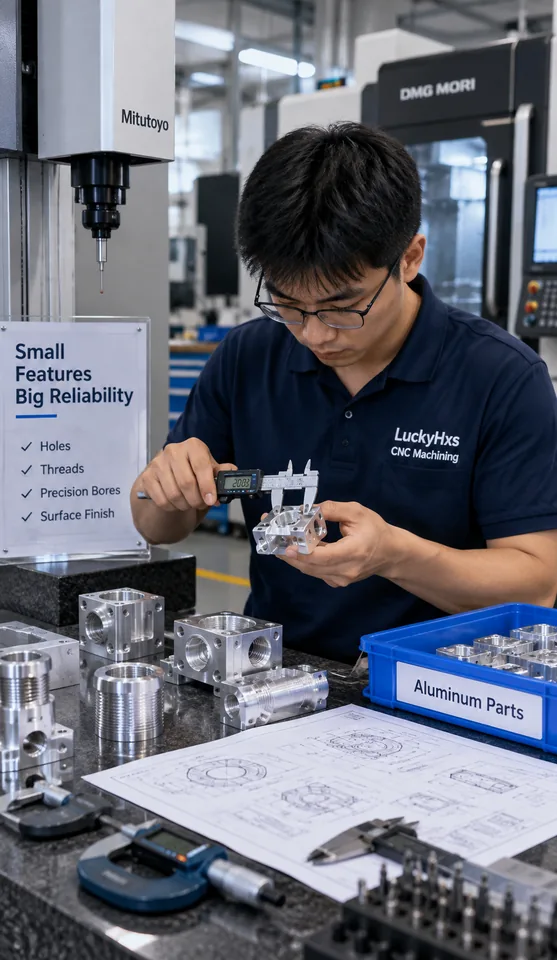
Small Holes, Threads & Burrs
Can Decide the Final Assembly
Precision in small features is critical for assembly reliability. Uncontrolled burrs, trapped chips, or improper thread fits can cause failures during repeated assembly or high-torque applications.
Aluminum Threads in Repeated Assembly
Direct aluminum threads may require additional review where the component will experience:
- Repeated disassembly
- High tightening torque
- Frequent maintenance
- High thread loading
*Do not claim inserts are always necessary.
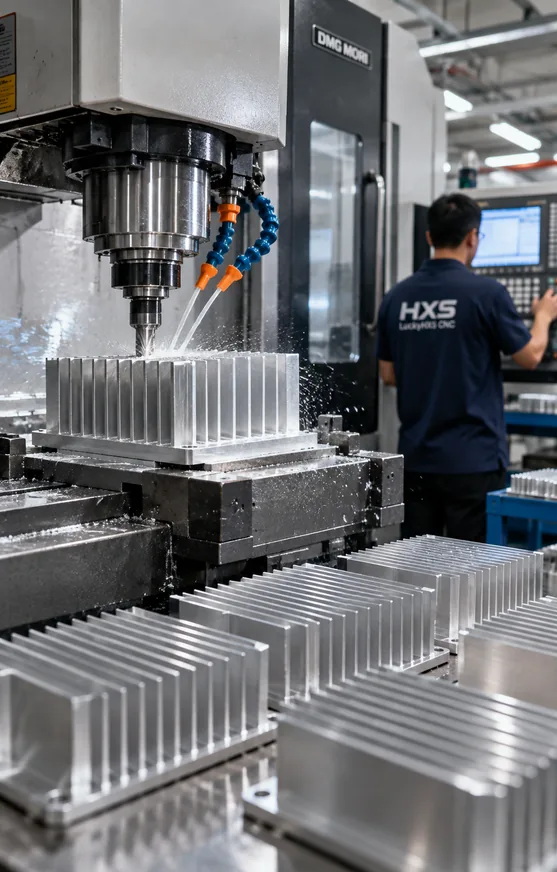
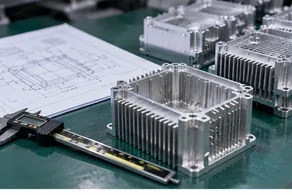
A Heat Sink Is Only Useful
if the Thermal Interface
Stays Flat
This section specifically supports Aluminum Heat Sinks, Cooling Plates, Cold Plates, Thermal Blocks, and Power Electronics Housings.
Buyer Watch Points
- Fin Thickness
- Fin Damage
- Slot Burr
- Base Distortion
- Thermal Interface Flatness
- Mounting Hole Position
- Post-Anodizing Condition
Good-Looking Fins ≠ Good Thermal Contact
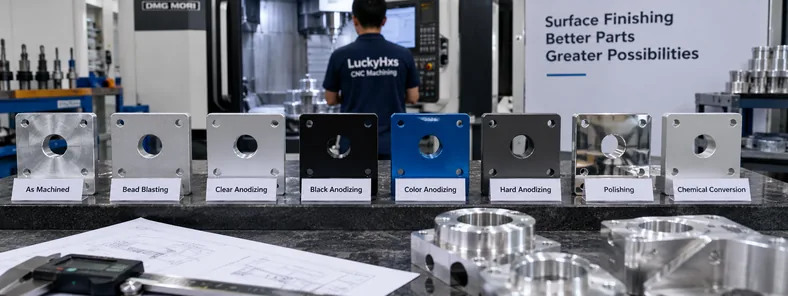
Surface Finishing Is Part of the Engineering Plan
Finish selection changes more than appearance. Design the CNC machined part around the final finished condition.
Review Before Finishing:
- Critical Bores
- Threads
- Bearing Seats
- Locating Fits
- Grounding Areas
- Sealing Faces
- Cosmetic Surfaces
Anodizing Changes Fit
Before Finish PASS does not guarantee After Finish PASS.
Anodizing Does Not Hide Every Mark
Tool marks, clamp marks, scratches, and uneven surface texture can remain visible.
Standard Anodizing Can Affect Electrical Contact
Must define: Grounding Pad, Contact Surface, Conductive Area, Masking Requirement.
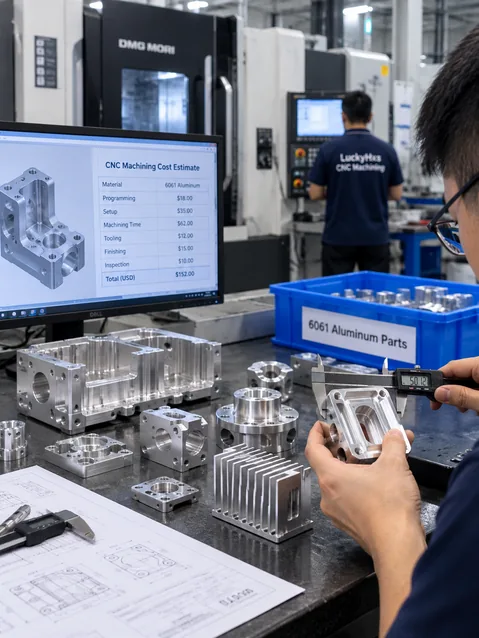
How Much Does Aluminum CNC Machining Cost?
There is no universal price for a CNC machined aluminum part. Two components made from the same 6061 alloy can have very different costs because geometry, setup, machining time, tolerance, finishing and inspection requirements are different.
Aluminum CNC Part Cost Equation
What Increases Cost?
- • Deep Pockets
- • Thin Walls
- • High Material Removal
- • Multiple Setups
- • Tight Tolerances
- • Small Internal Radii
- • Complex Anodizing Masking
- • High Cosmetic Requirements
- • Detailed Inspection
Quantity Effect
Setup cost distributed across few parts.
Programming and setup can be distributed across larger quantities where process remains stable.
FAQ: How much does CNC machining cost per hour?
Hourly machine rates alone do not determine the cost of a finished part. A lower machine rate can still result in a higher total cost if the manufacturing route requires more setups, longer cycle time, additional finishing or extra inspection.
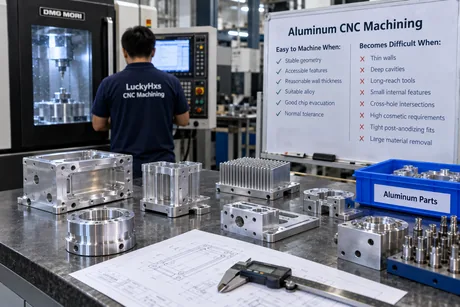
Is Aluminum Easy to CNC Machine—and What Makes It Difficult?
Aluminum is generally considered highly machinable, but “easy to cut” does not mean every aluminum component is easy to manufacture correctly.
Easy to Machine When:
- ✓ Stable geometry
- ✓ Accessible features
- ✓ Reasonable wall thickness
- ✓ Suitable alloy
- ✓ Good chip evacuation
- ✓ Normal tolerance
Becomes Difficult When:
- ✗ Thin walls
- ✗ Deep cavities
- ✗ Long-reach tools
- ✗ Very small internal features
- ✗ Cross-hole intersections
- ✗ High cosmetic requirements
- ✗ Tight post-anodizing fits
- ✗ Large material removal
Chip Control
Soft aluminum can create chip-management and built-up-edge problems if tooling and cutting parameters are unsuitable.
Workholding
Thin parts can distort from fixture pressure.
Tool Access
Deep or narrow geometry increases tool deflection and machining time.
Surface Quality
Incorrect cutting conditions can leave visible machining marks that remain visible after finishing.
Final Finish
The manufacturing strategy must consider anodizing and post-finish dimensions.
Aluminum Is Easy to Cut.
A Functional Aluminum Part Can Still Be Difficult to Manufacture.
What Are the Limitations of CNC Machining Aluminum?
CNC machining offers high accuracy and repeatability, but it is still a subtractive process limited by tool geometry, tool access, workholding and the physical stability of the part.
A cutting tool must physically reach the feature.
Rotating tools naturally produce internal radii rather than infinitely sharp internal corners.
Long tool reach increases deflection, vibration and cycle time.
Low stiffness increases distortion risk.
More repositioning can increase datum-transfer and positional risk.
Some geometries require 5-axis machining, special tooling, EDM or a redesigned manufacturing strategy.
"The goal of DFM is not to simplify every design. It is to identify where geometry adds cost or manufacturing risk without adding functional value."
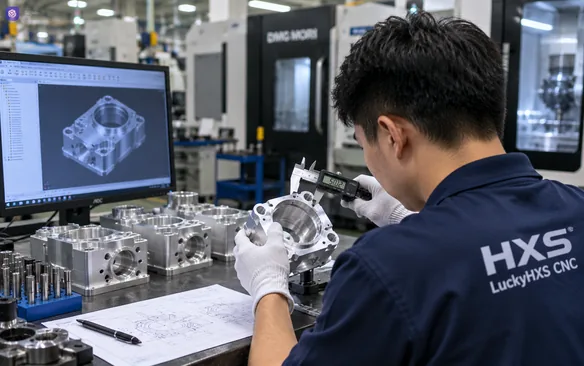
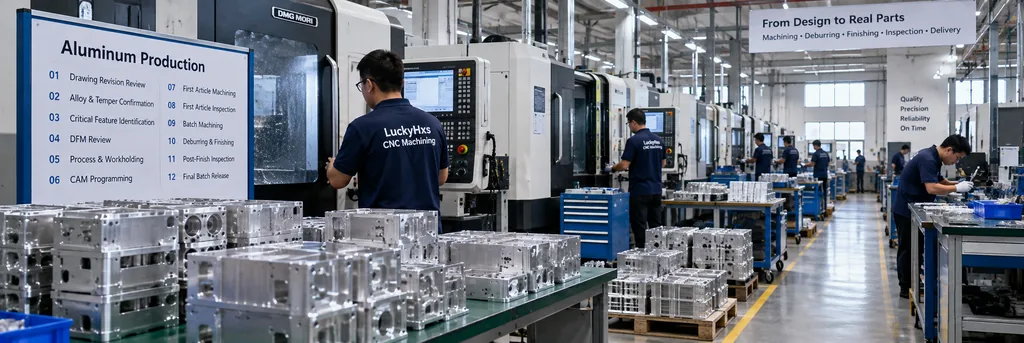
From Drawing Review to Repeat Aluminum Production
Machining, deburring, finishing and inspection must be planned as one connected manufacturing route.
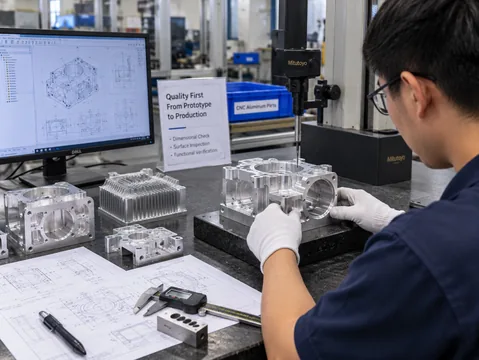
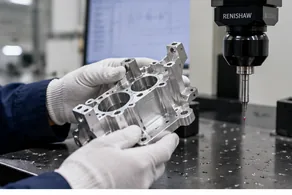
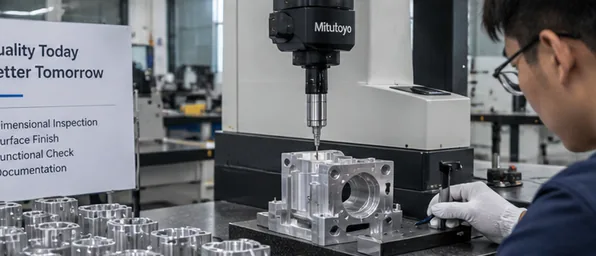
Inspection Built Around Aluminum Part Function
Not every aluminum part needs the same measurement plan. Inspection should follow the features that determine assembly, sealing, thermal performance and repeatability.
Housing
Datum, Hole Position, Flatness, Sealing Surface
CMM, Height Gauge, Surface Check
Shaft / Pin
OD, Runout, Concentricity
Micrometer, Runout Gauge, CMM Where Required
Bushing / Sleeve
ID / OD, Roundness, Wall Geometry
Micrometer, Bore Gauge, CMM Where Required
Finished Aluminum Component
Post-Anodizing Fit, Threads, Cosmetic Surface, Masking
Thread Gauge, Pin Gauge, Dimensional Check, Visual Review
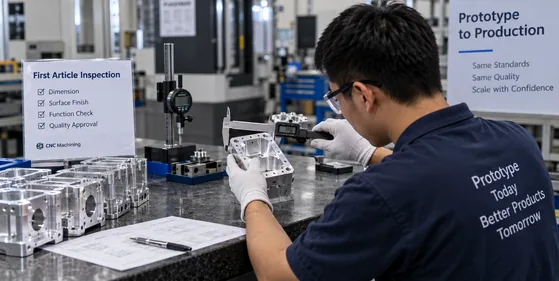
A Good Aluminum Prototype Is Only the First Test
Prototype approval proves the process once. Repeat production must keep material, geometry, surface condition, finishing and inspection stable.
First Article
Confirm:- Drawing Revision
- Alloy
- Temper
- Program
- CTQs
Pilot Batch
Verify:- Tool Wear
- Clamping
- Flatness
- Burr Control
- Free-State Geometry
Finishing
Verify:- Color
- Masking
- Critical Fits
- Cosmetic Surface
Repeat Production
Retain:- Approved Process
- Inspection Plan
- Finish Standard
- Critical Requirements
Addresses: Prototype-to-Batch Consistency Drifts
Custom Aluminum CNC Parts Across Industrial Applications
Electronics
Parts: Housings, Heat Sinks
Watch: Cosmetic / Grounding
Automotive & EV
Parts: Brackets, Cooling Components
Watch: Strength / Thermal
Robotics
Parts: Mounts, Lightweight Structural Parts
Watch: Weight / Hole Position
Industrial Automation
Parts: Fixtures, Plates, Manifolds
Watch: Datum / Repeatability
Medical Equipment
Parts: Instrument Housings, Brackets
Watch: Cleanliness / Surface
Precision Instruments
Parts: Sensor Housings, Mounts
Watch: Position / Stability
Fluid Control
Parts: Manifolds, Adapters
Watch: Burr / Seal
Thermal Management
Parts: Heat Sinks, Cooling Plates
Watch: Interface Flatness
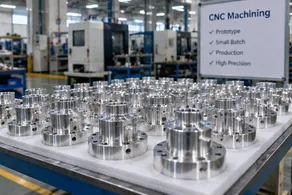
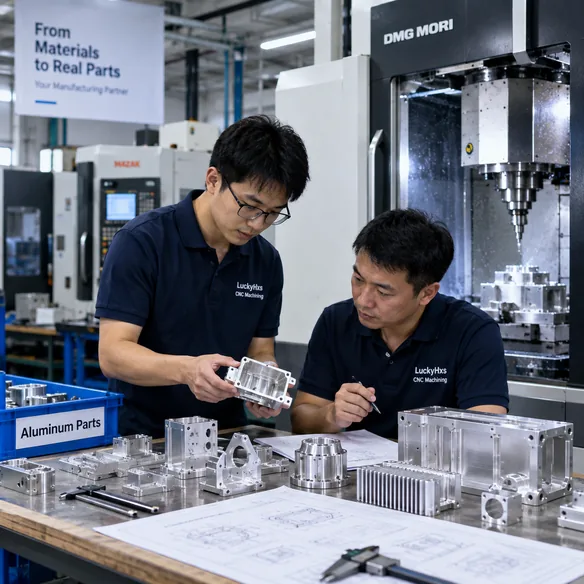
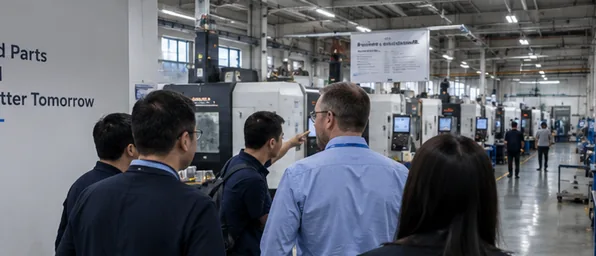
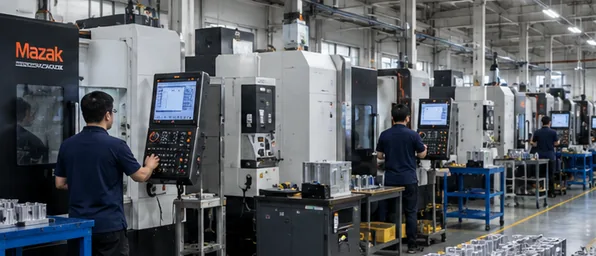
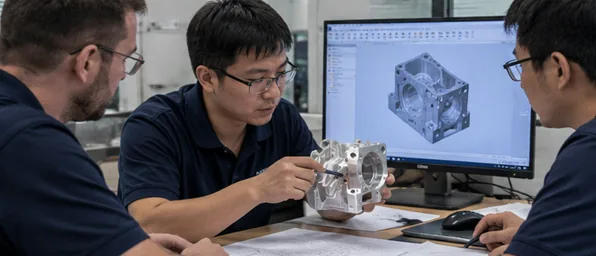
A CNC Manufacturing Partner You Can Verify
See the people, equipment and technical communication behind your aluminum CNC parts.
Quality & Project Documentation
Documentation is confirmed according to your part, material, inspection and project requirements.
 ISO 9001
Quality Management
ISO 9001
Quality Management
 CE
Applicable Product Documentation
CE
Applicable Product Documentation
 REACH & RoHS
Material Compliance
REACH & RoHS
Material Compliance
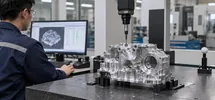 Test & Inspection Reports
CMM / FAI / Dimensional Records
Test & Inspection Reports
CMM / FAI / Dimensional Records
- Material Certification
- Dimensional / CMM Report
- First Article Inspection
- Surface / Test Records
Aluminum CNC Machining FAQs
What aluminum alloys can LuckyHxs machine?
What is the best aluminum alloy for CNC machining?
How much does it cost to CNC machine aluminum?
Does anodizing affect CNC machined aluminum dimensions?
Can LuckyHxs machine thin-wall aluminum housings?
Can you support both prototypes and repeat production?
High-Precision CNC Machining
Ready to start your project? Submit your drawings and requirements for a fast, detailed technical review and quotation.
Request a Project Quote
Upload drawings and project details. We will respond quickly.