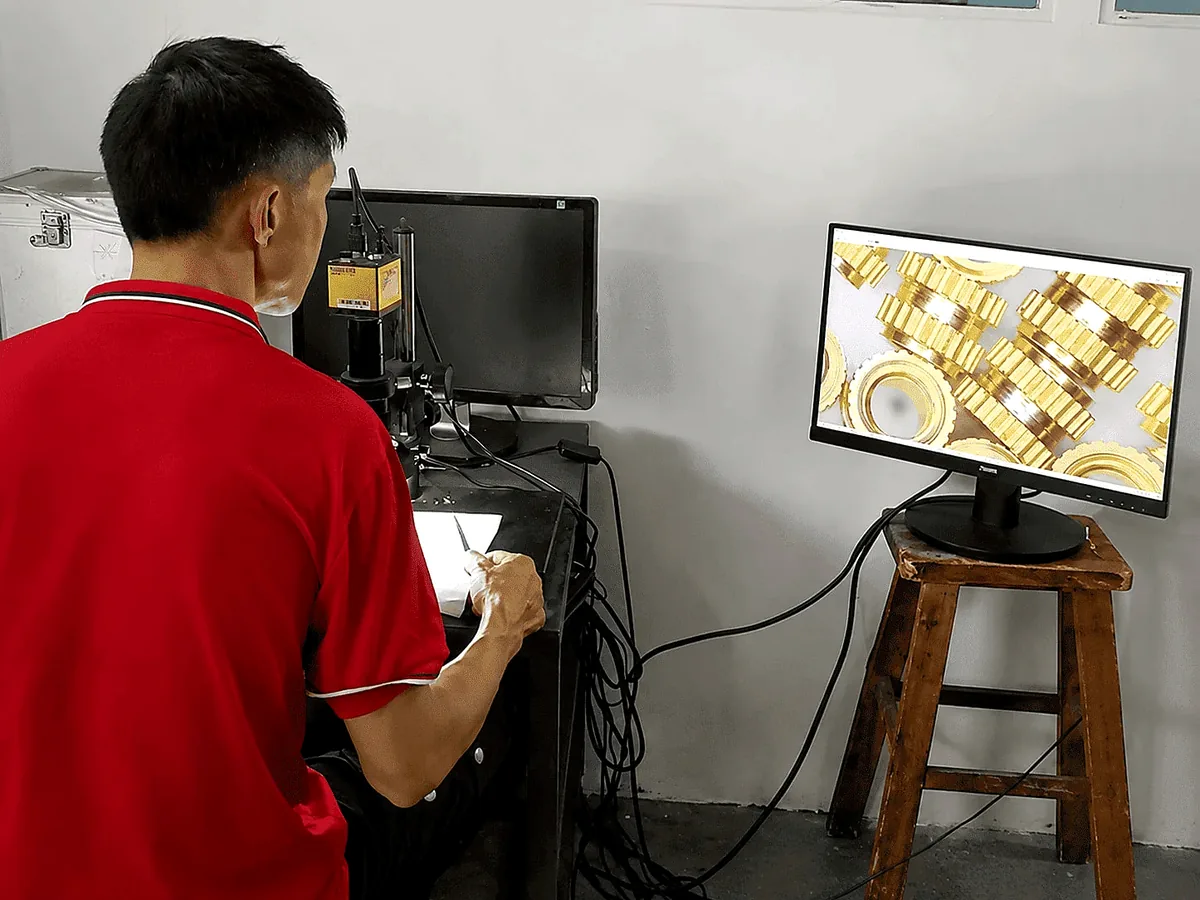
Brass CNC Machining Services for Custom Precision Parts
Manufacturing drawing-based brass components for industrial OEM assemblies. From complex electrical connectors and fluid fittings to precise threaded inserts, we verify material grades and critical tolerances from prototype to repeat production.
- Made to Your Drawing: Connectors, fittings, valve parts, and turned components.
- Turning, Swiss & Milling Support: Handling complex geometries and tight concentricity.
- Thread & Small-Feature Review: Engineering focus on burr control and assembly fit.
- Prototype to Repeat Production: Consistent batch-to-batch dimensional stability.
Brass CNC Machining at a Glance
Supply Type
Custom made-to-drawing brass parts
Processes
CNC Turning, Milling, Swiss, Auto Lathe
Typical Parts
Connectors, Fittings, Inserts, Valves, Pins
Material
Project-specified brass grade
Drawing Inputs
PDF, STEP, STP, IGES, DWG, DXF
Critical Requirements Reviewed
Threads, ID/OD Fit, Burr Limits, Small Holes, Cosmetic Surface, Finish
What Is Brass CNC Machining?
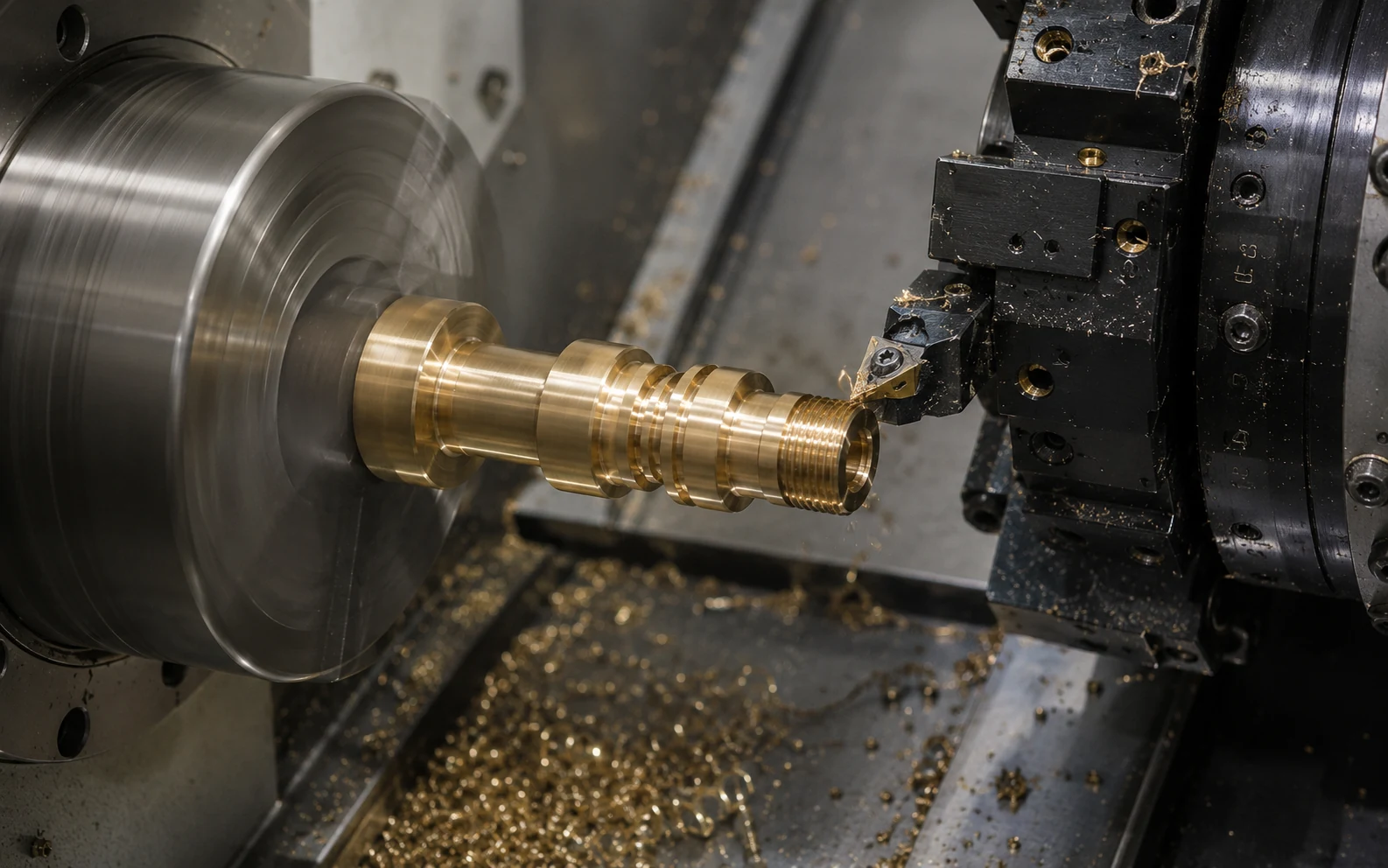
Brass is primarily a copper-zinc alloy family widely recognized in industrial manufacturing. Industry standards often highlight grades like C360 for general machining due to their excellent chip formation properties. Brass CNC machining utilizes computer-controlled lathes and mills to precisely cut outer diameters, bores, threads, pockets, grooves, and knurls from solid brass bar stock or blocks, creating tight-tolerance components for complex assemblies.
Custom Brass Parts We Machine to Drawing Requirements
Categorized by part type and functional application.
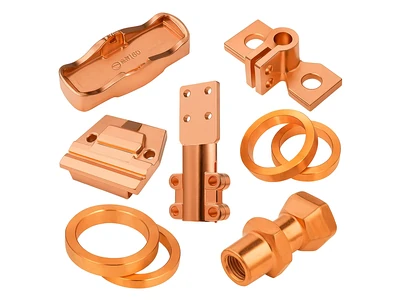
Brass Electrical Connectors & Terminals
Connector bodies, terminal contacts, and threaded pins. We focus on thread fit, burr-free contact features, and small-hole conditions for reliable conductivity.
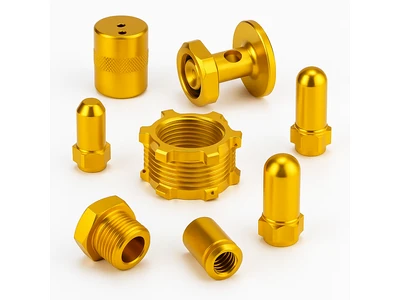
Brass Fittings, Adapters & Couplings
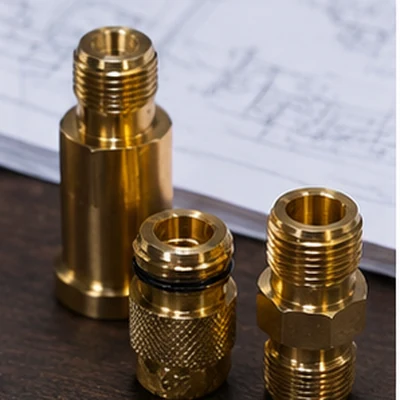
Custom threaded bodies, male/female adapters, and tube fittings requiring strict thread accuracy, sealing geometry, and bore cleanliness.
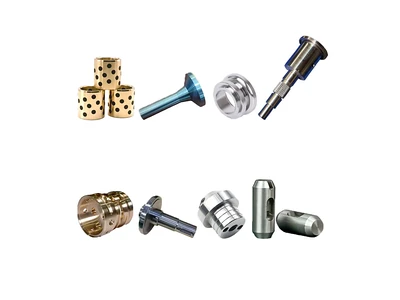
Brass Threaded Inserts & Knurled Components
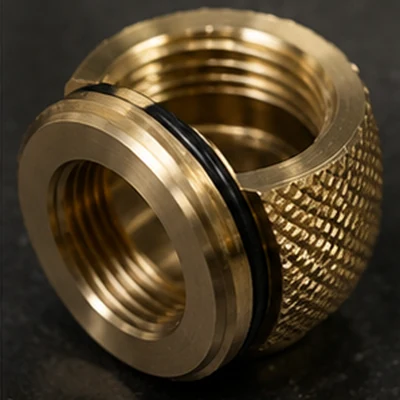
Press-in and mold-in inserts. Knurl geometry, thread condition, and entry edges matter as much as the basic outside diameter.
Brass Valve Bodies, Nozzles & Fluid Parts
Valve stems, precision nozzles, and manifolds. Critical attention to concentricity, sealing surfaces, and internal burr removal.
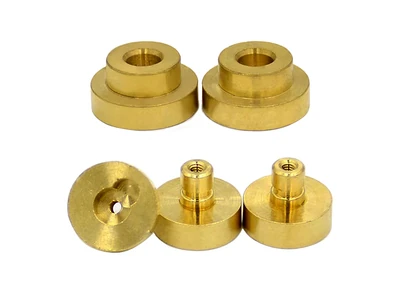
Brass Bushings, Sleeves & Spacers
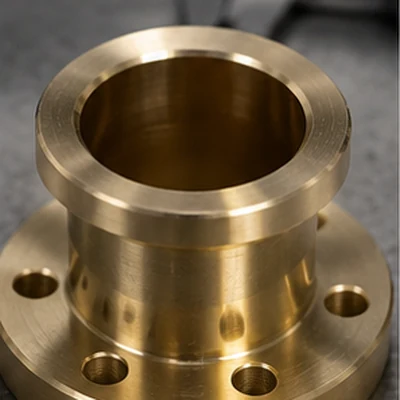
Guide sleeves and flanged bushings requiring precise ID/OD concentricity and bore finish. Need geometry-specific dimensions? We machine to print.
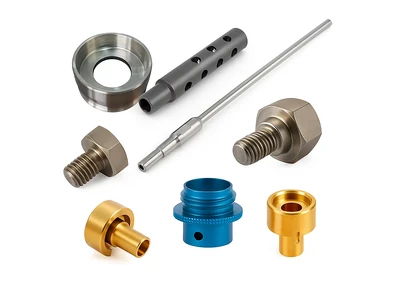
Brass Pins, Contacts & Precision Turned Parts
Small cylindrical components produced via Swiss machining and automatic lathes, focusing on batch repeatability and small diameter control.
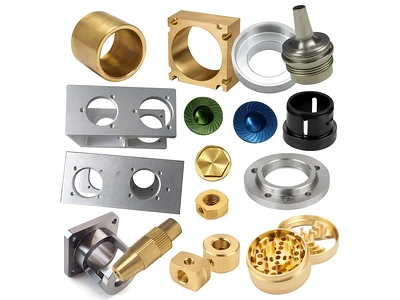
Brass Instrument & Sensor Components
Sensor bodies and precision caps where fine features, dimensional relationships, and cosmetic surfaces are critical for final assembly fit.
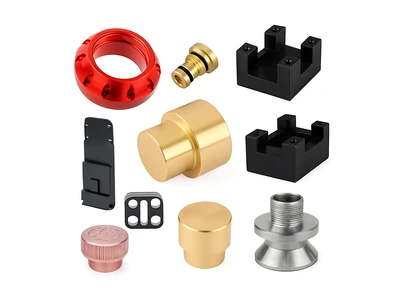
Custom Brass Housings & Mounting Blocks
CNC milled brass parts featuring pockets, counterbores, multi-face holes, and precise mounting features for structural applications.
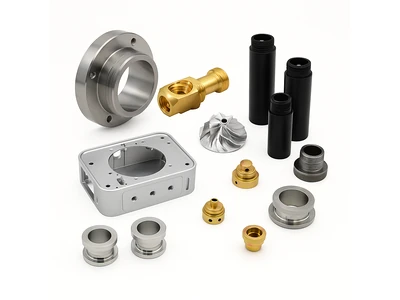
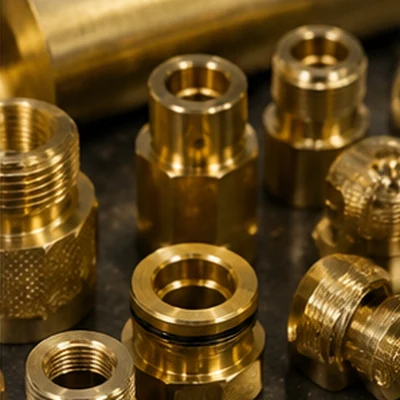
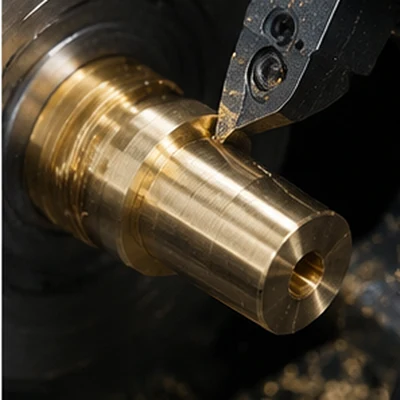
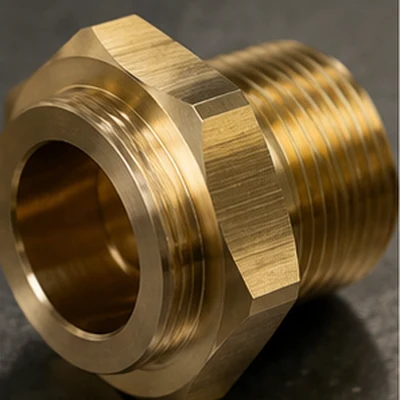
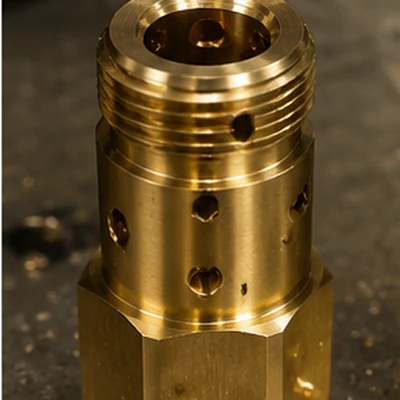
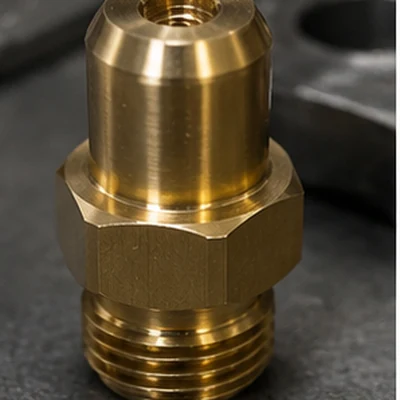
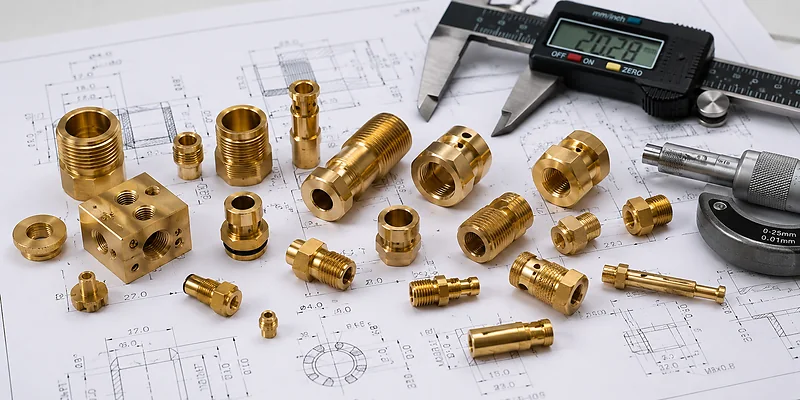
Precision Brass Components for Custom Assemblies
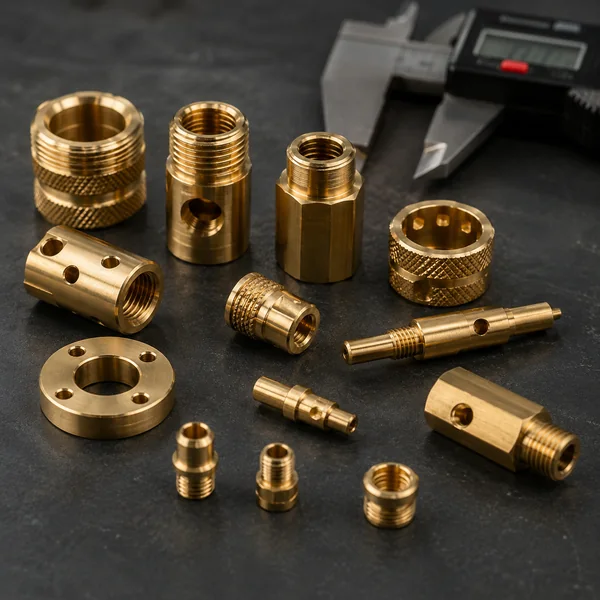
Showcasing a mix of CNC turning and milling capabilities.
Start with the Brass Grade, Not Just “Brass”
Brass grade and material specification are confirmed according to drawing, application, and compliance requirements. Material changes can change machining behavior.
Free-Cutting Brass
Commonly specified for high machinability, excellent thread formation, and complex turned components. (e.g., C360, C3604 as common project examples).
Project-Specified Lead-Free Brass
Evaluated for regulatory or environmental compliance. Subject to material specification and sourcing review, as machining characteristics differ from free-cutting grades.
DZR / Corrosion-Resistant Brass
Dezincification-resistant grades required for specific water or corrosive fluid environments. Sourced based on your specific drawing requirements.
Why Brass Parts Fail Even When They Look Easy to Machine
Wrong Brass Grade Creates Application Problems
Lead-Free Brass Behaves Differently from Free-Cutting
Burrs Remain Around Small Holes and Slots
Small Threads Fail GO/NO-GO Checks
ID / OD Concentricity Does Not Match Assembly
Thin-Wall Brass Parts Distort After Machining
Soft Surfaces Show Clamp Marks
Finishing Changes Critical Dimensions
Wrong Alloy Fails in Corrosion Environment
Prototype-to-Production Quality Drifts
Brass Grade Changes Machining Behavior
The Challenge
Buyers often simply write "Brass" on an RFQ, but this is an incomplete material specification. Different brass alloys vary significantly in machinability, chip formation, strength, lead content, and application compliance. C360 is a typical free-cutting brass with high machinability, but lead-free alternatives behave differently during CNC turning.
Why It Happens
- Material specification incomplete on drawing.
- Leaded material replaced with lead-free without process review.
- Corrosion environment not considered during sourcing.
Customer Consequence
Unsuitable material choices lead to increased burrs, different tool behavior, surface finish changes, and unsuitable corrosion performance in the field.
LuckyHxs Approach
- Review material callout before quotation.
- Confirm specific brass grade and lead-free requirements.
- Do not substitute material without engineering approval.
- Re-review machining strategy if material grade changes.
What We Check
Material specification, drawing revision, lot identification (where required), and finishing compatibility.
Burrs & Threads Cause Assembly Failures
The Challenge
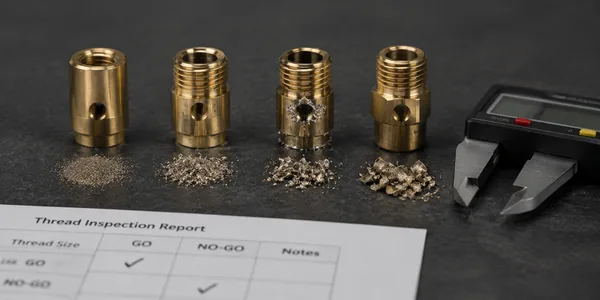
Brass connectors and fittings often contain small holes, blind holes, internal threads, and connector openings. Common failures include burrs at hole exits, damaged first threads, thread depth variation, and chips left inside blind holes.
Why It Happens
- Tool wear or changing brass grade affecting chip break.
- Poor deburring access in small feature geometry.
- Chip accumulation in deep blind holes.
Customer Consequence
Screws cannot fully seat, fittings leak or fail to tighten, connector pins interfere, and stray chips enter the final fluid or electronic assembly.
LuckyHxs Approach
- Identify assembly-critical holes and threads during review.
- Monitor thread tooling and review entry chamfers.
- Deburr functional edges and clean internal blind features.
What We Check
GO/NO-GO thread checks where specified, thread entry/exit, pitch geometry, burr absence, and blind-hole cleanliness.
Sample-to-Batch Fit & Finish Drifts
The Challenge
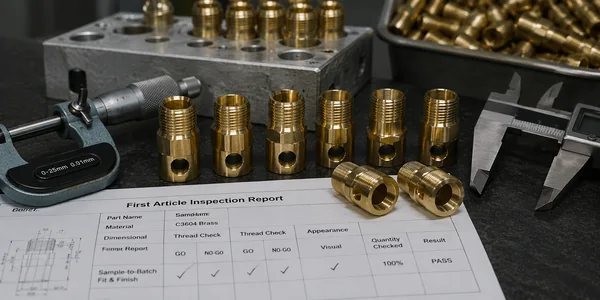
The prototype has the correct fit, clean threads, and acceptable appearance. But in the production batch, ID/OD dimensions drift, thread fit changes, thin walls deform, or plating appearance varies. The core risk: Sample Approved → Production Batch Changed.
Why It Happens
- Material lot or brass grade changes between runs.
- Tool wear and collet condition variations over large batches.
- Inconsistent manual deburring or plating thickness.
LuckyHxs Approach
- First article verification against drawing revisions.
- Identify fit-critical features for in-process checks.
- Final batch inspection and repeat-order requirement retention.
What We Check
ID/OD concentricity, threads, grooves, knurling, visible surface finish, and overall batch dimensional consistency.
Small Features Often Decide Whether a Brass Part Assembles
A brass part isn't just an outer diameter. The internal geometry dictates functionality.
Internal & External Threads
Failure Risk: Incomplete thread depth, damaged first thread.
Inspect: GO/NO-GO gauge, entry chamfer.
Blind Holes & Cross Holes
Failure Risk: Trapped chips, exit burrs blocking fluid/pins.
Inspect: Visual bore check, pin gauge.
Grooves & Knurls
Failure Risk: Sharp edges cutting O-rings, poor insert grip.
Inspect: Edge condition, knurl profile depth.
Thin Brass Parts Need Controlled Workholding
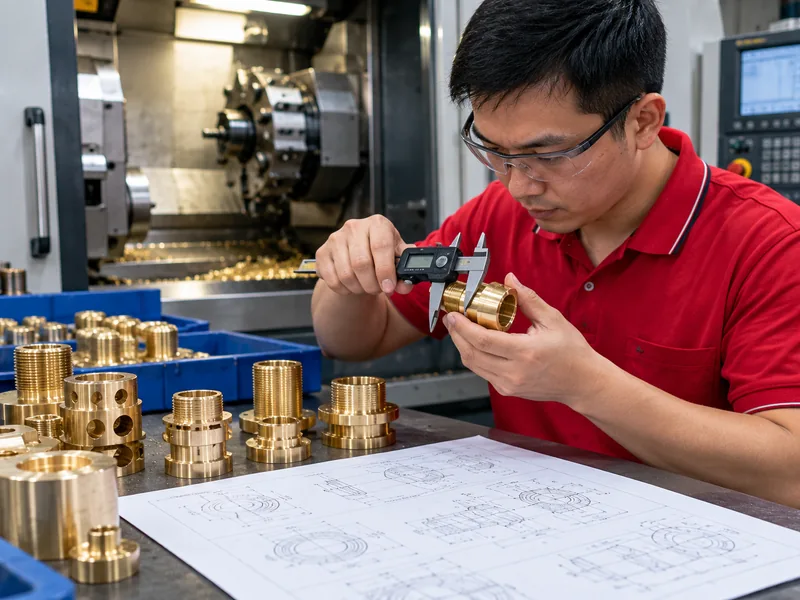
For brass sleeves, tubes, and flanged bushings, excessive collet or chuck pressure during turning causes bore distortion and OD ovality. The core engineering rule: The part should be evaluated after the clamping force is removed. We manage wall thickness and concentricity by controlling workholding strategies and performing post-unclamping measurement.
Finishing Can Change Both Appearance and Fit
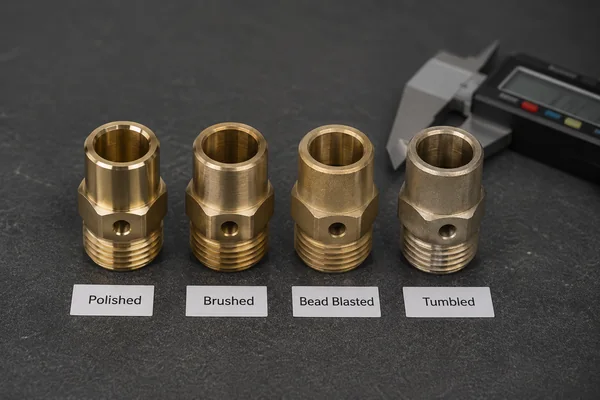
While brass offers a clean as-machined finish, projects may require polishing, nickel plating, tin plating, silver plating, or gold plating for conductivity or cosmetics. Available finishing depends on the project and material requirements.
- Plating thickness allowance on threads
- Thread masking for critical fits
- Final dimensional inspection post-plating
Brass Corrosion Resistance Depends on Alloy and Environment
Brass is not universally corrosion-resistant in all conditions. Performance depends on water contact, temperature, chemical exposure (e.g., ammonia), mechanical stress, and dissimilar metal contact. Specific alloys may require evaluation for dezincification and stress-corrosion cracking based on service conditions.
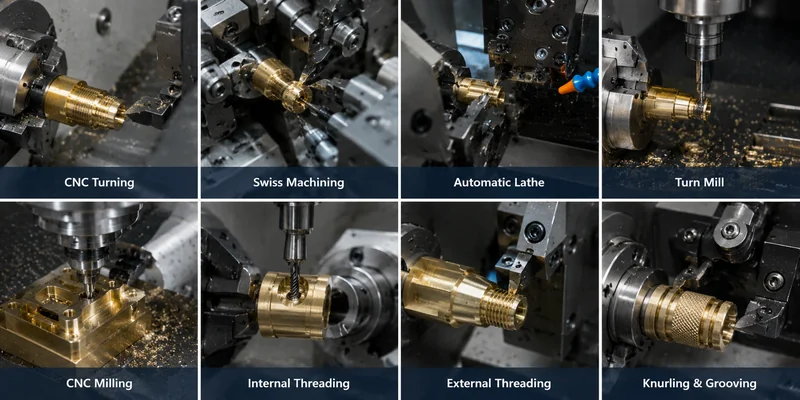
CNC Processes for Custom Brass Parts
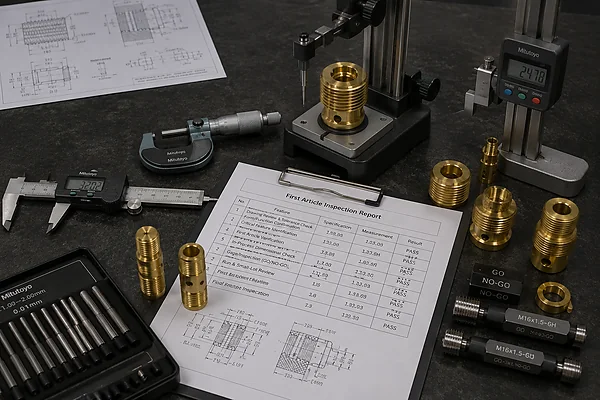
Inspect the Features That Control Real Assembly Performance
- Drawing Review & Tolerance Check
- Brass Grade Confirmation
- Critical Feature Identification
- First Article Verification
- In-Process Dimensional Checks
- Thread Inspection (GO/NO-GO)
- Burr & Small Hole Review
- Concentricity / Fit Review
- Finish Inspection
- Final Batch Inspection
Where Custom Brass CNC Parts Are Used
Electronics & Electrical
Part: Connector Pins
Why Brass: Conductivity & machinability
Critical: Burr-free contacts
Fluid Control
Part: Valve Bodies & Fittings
Why Brass: Threading & sealing
Critical: Thread accuracy
Precision Instruments
Part: Sensor Housings
Why Brass: Non-magnetic properties
Critical: Cosmetic surface & fit
Industrial Automation
Part: Guide Sleeves
Why Brass: Low friction & wear
Critical: ID/OD concentricity
A CNC Manufacturing Partner You Can Verify
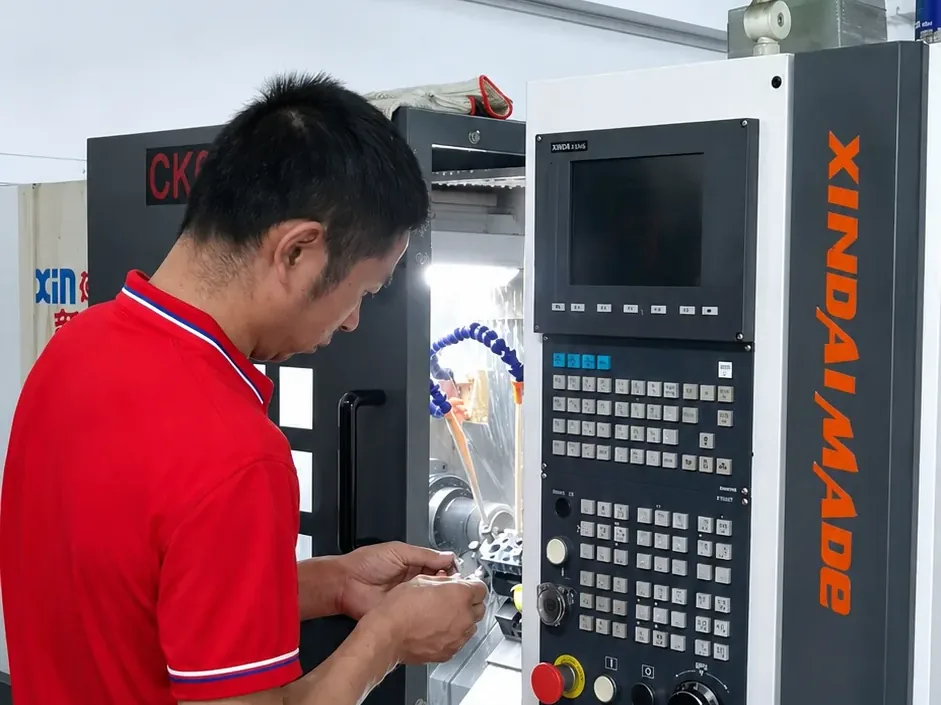
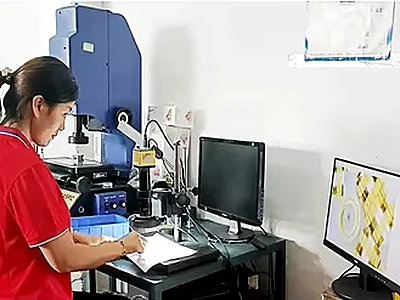
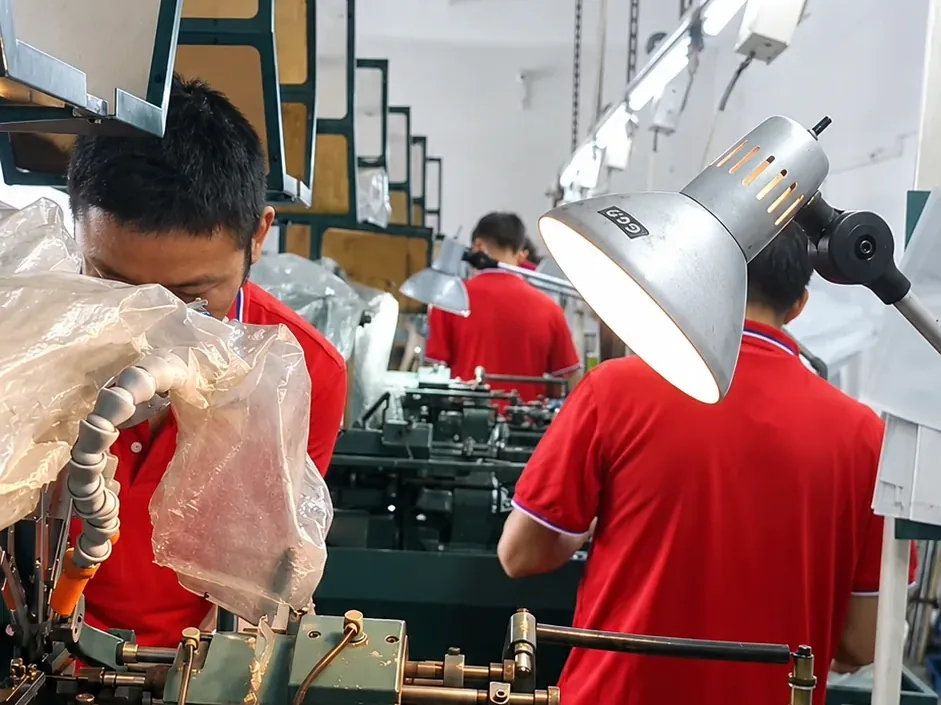
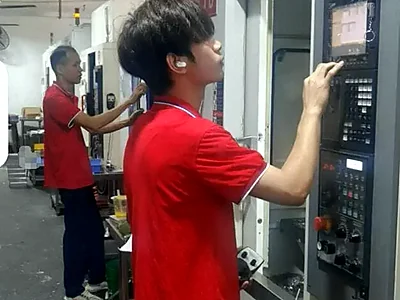
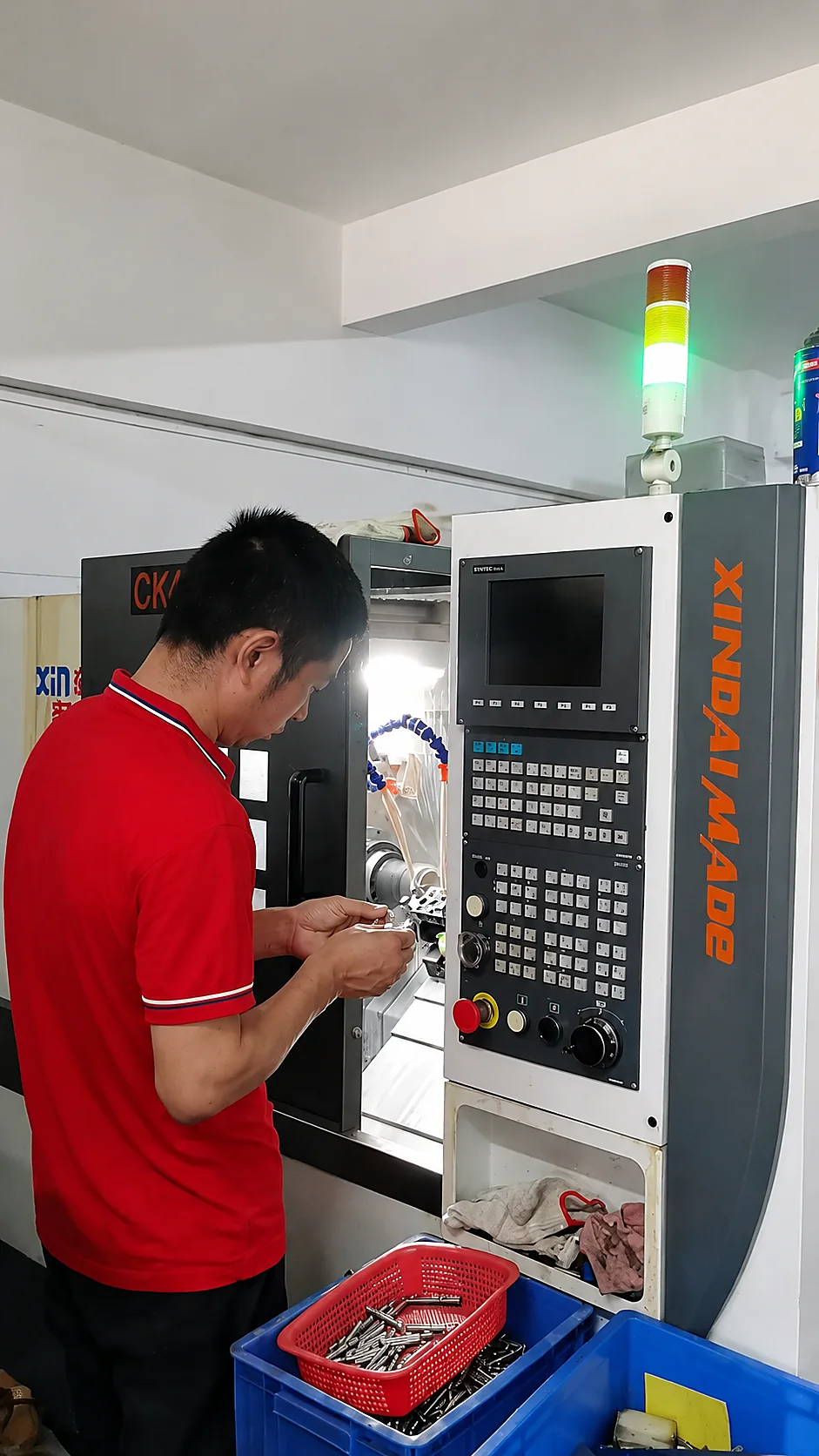
See Brass CNC Machining at LuckyHxs
Can Brass Be CNC Machined?
Yes. Brass is widely used for CNC-machined parts. Grades such as C360 are specifically valued for machining; industry standards identify C360 as a general machining brass due to its excellent chip control and tool life.
Which CNC Processes Can Be Used?
Depending on the part geometry, processes include CNC Turning, CNC Milling, Swiss Machining, Automatic Lathe Machining, Turn-Mill, Drilling, Threading, Grooving, and Knurling.
What Brass Parts Are Commonly CNC Machined?
Connectors, terminals, fittings, adapters, threaded inserts, valve parts, bushings, sleeves, pins, and instrument components.
Why Is Brass Popular for Precision Turning?
Beyond machinability and chip control, brass allows for clean thread formation, excellent surface finishes, and varying corrosion behavior depending on the specific alloy selected.
What Should Buyers Send?
A 2D/3D drawing, specific brass grade, quantity, critical tolerances, thread details, fit requirements, finishing, application, and compliance requirements.
What Is the Best Brass Grade for CNC Machining?
There Is No Single “Best” Brass Grade for Every Application.
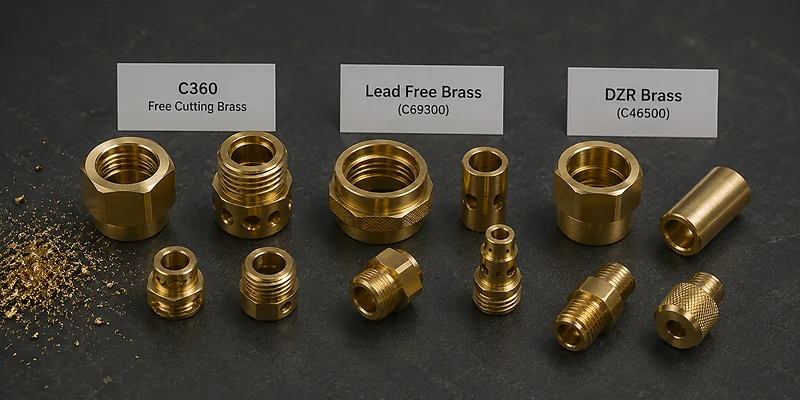
C360 / Free-Cutting Brass
Ideal when high machinability is the priority. It is suited for complex turned components, threading, knurling, and high-volume screw-machine type parts. It holds a standard machinability rating of 100.
Lead-Free Brass
Required for regulatory, drinking-water, environmental, or product-specific compliance. The specific grade must be confirmed per project, as lead-free special brasses vary in machinability and dezincification resistance.
DZR Brass
If the part is used in water, warm-water systems, or corrosive fluid environments, dezincification resistance (DZR) must be evaluated. Not all projects require DZR.
Buyer Rule
Do not just write "Brass" on an RFQ. Specify: Material grade / standard / lead requirement / corrosion requirement / finish.
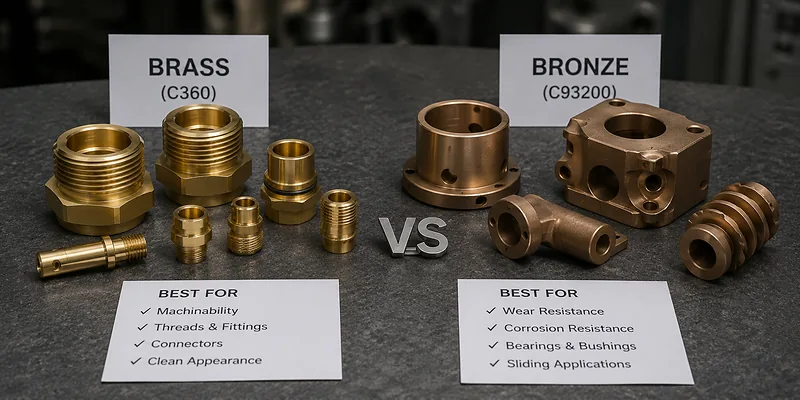
Brass vs Bronze: Which Is Better for CNC Machined Parts?
Brass and bronze are both copper-based alloy families, but their composition and typical engineering uses are different.
Brass
More common for connectors, fittings, threaded components, inserts, instrument parts, and small turned parts—especially free-machining brass.
Bronze
Selected based on specific bronze alloys for wear, sliding, bearing surfaces, mechanical loading, or specific corrosion environments.
Which Should a Buyer Choose?
- Choose Brass if the project focuses on machinability, threads, fittings, connectors, small turned parts, and a clean machined appearance.
- Consider Bronze if the project relies heavily on bearing surfaces, wear behavior, or sliding applications.
Choose by drawing requirements and service conditions—not by color or material name alone.
Frequently Asked Questions About Brass CNC Machining
Can brass be CNC machined?
What is brass made of?
Which brass grade is best for CNC machining?
Is brass easier to machine than aluminum?
Can you machine lead-free brass?
Can you machine threads, knurls and small holes in brass?
What finishes can be applied to brass CNC parts?
What should be considered when brass contacts another metal?
What information do you need for a brass CNC quotation?
Need Brass Parts That Must Fit, Thread and Finish Correctly?
Send your 2D/3D drawing, brass grade, quantity, critical dimensions, thread requirements, fit, corrosion environment, and surface finish. Our team will review the machining and inspection requirements before quotation.