
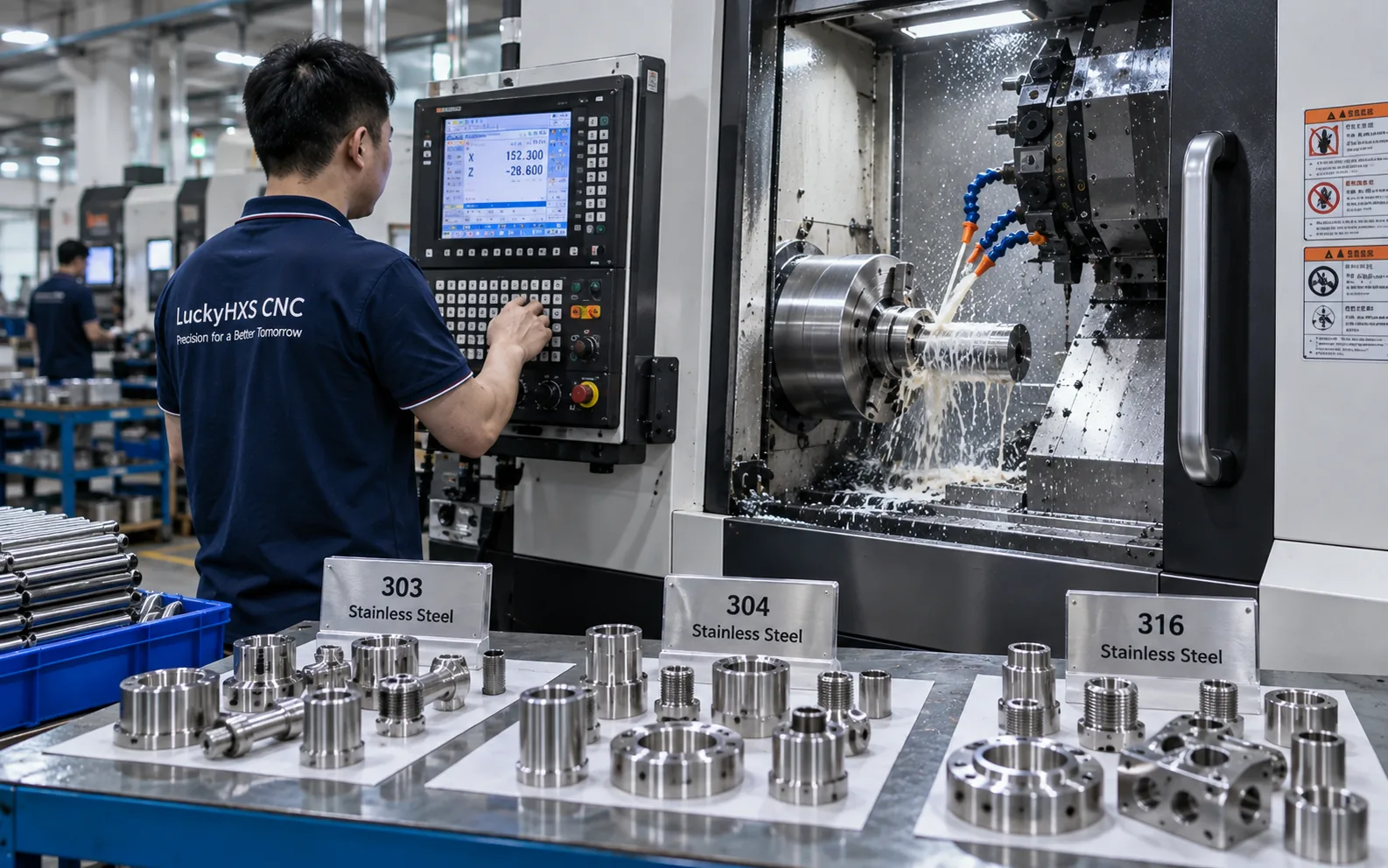
Choosing the right stainless steel grade for CNC machining affects cycle time, tool wear, surface finish, corrosion resistance, and total part cost. In most projects, 303 is best for fast machining, 304 offers the best all-purpose balance, and 316 is preferred when corrosion resistance is critical. For custom stainless steel CNC parts, the best choice depends on function, environment, tolerance, and budget.
303 vs 304 vs 316 Stainless Steel for CNC Machining: Key Differences
303, 304, and 316 are common austenitic stainless steels used for CNC machined components. 303 machines fastest, 304 is widely used for general precision stainless steel parts, and 316 provides superior corrosion resistance. This comparison helps engineers select the best stainless steel for CNC machining based on performance, manufacturability, and cost.
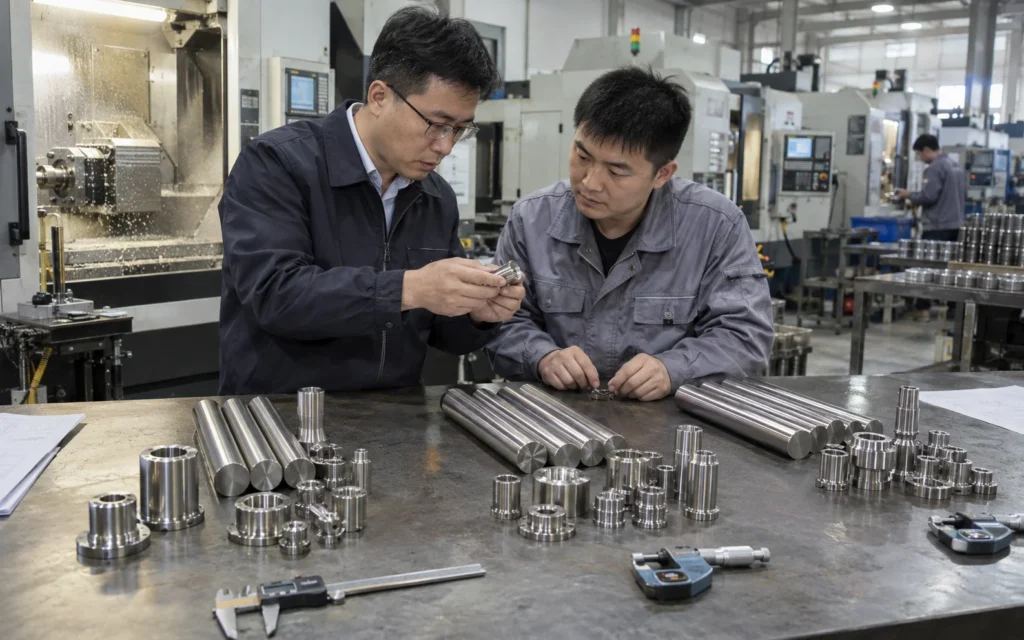
Material Selection Basics for CNC Stainless Steel Parts
303, 304, and 316 stainless steels look similar at first glance, but they behave differently during CNC milling, CNC turning, drilling, tapping, and finishing. Their differences come mainly from alloying elements, sulfur content, chromium-nickel balance, and molybdenum addition.
303 stainless steel includes sulfur to improve chip breaking and reduce cutting resistance. This makes 303 stainless steel machining faster and more predictable, especially for stainless steel CNC turning parts such as shafts, bushings, threaded inserts, spacers, and fittings.
304 stainless steel CNC machining is more common when parts need good corrosion resistance, weldability, and broad availability. However, 304 work-hardens more easily than 303, so tooling, cutting speed, coolant, and setup rigidity must be controlled carefully.
316 stainless steel CNC machining is selected for marine, chemical, medical, and food-related environments because molybdenum improves pitting and chloride resistance. It is tougher to machine than 303 and usually more expensive than 304.
Based on our internal data and market analysis, here is the breakdown:
| Grade | CNC Machinability | Corrosion Resistance | Typical Use | Main Limitation |
|---|---|---|---|---|
| 303 Stainless Steel | Excellent | Moderate-Good | Turned parts, fasteners, fittings, shafts | Lower weldability and slightly reduced corrosion resistance |
| 304 Stainless Steel | Medium | Good | General custom stainless steel CNC parts | Work-hardens during machining |
| 316 Stainless Steel | Medium-Low | Excellent | Marine, medical, chemical, food equipment parts | Higher cost and greater tool wear |
Luckyhxs Pro Tip: When I review stainless steel CNC projects, I first ask where the part will operate. If it is not exposed to harsh chemicals, saltwater, or high sanitation requirements, 303 or 304 often provides better machining value than 316.
CNC Machinability of 303, 304, and 316 Stainless Steel
Stainless steel CNC machining works by removing material with controlled cutting tools, but each grade responds differently. 303 forms cleaner chips, 304 tends to work-harden, and 316 requires more cutting force. Proper speed, feed, coolant, tool coating, and setup rigidity determine final precision, repeatability, and cost.
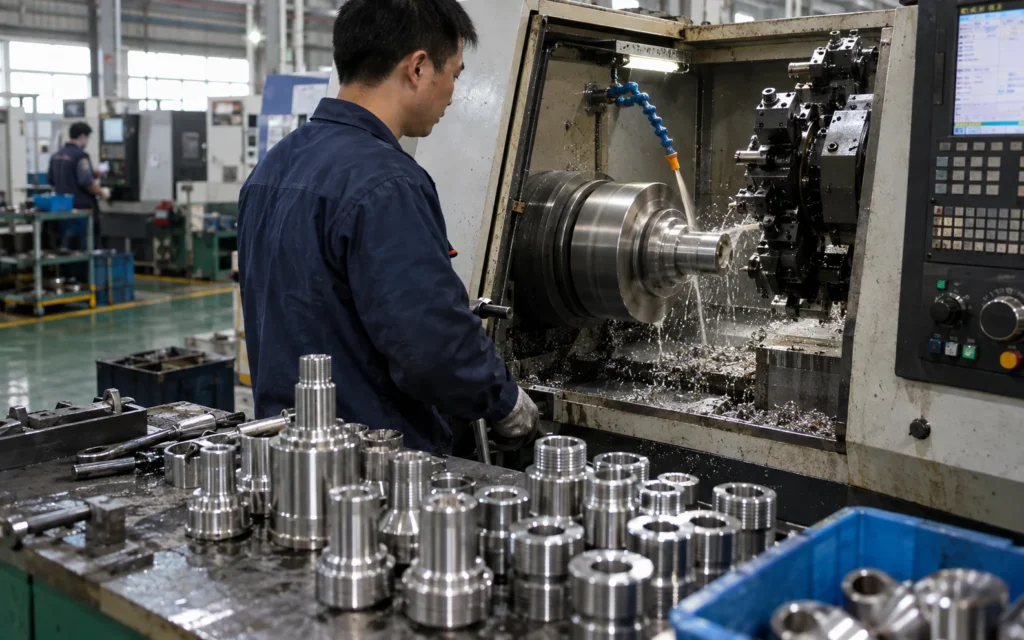
Machining Behavior of 303, 304, and 316 Stainless Steel
During CNC machining, stainless steel generates heat and cutting pressure because it is tough, ductile, and prone to work hardening. If the cutting edge rubs instead of shearing, the surface becomes harder, tool wear accelerates, and dimensional consistency becomes harder to maintain.
303 is the easiest of the three because sulfur improves chip formation. This supports stable CNC turning, drilling, tapping, and thread cutting. It is often the best stainless steel for CNC machining when corrosion requirements are moderate and production efficiency matters.
304 is more challenging because it forms long, stringy chips and can harden rapidly under poor cutting conditions. Successful 304 stainless steel CNC machining requires sharp tools, positive rake geometry, adequate coolant, and consistent chip evacuation.
316 is tougher than 304 because of its alloy composition and molybdenum content. It can produce more heat and tool wear, so slower speeds, stronger tooling, and high-pressure coolant are often needed for precision stainless steel parts.
Based on our internal data and market analysis, here is the breakdown:
| Machining Factor | 303 Stainless Steel | 304 Stainless Steel | 316 Stainless Steel |
|---|---|---|---|
| Chip Control | Shorter, easier chips | Longer, stringy chips | Tougher, heat-prone chips |
| Tool Wear | Lowest | Medium | Highest |
| Cutting Speed Potential | Highest | Medium | Lower |
| Work-Hardening Risk | Lower | High | High |
| Best CNC Process Fit | Turning, threading, drilling | Milling, turning, general parts | Critical corrosion-resistant parts |
Luckyhxs Pro Tip: I avoid light rubbing cuts on 304 and 316. A sharp tool with enough feed to cut cleanly is usually better than babying the material, because rubbing creates work-hardening and shortens tool life.
Benefits of Choosing the Right Stainless Steel Grade for CNC Machining
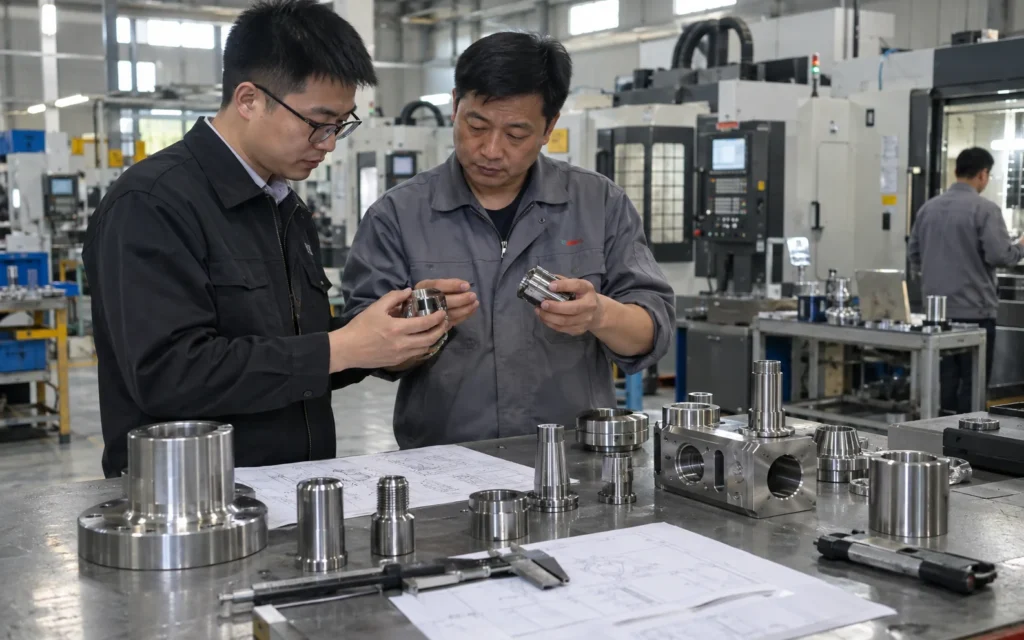
The main benefit of comparing 303, 304, and 316 is better material-to-application matching. 303 reduces machining cost, 304 offers versatile corrosion resistance and availability, and 316 protects parts in aggressive environments. This improves part performance, lead time, surface quality, and long-term reliability.
Practical Advantages for Custom Stainless Steel CNC Parts
Selecting the right stainless steel grade prevents overengineering and avoids unnecessary machining cost. For example, using 316 for a dry indoor component may increase material and machining expense without adding meaningful value. On the other hand, using 303 in a chloride-rich environment may reduce service life.
For high-volume stainless steel CNC turning parts, 303 can significantly reduce cycle time because it cuts cleaner and supports better chip control. This is useful for precision shafts, fittings, fasteners, sleeves, and threaded components.
For general-purpose precision stainless steel parts, 304 is often the most practical grade because it is strong, corrosion-resistant, widely available, and suitable for many industries.
For aggressive environments, 316 offers the best corrosion performance among the three, especially where saltwater, chemicals, acids, or hygiene requirements are involved.
Key benefits include:
- Lower machining cost with 303 when corrosion demands are moderate.
- Balanced performance with 304 for general industrial, consumer, and equipment components.
- Higher corrosion resistance with 316 for marine, medical, food processing, and chemical applications.
- Improved product reliability by matching material properties to operating conditions.
- Better production planning through accurate expectations for tool wear, cycle time, and finishing.
- More consistent tolerances when the correct machining strategy is matched to the grade.
Luckyhxs Pro Tip: I recommend choosing the least expensive grade that still meets the operating environment. In many real projects, the smartest decision is not the strongest material, but the grade that balances performance, machinability, and cost.
How to Maintain CNC Machined Stainless Steel Parts
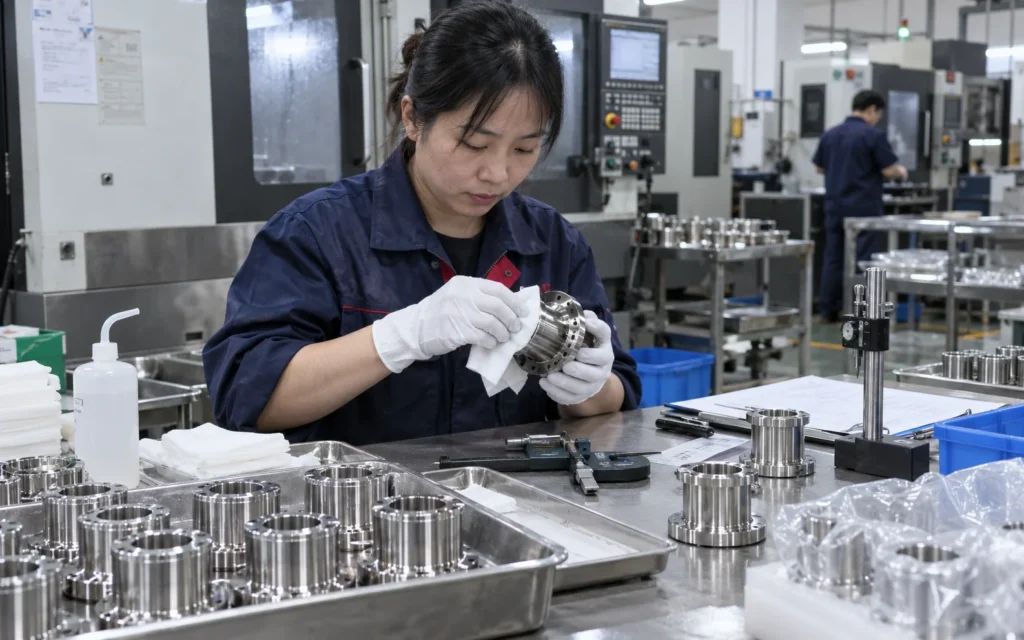
Maintaining stainless steel CNC parts means protecting the machined surface, preventing contamination, and matching cleaning methods to the environment. 303, 304, and 316 all resist corrosion, but improper handling, embedded iron, chloride exposure, or poor cleaning can reduce performance and appearance over time.
Care, Cleaning, and Surface Protection After Machining
Stainless steel does not stay corrosion-resistant simply because it is stainless. Its performance depends on a passive chromium oxide layer on the surface. CNC machining, deburring, grinding, welding, or handling can disturb this layer or introduce contaminants.
After 303 stainless steel machining, parts should be cleaned to remove chips, cutting oil, and sulfur-related residue. Since 303 has reduced corrosion resistance compared with 304 and 316, it should not be used in harsh chloride or marine environments unless carefully evaluated.
304 stainless steel CNC machining parts should be protected from carbon steel contamination. If iron particles are embedded into the surface, rust staining may appear even though the base material is stainless steel.
316 stainless steel CNC machining parts are more corrosion-resistant, but they are not immune to corrosion. Chloride concentration, temperature, surface roughness, and cleaning chemicals all affect long-term performance.
Recommended maintenance steps:
- Remove machining oil and chips using approved cleaning agents after CNC production.
- Avoid contact with carbon steel tools or fixtures during final handling and assembly.
- Use passivation when required for medical, food, marine, or corrosion-critical parts.
- Specify the correct surface finish because smoother surfaces resist contamination better.
- Rinse chloride-exposed parts regularly in marine or chemical environments.
- Inspect threaded and tight-tolerance areas where residue and corrosion may accumulate.
- Store precision stainless steel parts properly in clean, dry packaging before assembly.
Luckyhxs Pro Tip: For stainless parts that must look good and resist corrosion, I always consider passivation after machining. It is a relatively small finishing step that can prevent many surface staining and contamination problems.
303 vs 304 vs 316 Stainless Steel CNC Machining Cost
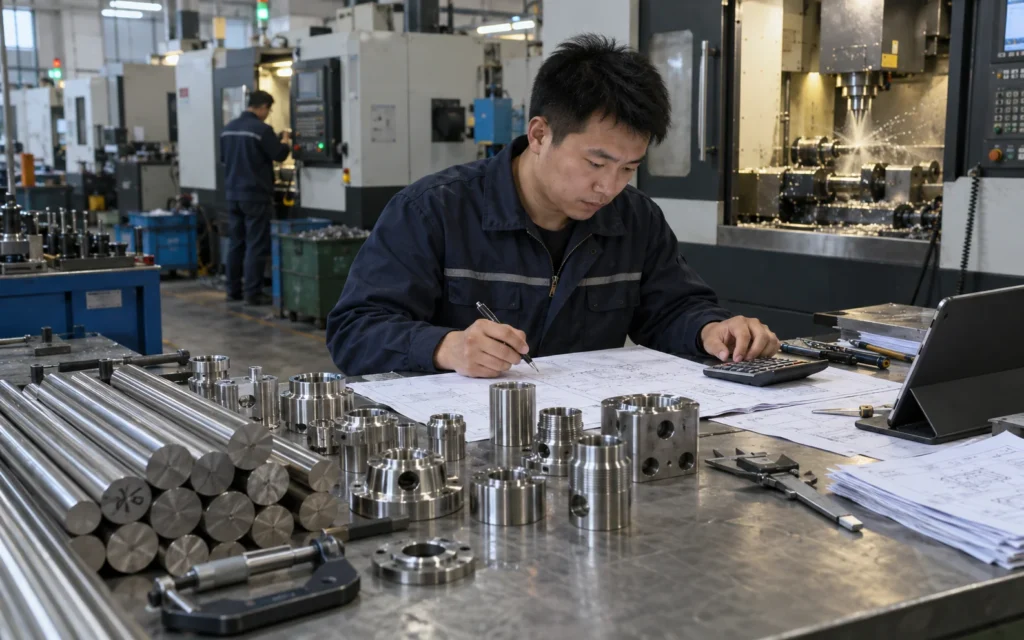
Pricing depends on material grade, part geometry, tolerance, quantity, surface finish, and inspection requirements. In general, 303 often has the lowest machining cost, 304 is usually cost-effective and widely available, while 316 costs more due to material price, slower machining, and greater tool wear.
CNC Stainless Steel Pricing Drivers
The price of custom stainless steel CNC parts is not determined by material cost alone. Machining time often has a larger impact, especially for tight tolerances, deep holes, thin walls, internal threads, complex pockets, or fine surface finishes.
303 may cost slightly more or similar as raw material compared with some 304 forms, but it can reduce total CNC machining cost because it cuts faster and improves tool life. This makes 303 attractive for high-volume stainless steel CNC turning parts.
304 is usually widely stocked, which helps reduce procurement delays. It is often a cost-effective choice for general precision stainless steel parts, though machining must be controlled to avoid work-hardening.
316 typically has the highest total cost because raw material is more expensive and machining is slower. However, it is the right investment when corrosion resistance prevents failure, warranty issues, or frequent replacement.
Based on our internal data and market analysis, here is the breakdown:
| Cost Factor | 303 Stainless Steel | 304 Stainless Steel | 316 Stainless Steel |
|---|---|---|---|
| Raw Material Cost | Medium | Low-Medium | High |
| Machining Time | Low | Medium | High |
| Tool Wear Cost | Low | Medium | High |
| Finishing Cost | Medium | Medium | Medium-High |
| Best Cost Advantage | High-volume turned parts | General CNC parts | Harsh-environment parts |
Luckyhxs Pro Tip: When customers ask for the cheapest stainless option, I do not quote material alone. I compare total finished-part cost, because 303 can sometimes be cheaper overall than 304 when machining time is the biggest cost driver.
Key Features & Comparison
303, 304, and 316 stainless steels each offer a different balance of machinability, corrosion resistance, strength, weldability, and cost. 303 is the easiest to machine, 304 is the most versatile, and 316 is the best option for demanding corrosion environments where durability is more important than machining speed.
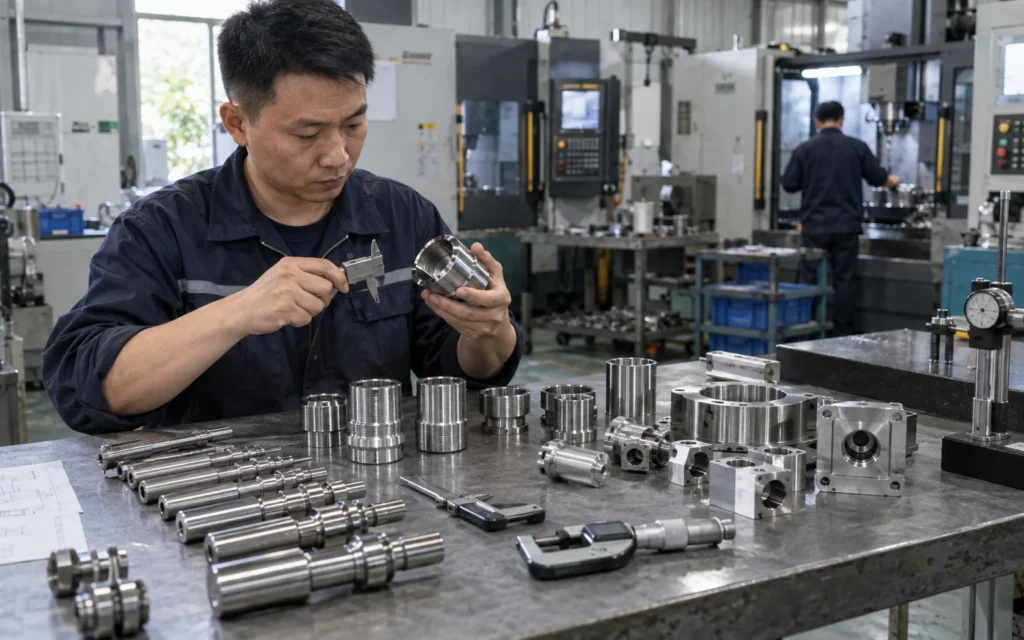
Side-by-Side Grade Comparison for CNC Machining
A direct comparison is the fastest way to choose the best stainless steel for CNC machining. For production efficiency, 303 often wins. For general-purpose custom stainless steel CNC parts, 304 is usually the default choice. For corrosion-critical precision stainless steel parts, 316 is the preferred option.
Based on our internal data and market analysis, here is the breakdown:
| Feature | 303 Stainless Steel | 304 Stainless Steel | 316 Stainless Steel |
|---|---|---|---|
| CNC Machinability | Best | Moderate | Most difficult of the three |
| Corrosion Resistance | Good, but lower than 304 | Good general resistance | Excellent, especially against chlorides |
| Weldability | Poor to limited | Good | Good |
| Chip Formation | Shorter, cleaner chips | Stringy chips | Tough, heat-generating chips |
| Tool Life | Best | Moderate | Shorter |
| Surface Finish Potential | Very good | Good | Good with proper process |
| Material Availability | Good | Excellent | Good |
| Typical Applications | Shafts, fittings, screws, bushings | Brackets, housings, equipment parts | Marine, chemical, medical, food parts |
| Best For | Fast machining and turning | Balanced performance | Harsh environments |
| Main Trade-Off | Reduced corrosion and weldability | Work-hardening | Higher cost and slower machining |
Luckyhxs Pro Tip: If a drawing does not specify the stainless grade, I never assume. I confirm the environment, welding needs, and corrosion exposure first, because switching from 304 to 303 or 316 can completely change performance and cost.
Cost & Buying Factors
When buying stainless steel CNC machined parts, evaluate total project cost rather than unit material price. Grade selection, tolerance, quantity, geometry, finishing, inspection, and delivery schedule all affect pricing. The right supplier should help optimize both material choice and manufacturability before production starts.
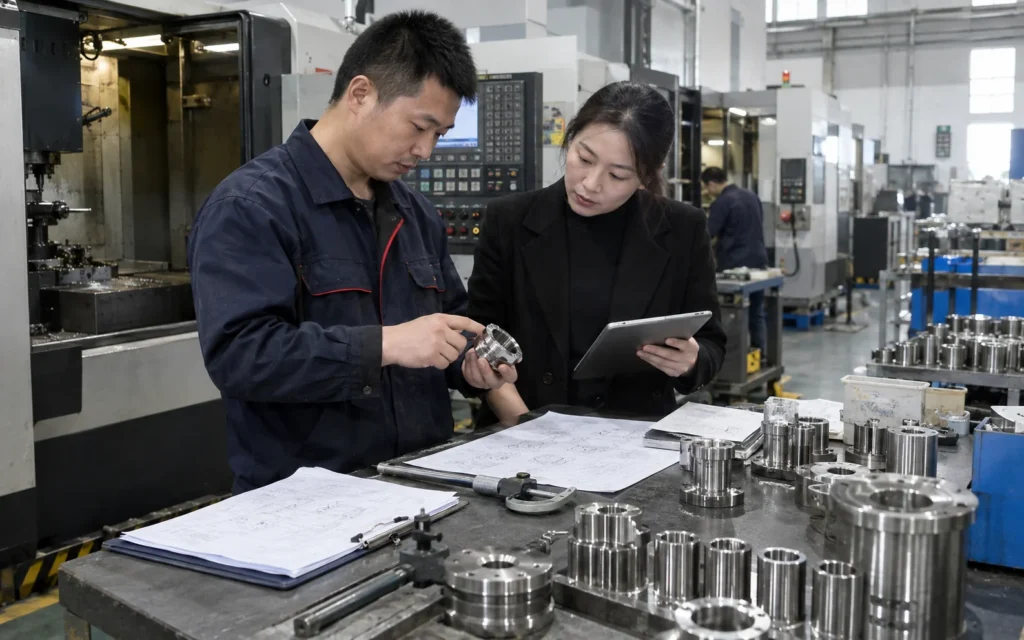
How to Choose the Right Stainless Steel CNC Supplier and Grade
A good buying decision starts with understanding what the part must do. If the part needs fast production and clean threads, 303 may be ideal. If the part needs balanced corrosion resistance and availability, 304 is often the right option. If the part will face saltwater, chemicals, or strict hygiene conditions, 316 may be necessary.
For custom stainless steel CNC parts, buyers should also consider whether the part is designed for manufacturability. Sharp internal corners, deep narrow grooves, very thin walls, and unnecessarily tight tolerances can increase cost regardless of material grade.
Important buying factors include:
- Application environment: indoor, outdoor, marine, chemical, food, or medical.
- Machining process: CNC turning, milling, drilling, tapping, or multi-axis machining.
- Tolerance requirements: standard precision versus high-precision inspection needs.
- Surface finish: machined, polished, brushed, passivated, bead blasted, or electropolished.
- Order quantity: prototype, low-volume, bridge production, or mass production.
- Material certification: traceability, RoHS, REACH, medical, or industry-specific documents.
- Supplier experience: proven capability with 303 stainless steel machining, 304 stainless steel CNC machining, and 316 stainless steel CNC machining.
Luckyhxs Pro Tip: I advise customers to send both the drawing and the working conditions. With that information, Luckyhxs can often suggest small design or material changes that reduce cost without compromising part performance.
Conclusion
For CNC machining, 303 is usually best for machinability, 304 is best for balanced general use, and 316 is best for corrosion resistance. The right grade depends on the part’s environment, tolerance, production volume, and budget. Luckyhxs can help manufacture precision stainless steel parts to match your application.
Final Recommendation for Stainless Steel CNC Machining Projects
There is no single best stainless steel grade for every CNC machining project. The best choice depends on the performance requirement behind the part.
Choose 303 stainless steel when machining speed, chip control, and cost efficiency are top priorities, especially for stainless steel CNC turning parts.
Choose 304 stainless steel when you need a reliable, widely available, corrosion-resistant material for general custom stainless steel CNC parts.
Choose 316 stainless steel when the part must survive harsh corrosion, saltwater, chemicals, sanitation processes, or demanding service environments.
A simple selection guide:
| Project Requirement | Recommended Grade |
|---|---|
| Fastest machining and best chip control | 303 |
| General corrosion resistance and broad availability | 304 |
| Marine or chloride exposure | 316 |
| High-volume turned components | 303 |
| Welded stainless assemblies | 304 or 316 |
| Food, medical, or chemical exposure | 316 |
| Best balance of price and performance | 304 |
Luckyhxs Pro Tip: If you are unsure which stainless grade to specify, send Luckyhxs your drawing, target quantity, tolerance requirements, and working environment. I can help compare 303, 304, and 316 from both engineering and manufacturing cost perspectives.