
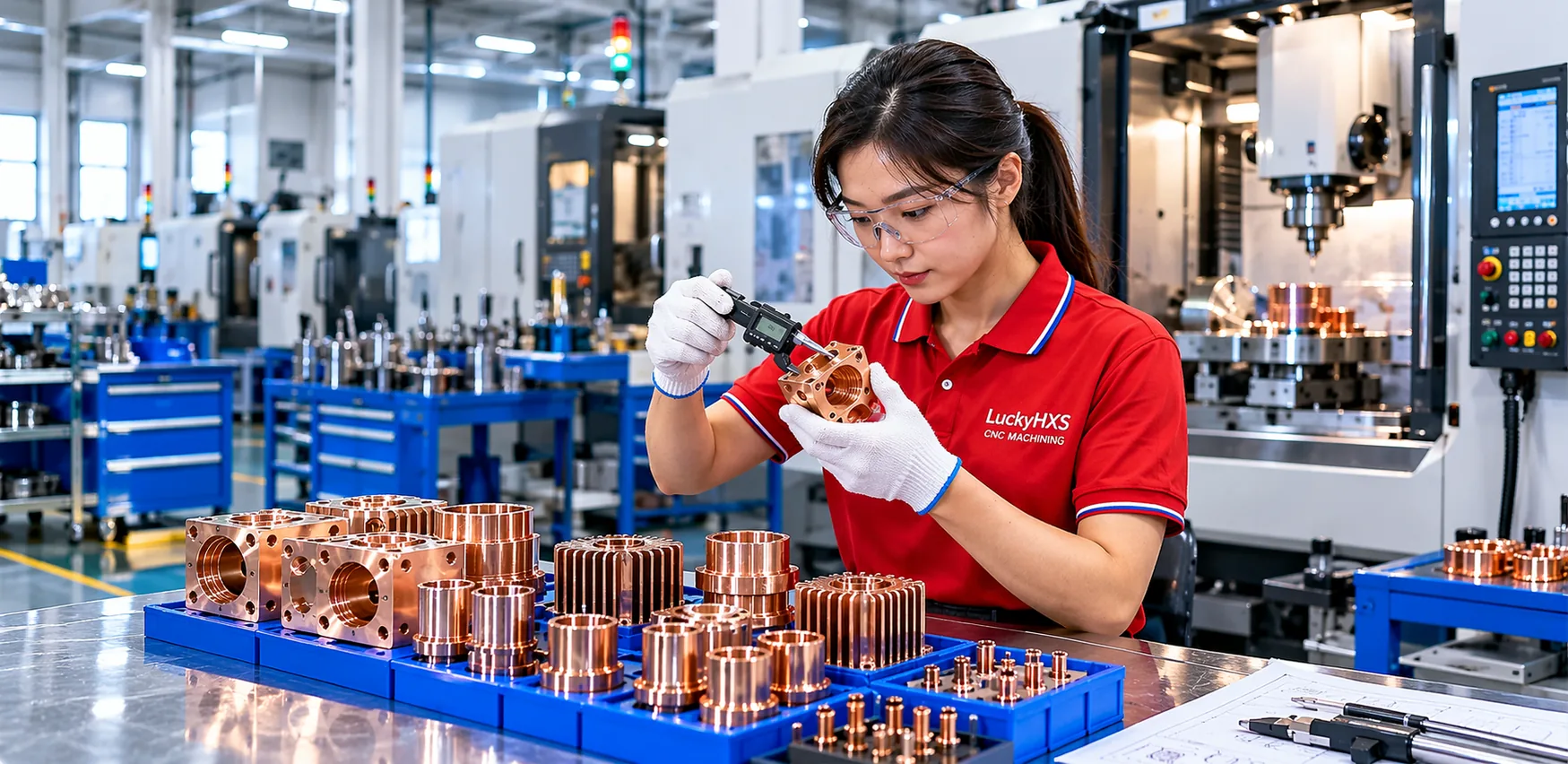
Copper CNC Machining Manufacturer for Custom Precision Parts
LuckyHXS provides Copper CNC Machining for conductive, thermal and precision copper components made from customer drawings, 3D CAD files, samples and technical requirements. Our CNC turning, milling, Swiss and turn-mill processes support copper connectors, terminals, fittings, sleeves, inserts, heat-transfer parts and custom mechanical components.
- Copper CNC milling, turning, Swiss and turn-mill support
- Drawing-based prototypes, low-volume parts and repeat production
- Material, geometry, burr, finish and inspection review before machining
Copper CNC Machining at a Glance
Actual capability, tolerance, timing and inspection scope depend on the copper material, part geometry, quantity and drawing requirements.
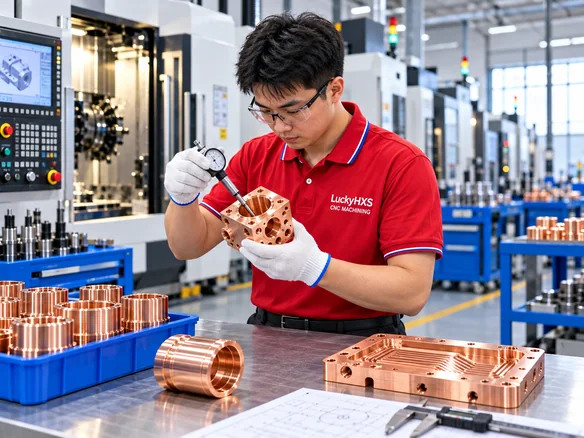
What Is Copper CNC Machining?
Copper CNC Machining is a subtractive process that uses computer-controlled cutting tools to create precision components from copper stock. The final part is defined by the customer’s drawing, material condition, geometry, dimensions, tolerances, surface requirements and inspection needs.
Copper is valued for electrical conductivity, thermal conductivity and corrosion resistance. Its softness and ductility can also make machining more sensitive to tool adhesion, burrs, surface marks and chip control than some harder metals.
Why Buyers Choose Copper CNC Machining
- ✓ Conductive components with controlled dimensions
- ✓ Thermal-transfer components with flat interfaces
- ✓ Custom connectors, terminals and adapter bodies
- ✓ Precision sleeves, inserts and fittings
- ✓ Prototype and low-volume parts without dedicated molding tools
- ✓ Drawing-based components for repeat OEM production
Custom Copper CNC Parts We Manufacture
The best Copper CNC Machining route depends on the copper material, geometry, quantity, feature access and functional requirements.
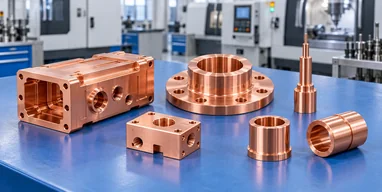
Custom Copper CNC Machined Parts
Made-to-drawing copper components for electrical, thermal, industrial and equipment assemblies.
Use this route when the project combines several copper geometries or requires one coordinated review.
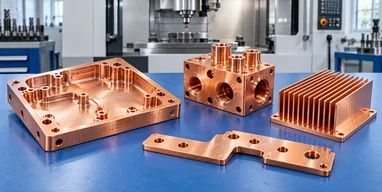
Copper CNC Milled Parts
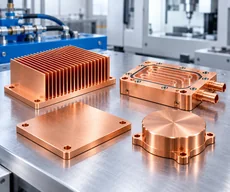
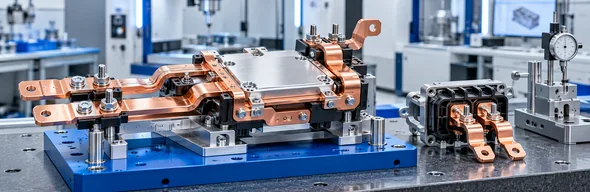
Copper blocks, plates, connector bodies, heat-transfer components, cold-plate structures and multi-face parts.
Best for flat faces, pockets, slots, hole patterns and thermal interfaces.
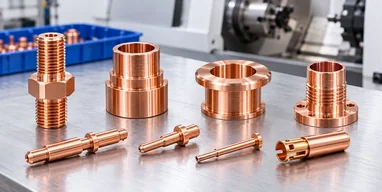
Copper CNC Turned Parts
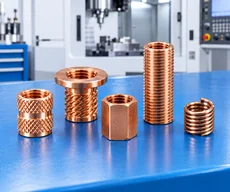
Copper sleeves, pins, inserts, fittings, terminals, spacers and rotational components.
Best for cylindrical parts requiring controlled diameter, bore, concentricity or threads.
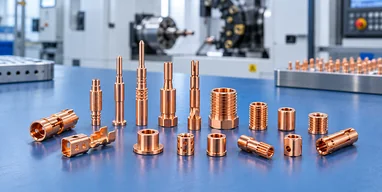
Copper Swiss-Machined Parts
Small-diameter copper pins, contacts, sleeves and precision conductive components where suitable.
Best when small-part support and repeatability are important.
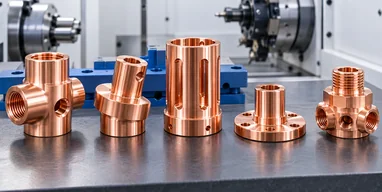
Copper Turn-Mill Parts
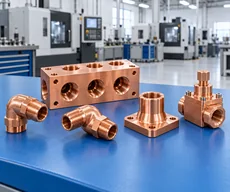
Copper connector bodies, fittings and round components with cross holes, flats, slots or off-axis features.
Best when several feature directions must be controlled in a coordinated route.
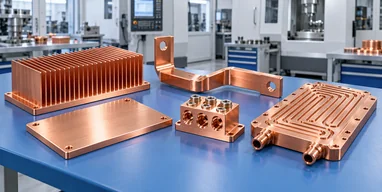
Copper Conductive & Thermal Parts
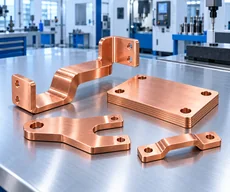
Copper terminals, contact components, heat-transfer parts, cold-plate elements and custom interface parts.
Review conductivity, thermal contact, flatness, finish and assembly requirements together.
Which Process Fits Your Copper CNC Machining Project?
Process selection should follow geometry, copper condition, tolerance, quantity, feature access and final function. Copper parts should not be planned using an aluminum-only cutting assumption.
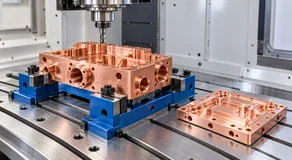
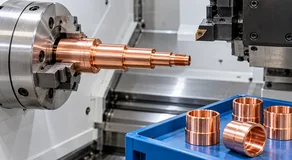
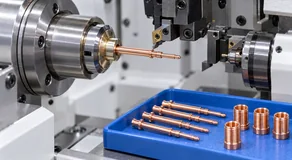
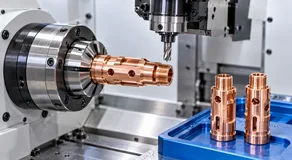
| Part Geometry | Recommended Process | Typical Copper Parts | Main Review Point |
|---|---|---|---|
| Flat faces, pockets and thermal interfaces | CNC Milling | Copper blocks, connector bodies, plates and heat-transfer parts | Tool adhesion, surface finish, flatness and burrs |
| Cylindrical geometry | CNC Turning | Sleeves, pins, inserts, terminals and fittings | Diameter, bore, concentricity, thread and chip removal |
| Small and slender conductive components | Swiss Machining where suitable | Small pins, contacts and sleeves | Bar support, deflection and repeatability |
| Round components with off-axis features | Turn-Mill where suitable | Connector bodies, adapters and ported components | Setup reduction, hole position and feature alignment |
Send the drawing when the process is unclear. LuckyHXS can review the geometry and recommend a Copper CNC Machining route.
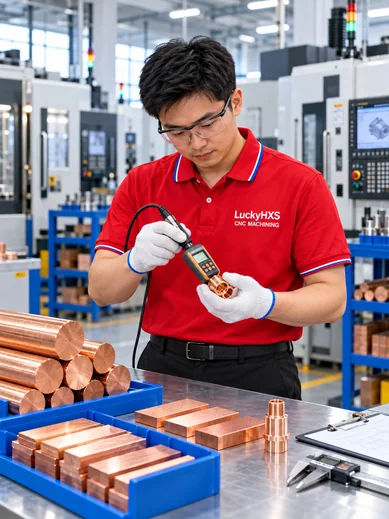
Choose the Copper Material and Condition Before Machining
Copper grade, purity, temper and stock condition can affect conductivity, thermal behavior, hardness, tool response, surface finish and dimensional stability. The full material designation should be taken from the drawing or confirmed during engineering review.
Pure Copper
Often selected for conductivity and thermal-transfer requirements. Softness, ductility, burr formation and handling marks require process attention.
Electrical Copper Grades
Use the exact grade specified by the electrical or thermal application. Conductivity requirements should be confirmed from the project documentation.
C101 / C110 or Similar Specified Grades
These grade names may appear in industry drawings, but availability and suitability must be confirmed for each LuckyHXS project.
Beryllium Copper or Special Copper Alloys
Review only when the drawing, material documentation and project requirements support the specific alloy.
Do not specify only “copper” when the application requires a defined material standard, grade, purity or condition.
Why Copper Is Selected for CNC Components
Copper CNC Machining should be evaluated according to the actual electrical, thermal, mechanical and environmental function of the part.

Electrical Conductivity
Useful for terminals, contacts, connector bodies, busbar-related components and conductive interfaces.

Thermal Conductivity
Useful for heat-transfer components, thermal blocks and cold-plate structures where flatness and contact matter.

Corrosion Resistance
Suitable for selected fittings, connectors and components exposed to the defined environment.

Machined Feature Integration
CNC machining can combine holes, threads, slots, pockets, bores and interface surfaces in one drawing-based part.

Custom Geometry
Useful when a standard copper component cannot provide the required size, hole pattern or assembly relationship.
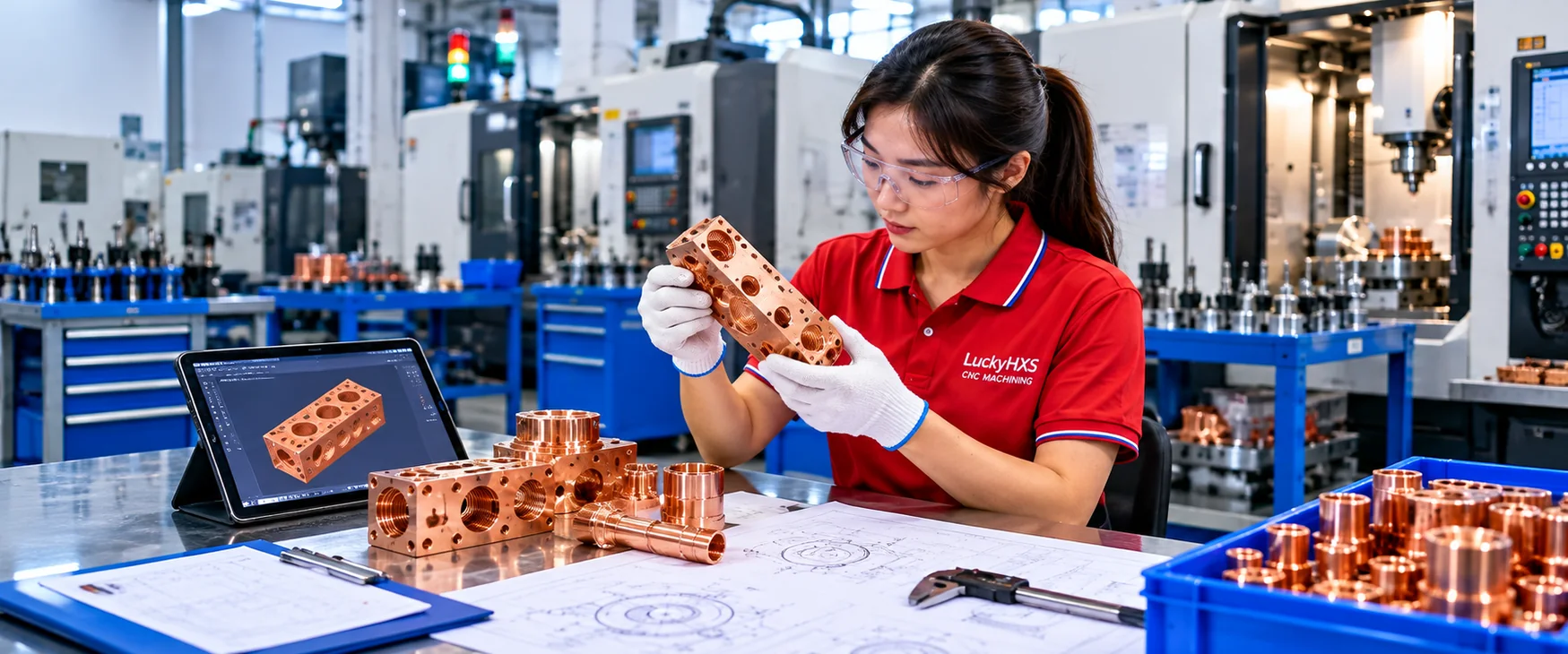
What to Provide for an Accurate Copper CNC Machining Quote
If the copper grade or process is not yet confirmed, send the drawing and describe the end use. The engineering team can review the manufacturing route before quotation.
Common Problems That Affect Copper CNC Machining
Soft and Ductile Material
Copper can deform or mark under excessive clamping. Review workholding and final free-state dimensions.
Built-Up Edge and Tool Adhesion
Copper can adhere to the tool and affect surface quality. Review tool condition, cutting strategy and chip evacuation.
Long or Tangled Chips
Chip control is important around pockets, bores, cross holes and turning features.
Burrs at Holes and Threads
Burrs can interfere with electrical contact, fluid paths, mating parts and fastener installation.
Surface Scratches and Handling Marks
Soft copper surfaces require controlled handling, workholding and packaging.
Finish or Plating Changes Fit
Plating or protective treatment can affect threads, contact areas, bores and thermal interfaces.
Galvanic Contact Risk
If copper contacts dissimilar metals, the project should define the environmental and surface-protection requirements.
CNC Processes for Copper Components
The process is selected around copper behavior, part geometry and final function rather than machine type alone.
Copper CNC Milling
For blocks, plates, connector bodies, pockets, slots, thermal interfaces and multi-face components.
Copper CNC Turning
For sleeves, pins, inserts, terminals, rings, fittings and rotational interface parts.
Copper Swiss Machining
For small-diameter contacts, pins and slender conductive parts where suitable.
Copper Turn-Mill Machining
For round copper parts with cross holes, flats, slots and off-axis features.
Additional operations: Drilling, boring, tapping, internal and external threading, grooving, chamfering, deburring and project-specific secondary operations can be reviewed from the drawing.
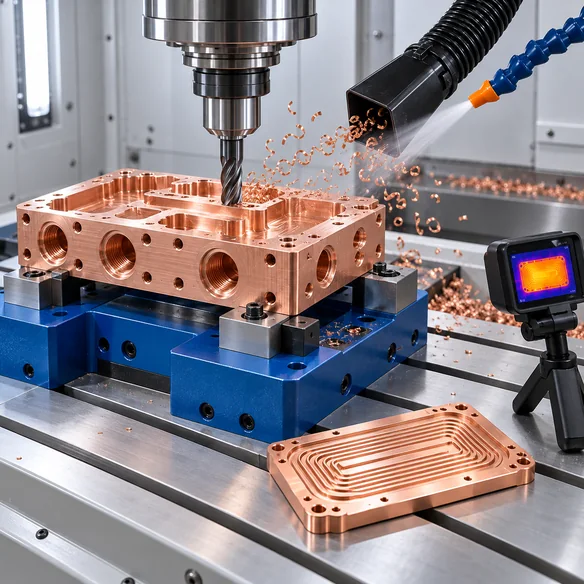
Control Cutting Heat, Chips and Copper Surface Quality
Copper’s softness and ductility can create cutting conditions that differ from aluminum, brass or steel. Successful Copper CNC Machining requires attention to tool sharpness, chip evacuation, workholding, cutting heat and surface protection.
Sharp and Suitable Tooling
Tool condition affects adhesion, burrs, surface marks and dimensional stability.
Chip Evacuation
Long or compacted chips must be cleared from holes, pockets and turning features.
Controlled Workholding
Clamping should hold the part securely without leaving unacceptable marks or deformation.
Thermal Management
Cutting heat and the copper part’s thermal response should be considered in the process plan.
Surface Protection
Finished copper surfaces should be handled and packed according to appearance and contact requirements.
Feature-Specific Cutting
Small holes, threads, slots and thin sections require their own process attention.
Surface Finishing for Copper CNC Machining
Copper surface requirements should be defined together with the part’s electrical, thermal, mechanical and cosmetic function.
As-Machined Copper
Suitable when the natural machined surface is acceptable and no added coating thickness is required.
Polishing
Can improve appearance or contact conditions when the geometry allows controlled treatment.
Nickel Plating
May be reviewed for corrosion protection, wear, appearance or selected electrical requirements.
Tin, Gold or Silver Plating
May be reviewed for specified contact or conductivity requirements when supported by the project.
Protective Packaging
Important where scratches, oxidation, contamination or handling marks must be controlled.
Specify coating type, thickness, masking zones and whether critical dimensions apply before or after finishing.
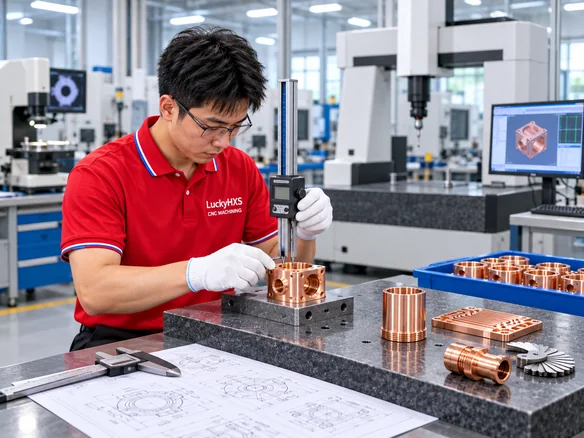
Inspection Planning for Copper CNC Machining
Inspection should match the copper part’s functional requirements. Dimensional accuracy alone may not confirm electrical contact, thermal interface quality, thread condition or burr removal.
Inspection Flow
- Drawing Revision Review
- Copper Grade Confirmation
- First-Article Verification
- In-Process Dimensional Checks
- Hole, Thread and Interface Inspection
- Burr and Chip Review
- Surface and Finish Review
- Final Dimensional Inspection
- Packaging Verification
- Repeat-Batch Verification
Focus areas: ID, OD, flatness, hole position, concentricity, thread fit, contact surfaces, thermal interfaces, burrs, surface marks and final assembly fit.
From Copper Drawing to Repeat Production
Drawing and Material Review
Confirm copper grade, condition, geometry, quantity and critical features.
Function and DFM Review
Review conductivity, thermal contact, tool access, burrs, threads and workholding.
Process and Quotation Plan
Select milling, turning, Swiss or turn-mill processing and confirm project assumptions.
First-Article Production
Machine the first copper components using the approved route.
Inspection and Approval
Check dimensions, interface features, burrs, surface and agreed documents.
Repeat Production
Retain the approved drawing revision, process route, inspection points and packaging requirements.
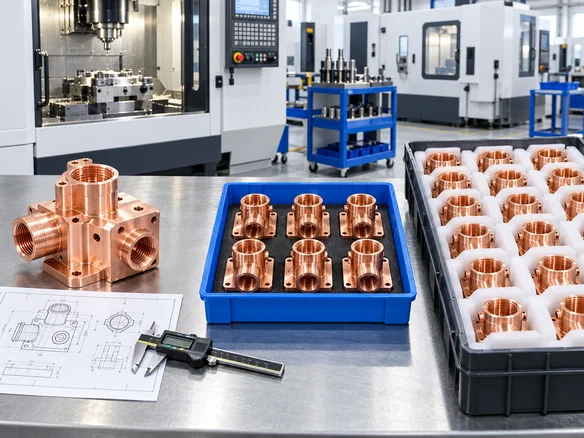
Copper CNC Machining from Prototype to Repeat Orders
Copper CNC Machining supports functional prototypes, low-volume validation and repeat production when the project requires real copper conductivity, thermal behavior or assembly performance.
Prototype
Validate material, geometry, interface fit, burr control and surface condition.
Pilot or Low Volume
Confirm process stability, inspection scope, packaging and finishing requirements.
Repeat Production
Maintain the approved drawing revision, copper material, critical features and repeat-batch controls.
Prototype support can start from one piece depending on the project. Quantity and timing are confirmed after drawing review.
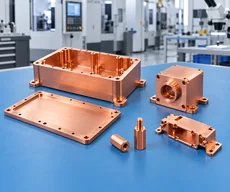
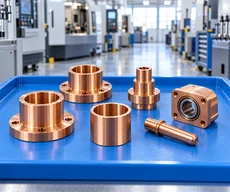
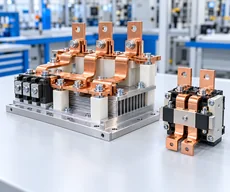
Copper CNC Parts for Industrial Assemblies
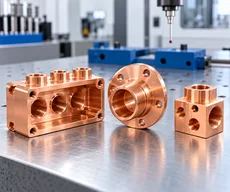
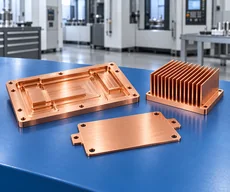
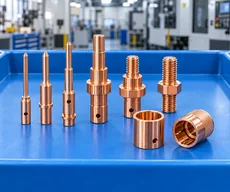
Each copper CNC part is reviewed around its drawing, material requirement, functional interface, surface condition and inspection scope.
Where Copper CNC Machining Is Used
Electrical and Power Components
Terminals, contact bodies, conductive pins and connection components.
Focus: contact geometry, surface condition and material specification.
Thermal Management
Heat-transfer blocks, cold-plate features and thermal interface components.
Focus: flatness, contact area and dimensional stability.
Electronics and RF Components
Connector bodies, shielding-related parts and precision conductive interfaces.
Focus: hole position, threads and surface protection.
Industrial Equipment
Fittings, sleeves, adapters and mechanical copper parts.
Focus: fit, burr removal and handling protection.
Fluid-Control Components
Copper fittings, inserts and ported components where the drawing and environment support the material.
Automation and Machinery
Pins, spacers, bushings and custom interface components.
Focus: repeatability and assembly fit.
Energy Equipment
Conductive and thermal components for project-specific power assemblies.
Focus: material documentation and functional inspection.
Final application suitability depends on the approved drawing, copper grade, environment and customer requirements.
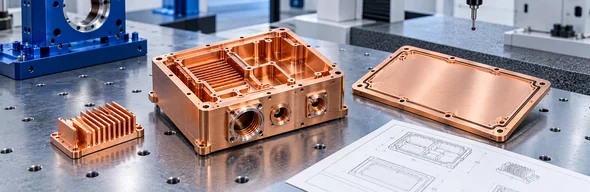
Copper CNC Machining Case and Application Examples
Related LuckyHXS Case: Aerospace Sensor Enclosure
Material: Aluminum 7075
Process: 5-axis CNC milling
Quality focus: CMM inspection and 100% visual inspection
Documented result: Selected critical features were controlled to the project requirement, including features referenced at ±0.004 mm.
Related LuckyHXS Case: EV Charging Control Bracket
Material: Aluminum 6061
Process: 4-axis CNC machining
Quality focus: Dedicated hole-pattern gauge and repeat-production inspection
Documented result: The process was organized around stable hole positioning and repeatable assembly fit.
Copper Application Examples
Copper Connector Body
Application Example
Copper Thermal Interface Block
Application Example
Copper Conductive Pin
Application Example
Copper Threaded Insert
Application Example
Why Choose LuckyHXS for Copper CNC Machining?
Drawing-Based Copper Manufacturing
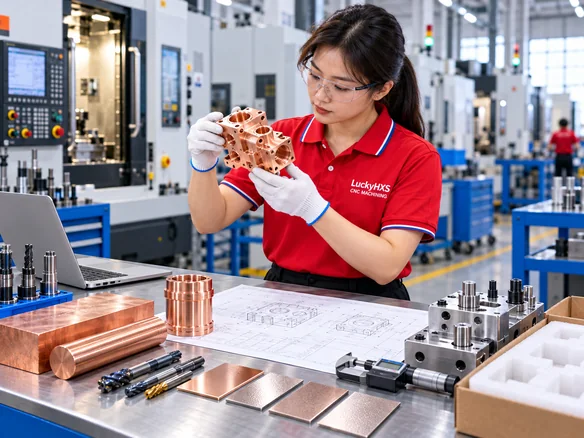
Copper components are reviewed and produced according to the customer’s drawings, CAD files, samples and technical requirements.
Multiple CNC Process Options
Milling, turning, Swiss and turn-mill routes support different copper geometries.
Material and Function Review
Copper grade, electrical or thermal purpose, geometry and finishing requirements are reviewed together.
Burr and Surface Attention
Copper burrs, chip residue and surface marks are considered before parts move to final inspection.
Prototype-to-Production Support
Approved copper prototypes can move into repeat production subject to project review.
Direct Engineering Communication
Material, process, tolerance, finish and inspection questions can be discussed before production.
What Affects Copper CNC Machining Cost and Timing?
Copper CNC Machining is quoted according to the actual work required to produce and verify the part. Copper material cost is only one part of the project scope.
- Copper Grade and Material Condition
- Stock Size and Material Removal
- Part Geometry and Number of Setups
- Tooling and Chip-Control Requirements
- Tolerance, Flatness and Concentricity
- Threads, Holes and Cross Features
- Prototype or Repeat Quantity
- Surface Finish, Plating and Masking
- Inspection Documents and Packaging
Provide both the initial quantity and expected repeat volume when possible. Identify functional surfaces, contact areas, thermal interfaces and dimensions that must be checked after finishing.
How to Choose a Copper CNC Machining Supplier
- Can the supplier confirm the exact copper material and condition?
- Can the supplier explain how copper softness and ductility affect machining?
- Can the supplier select milling, turning, Swiss or turn-mill processing?
- Can the supplier control chips, burrs and tool adhesion?
- Can the supplier protect soft copper surfaces during handling and packaging?
- Can the supplier inspect threads, holes, flatness and functional interfaces?
- Can the supplier coordinate plating or finishing with critical dimensions?
- Can the supplier support prototypes and repeat production?
- Can the supplier handle confidential drawings and project information?
A reliable Copper CNC Machining supplier should connect material, geometry, process, finishing and inspection before production begins.
Copper CNC Machining FAQ
What copper parts can LuckyHXS manufacture?
What copper grades are available?
Is copper difficult to CNC machine?
Can you CNC mill copper heat-transfer or thermal components?
Can you machine copper connectors and terminals?
Can copper parts receive plating or polishing?
Can you make one copper prototype?
What information is needed for a Copper CNC Machining quote?
Start Your Copper CNC Machining Project
Send your drawing, CAD file or project summary to LuckyHXS. We will review the copper material, geometry, quantity, critical features, conductive or thermal function, surface requirements and inspection expectations before confirming the machining route and quotation.
Contact LuckyHXS
admin1@lucky-hxs.com
+86 13342931453
Shenzhen Bao’an Songgang, China