
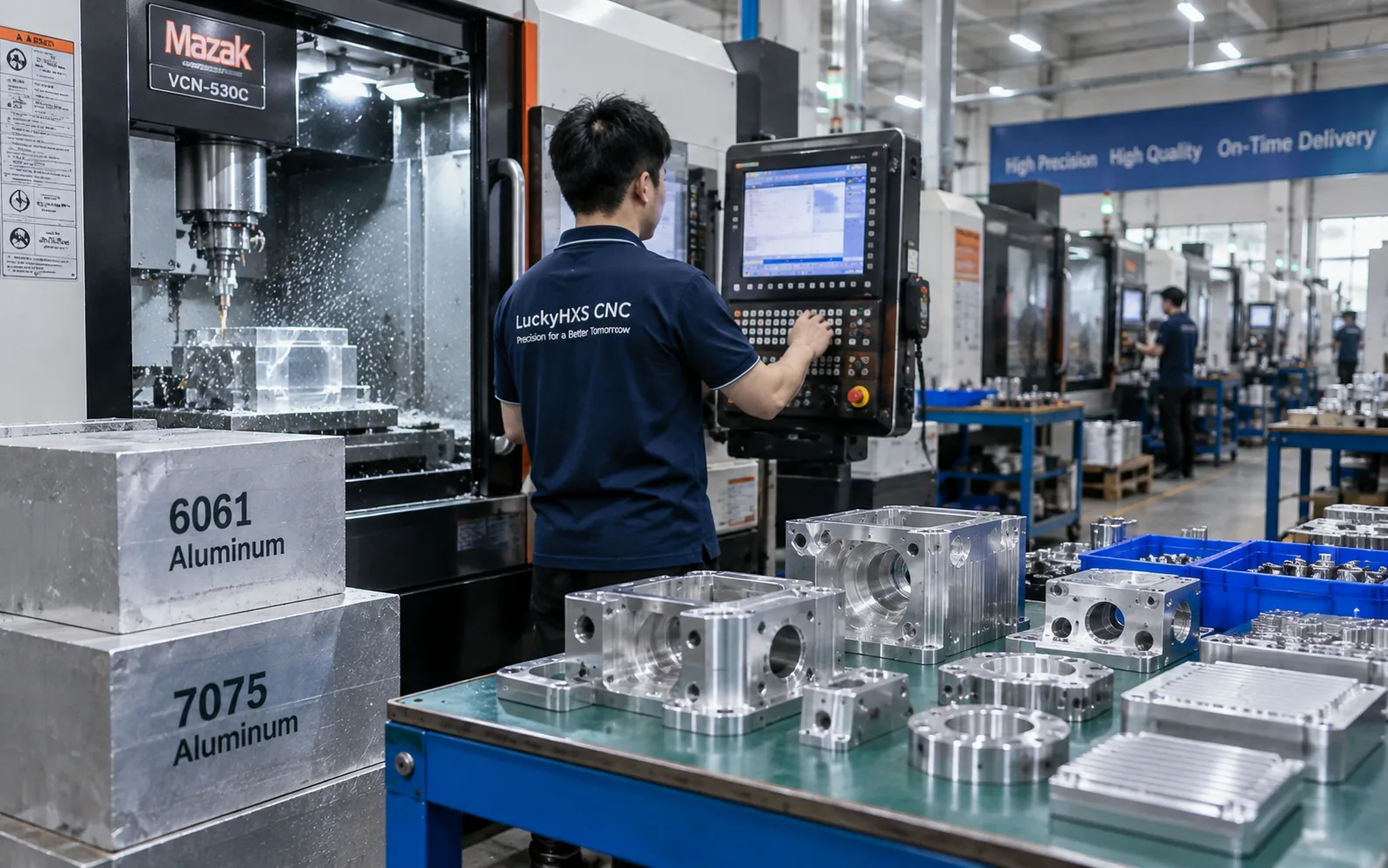
Choosing between 6061 aluminum and 7075 aluminum for CNC machining comes down to strength, machinability, corrosion resistance, finishing needs, and budget. 6061 is the practical all-rounder for many custom aluminum CNC parts, while 7075 is preferred when high strength and fatigue resistance matter most. The right alloy depends on your part geometry, tolerance requirements, operating environment, and production volume.
6061 vs 7075 Aluminum for CNC Machining: Key Differences
6061 vs 7075 for CNC machining compares two widely used aluminum alloys with different priorities. 6061 offers excellent machinability, corrosion resistance, weldability, and lower cost. 7075 provides much higher strength and fatigue resistance, making it suitable for demanding aerospace, robotics, motorsport, and structural CNC machined components.
Alloy Basics for CNC Part Selection
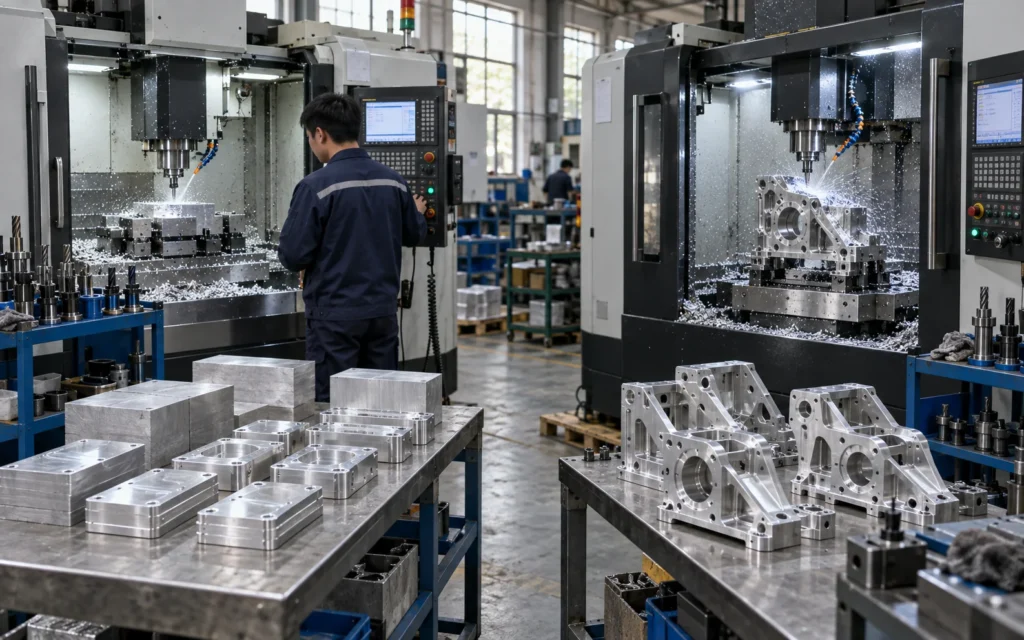
6061 aluminum is commonly selected for brackets, housings, plates, fixtures, enclosures, and general-purpose custom aluminum CNC parts. It machines cleanly, accepts anodizing well, and performs reliably in many industrial environments.
7075 aluminum is a high-strength alloy, typically used when mechanical performance is the main design driver. CNC machined 7075 aluminum parts are common in lightweight structural components, drone frames, aircraft fittings, high-load arms, and precision performance hardware.
Based on our internal data and market analysis, here is the breakdown:
| Factor | 6061 Aluminum CNC Machining | 7075 Aluminum CNC Machining |
|---|---|---|
| Primary advantage | Balanced performance and cost | High strength-to-weight ratio |
| Machinability | Very good | Good, but more demanding |
| Corrosion resistance | Better | Lower unless protected |
| Weldability | Good | Poor to limited |
| Anodizing response | Excellent | Good, but can vary |
| Typical cost | Lower | Higher |
| Best use case | General-purpose CNC parts | High-strength precision parts |
Luckyhxs Pro Tip: I usually recommend 6061 when the drawing does not clearly require extreme strength. If the part is load-bearing, weight-sensitive, or exposed to repeated stress cycles, I review 7075 early in the design stage.
How to Choose Between 6061 and 7075 Aluminum for CNC Machining
Aluminum alloy selection for CNC machining works by matching material properties to the part’s function, tolerance, surface finish, load, corrosion exposure, and cost target. 6061 is usually easier and more economical to machine, while 7075 requires more attention to tool wear, clamping, cutting parameters, and finishing.
Practical Selection Workflow
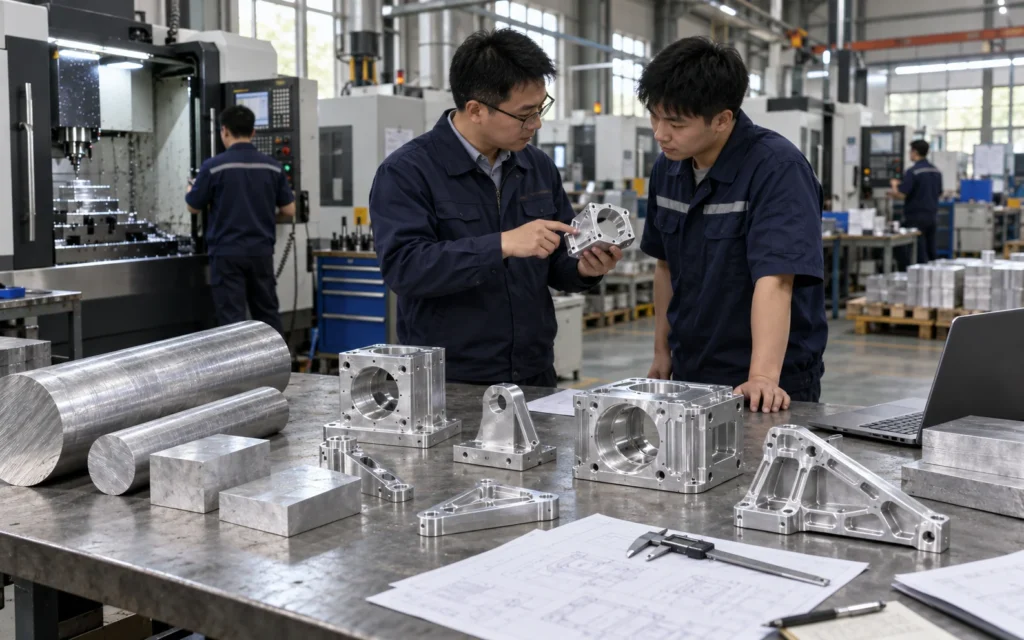
For CNC machining, the alloy does not work alone; it interacts with the entire manufacturing process. Cutting speed, tool geometry, coolant strategy, fixture rigidity, tolerance class, and surface treatment all affect the final part quality.
A practical selection process includes:
- Define the mechanical load
Identify whether the part is cosmetic, structural, high-impact, or fatigue-loaded. - Review the machining geometry
Deep pockets, thin walls, tight tolerances, and complex contours can affect alloy choice. - Check environmental exposure
If corrosion resistance is important, 6061 often has an advantage unless 7075 is anodized or coated. - Confirm finishing requirements
Anodizing, bead blasting, painting, and passivation-like protective treatments should be considered early. - Balance cost and performance
If both alloys meet the design requirement, 6061 usually provides better value. - Prototype before scaling
For custom aluminum CNC parts, a prototype run can reveal distortion, tool marks, burr behavior, and tolerance stability.
Luckyhxs Pro Tip: I always ask customers whether strength is a real engineering requirement or just a preference. Many parts specified as 7075 can be made from 6061 without performance loss, saving both material and machining cost.
Which is better for machining, 6061 or 7075 aluminum?
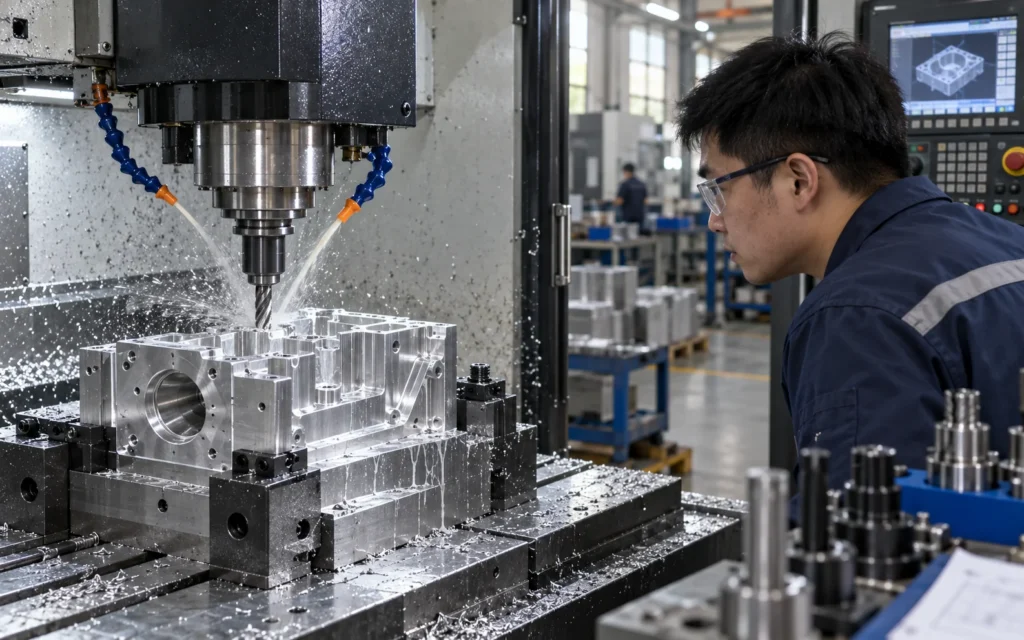
6061 is generally better for machining when ease of production, lower cost, corrosion resistance, and surface finish consistency are the main priorities. 7075 is better when high strength, stiffness, and fatigue performance justify the added material cost and more controlled machining process.
Machining Performance in Real Production
6061 is easier to process in most CNC milling and turning operations. It cuts smoothly, forms manageable chips, and is forgiving during prototyping and production. It is also less prone to unexpected cost increases caused by tool wear or special handling.
7075 machines well compared with many metals, but it is less forgiving than 6061. Because it is stronger and harder, shops may adjust speeds, feeds, tool coatings, and coolant use to maintain dimensional accuracy and surface finish.
Based on our internal data and market analysis, here is the breakdown:
| Machining Consideration | 6061 | 7075 |
|---|---|---|
| Ease of cutting | Excellent | Good |
| Tool wear | Lower | Higher |
| Burr control | Easier | Moderate |
| Thin-wall stability | Good | Good, but stress control matters |
| Surface finish consistency | Very good | Good to very good |
| Production cost | Lower | Higher |
| Best machining choice | General CNC parts | High-strength CNC parts |
Luckyhxs Pro Tip: If your project needs fast delivery, stable pricing, and reliable finishing, I start with 6061. If the part is replacing steel or must carry heavy load while staying lightweight, I evaluate 7075.
Is 7075 harder to machine than 6061?
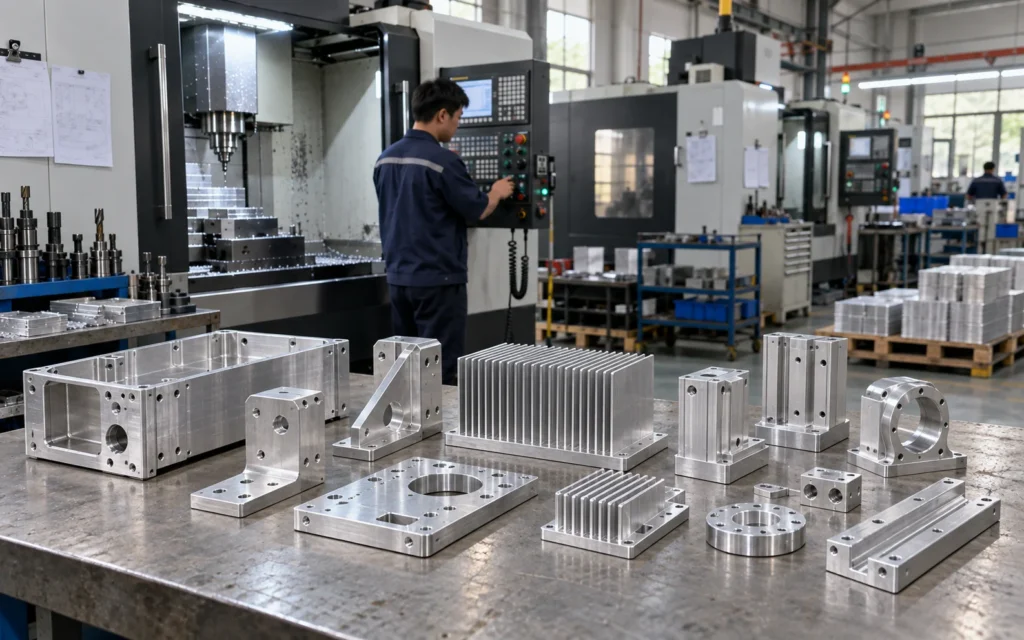
Yes, 7075 is generally harder to machine than 6061 because it has higher strength and hardness. It is still very machinable compared with steels, but it can increase tool wear, require tighter process control, and demand better fixturing for precision CNC machined 7075 aluminum parts.
Why 7075 Requires More Process Control
The difference between 7075 vs 6061 machinability is not extreme, but it is meaningful in production. 7075’s higher strength can increase cutting forces, which affects tool life, part stability, and heat management. For simple geometries, the difference may be minor. For complex parts with thin walls or tight tolerances, it becomes more important.
Key machining considerations for 7075 include:
- Sharper, high-quality carbide tools to reduce cutting force and maintain finish.
- Rigid workholding to prevent vibration and dimensional drift.
- Optimized feeds and speeds to manage heat and tool wear.
- Coolant or air blast strategy to evacuate chips from deep pockets.
- Stress-relief planning for thin or heavily machined parts.
- Deburring control to protect precision edges and mating surfaces.
6061 is more forgiving if the geometry changes, if production volume increases, or if the part requires multiple finishing steps after machining.
Luckyhxs Pro Tip: When machining 7075, I pay special attention to thin walls, long reach tools, and tight flatness requirements. Those are the areas where cost and risk can increase quickly.
Which aluminum is stronger, 6061 or 7075?
7075 aluminum is significantly stronger than 6061, especially in tensile strength, yield strength, and fatigue resistance. 6061 still offers good mechanical performance for many CNC parts, but 7075 is the stronger choice when lightweight structural performance is the main design requirement.
Strength Difference and Application Impact
The strength gap between 6061 and 7075 is one of the main reasons engineers compare these alloys. 7075-T6 can approach or exceed the strength of some steels while remaining much lighter. This makes it valuable for aerospace, defense, high-performance vehicles, and robotics.
6061-T6 is not weak. It is strong enough for many frames, mounts, fixtures, housings, and machine components. The key is not choosing the strongest alloy automatically, but choosing the alloy that meets the required safety factor.
Based on our internal data and market analysis, here is the breakdown:
| Property | 6061-T6 Aluminum | 7075-T6 Aluminum |
|---|---|---|
| Tensile strength | Moderate to high | Very high |
| Yield strength | Moderate | Very high |
| Fatigue resistance | Good | Excellent |
| Hardness | Lower | Higher |
| Impact on machining | Easier | More demanding |
| Best fit | Balanced structural parts | High-load lightweight parts |
Luckyhxs Pro Tip: I do not choose 7075 only because it is stronger. I choose it when the part actually needs that strength, because unnecessary strength can add cost without improving the final product.
Key Features & Comparison
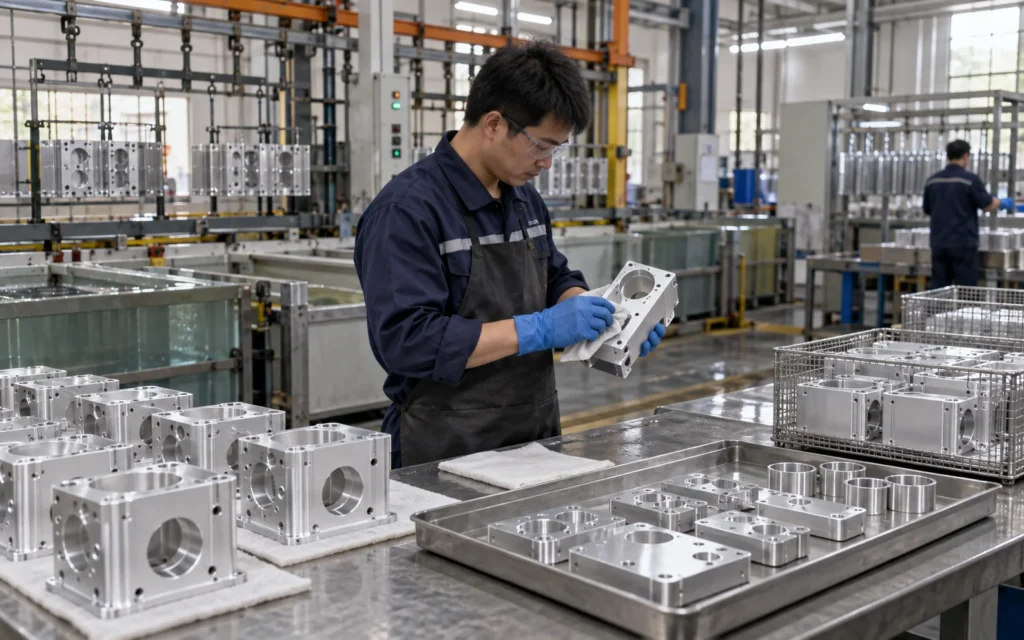
6061 and 7075 are both excellent CNC machining aluminum alloys, but they serve different engineering priorities. 6061 is the better all-purpose option for cost, corrosion resistance, weldability, and finishing. 7075 is the better performance option for strength-critical CNC machined aluminum parts.
Side-by-Side Engineering Comparison
When selecting 6061 or 7075 aluminum, it is useful to compare the practical manufacturing and performance factors together rather than looking at strength alone. The best material should satisfy design requirements without overcomplicating production.
Based on our internal data and market analysis, here is the breakdown:
| Feature | 6061 Aluminum | 7075 Aluminum | Selection Guidance |
|---|---|---|---|
| CNC machinability | Excellent | Good | Choose 6061 for smoother, more economical production |
| Strength | Good | Excellent | Choose 7075 for high-load structural parts |
| Corrosion resistance | Better | Lower | Choose 6061 for outdoor or humid environments |
| Weldability | Good | Poor | Choose 6061 if welding is required |
| Anodizing | Excellent | Good | Both can be anodized, but 6061 is more predictable |
| Cost | Lower | Higher | Choose 6061 for cost-sensitive production |
| Weight | Lightweight | Lightweight | Similar density; strength-to-weight favors 7075 |
| Fatigue resistance | Good | Excellent | Choose 7075 for repeated stress or vibration |
| Typical parts | Housings, brackets, plates, fixtures | Aerospace parts, arms, links, high-strength mounts | Match alloy to load and environment |
Luckyhxs Pro Tip: For most custom aluminum CNC parts, 6061 is the default starting point. I move to 7075 only when the drawing, load case, or product environment clearly supports the upgrade.
Cost & Buying Factors
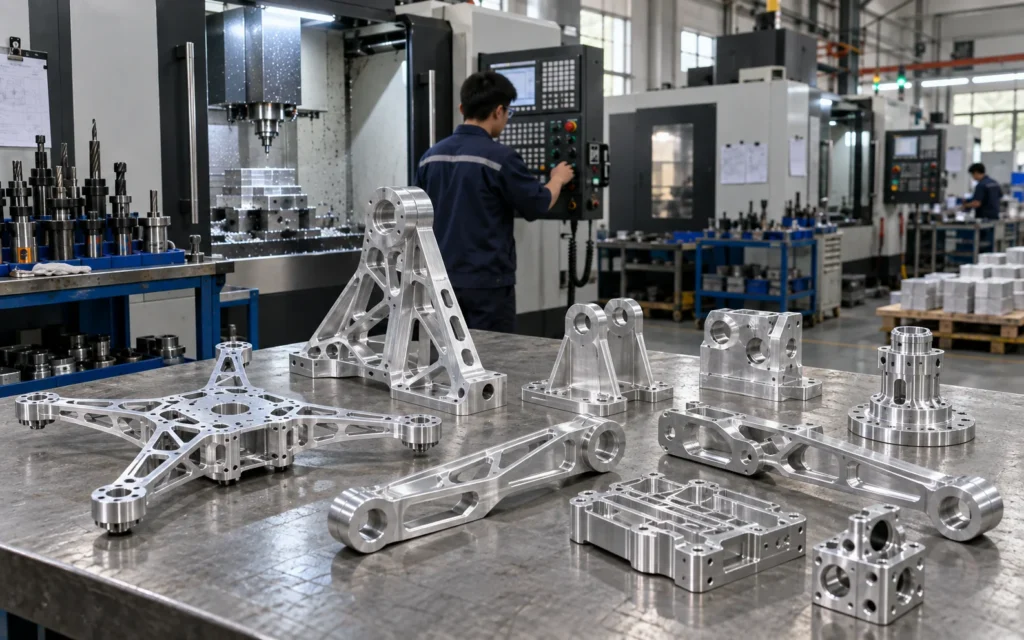
6061 is usually more cost-effective than 7075 because the raw material is less expensive, easier to source, and simpler to machine. 7075 costs more but can be the better investment when it reduces weight, increases part life, or replaces heavier materials in demanding applications.
What Affects the Final CNC Part Price
Material price is only one part of the total cost. The final quote for CNC machined 6061 aluminum parts or CNC machined 7075 aluminum parts also depends on geometry, tolerance, finish, batch size, inspection needs, and delivery schedule.
Important buying factors include:
- Raw material availability
6061 is widely available in plate, bar, tube, and extrusion forms. 7075 may require more planning for specific sizes. - Part complexity
Deep pockets, thin walls, tight radii, and multi-axis machining features increase machining time. - Tolerance requirements
Tight tolerances require more careful process control, inspection, and sometimes additional setups. - Surface finishing
Anodizing, hard anodizing, bead blasting, polishing, and coating affect lead time and cost. - Order quantity
Higher volumes reduce per-part setup cost, especially for repeat production. - Quality documentation
Material certificates, inspection reports, and special traceability requirements can influence pricing.
Based on our internal data and market analysis, here is the breakdown:
| Buying Factor | 6061 Cost Impact | 7075 Cost Impact |
|---|---|---|
| Raw material | Lower | Higher |
| Machining time | Lower to moderate | Moderate to higher |
| Tooling wear | Lower | Higher |
| Finishing cost | Predictable | Moderate, depending on finish |
| Lead time | Usually shorter | May be longer |
| Best budget choice | 6061 | Only when performance justifies cost |
Luckyhxs Pro Tip: If you want the most accurate quote, send the 3D CAD file, 2D drawing, material preference, finish requirement, tolerance notes, and expected annual quantity. That lets us identify whether 6061 or 7075 gives the best total value.
Conclusion
Choose 6061 for most CNC machined aluminum parts when you need reliable machinability, corrosion resistance, good finishing, weldability, and cost efficiency. Choose 7075 when strength, fatigue resistance, and lightweight structural performance are more important than price and machining simplicity.
Final Recommendation for Alloy Selection
The best choice is not simply 6061 or 7075 aluminum; it is the alloy that matches your part’s real operating conditions. For general industrial components, enclosures, fixtures, plates, and brackets, 6061 is often the smarter and more economical choice. For high-load, high-performance, or weight-critical applications, 7075 can deliver superior results.
A simple decision guide:
- Choose 6061 if you need:
- Lower cost
- Easier machining
- Better corrosion resistance
- Good anodizing results
- Weldability
- General-purpose CNC performance
- Choose 7075 if you need:
- Maximum strength
- Better fatigue resistance
- High strength-to-weight ratio
- Structural performance
- Aerospace, robotics, or motorsport-grade parts
- Ask for engineering support if:
- The part has thin walls or tight tolerances
- The application involves vibration or repeated loading
- You are unsure whether 6061 is strong enough
- You need cost optimization for production runs
Luckyhxs can support aluminum alloy selection for CNC machining, prototype validation, and production of custom aluminum CNC parts in both 6061 and 7075.
Luckyhxs Pro Tip: My final advice is simple: do not pay for 7075 unless the part truly needs it. A well-designed 6061 part often performs better than an over-specified 7075 part with unnecessary cost and manufacturing complexity.