
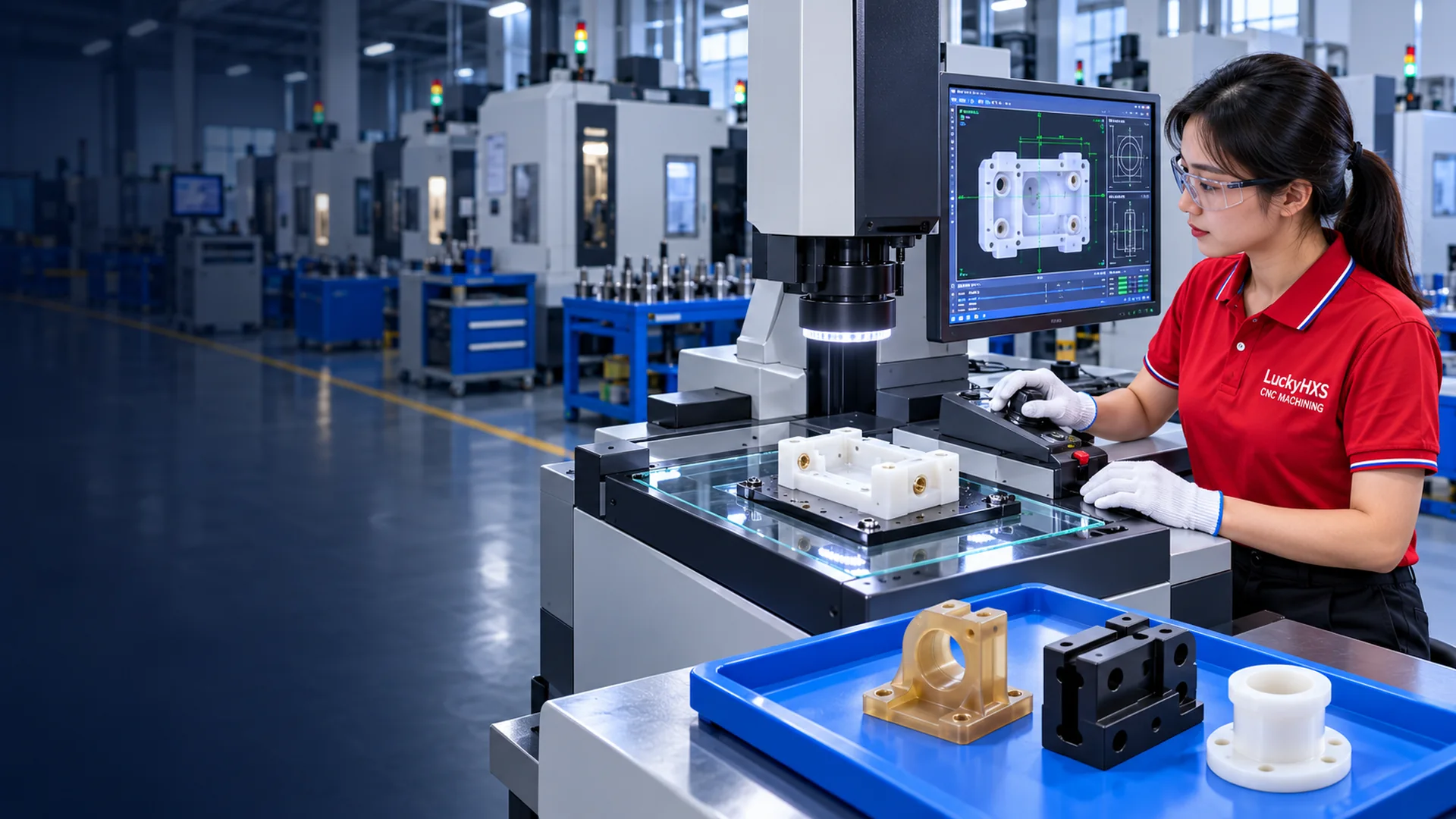
Plastic Manufacturing Products Manufacturer for Custom CNC Parts
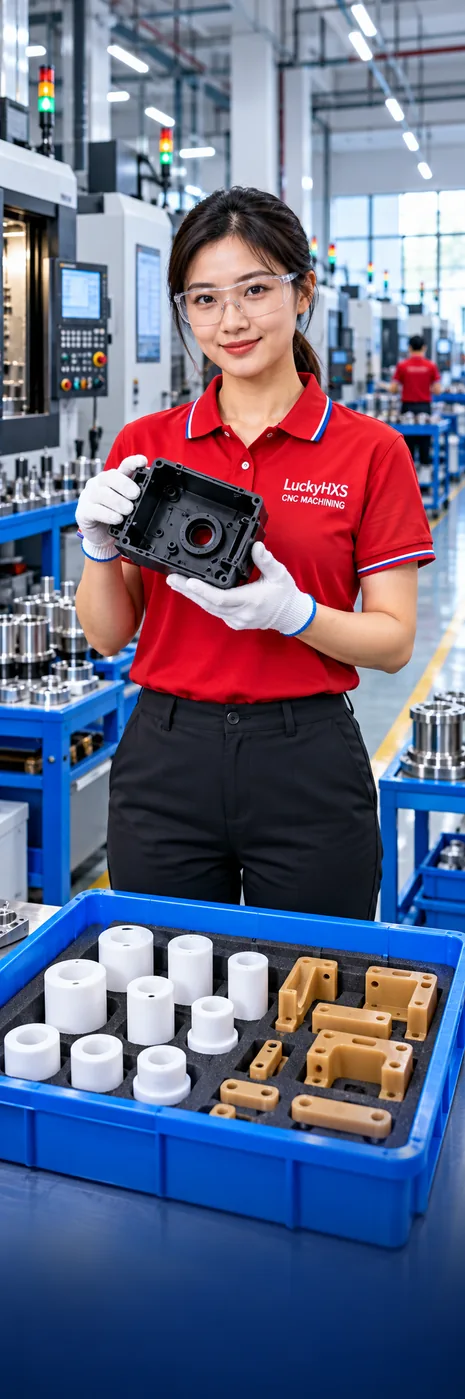
LuckyHXS manufactures plastic manufacturing products from customer drawings, CAD files, samples and technical requirements. We machine POM, PEEK, PTFE, nylon, ABS and selected engineering plastics into housings, bushings, sleeves, spacers, insulators, guide parts, fixtures and other custom components.
- Plastic CNC milling, turning and Swiss machining
- Prototype, low-volume and repeat-production support
- Material, environment, fit and inspection review before machining
Plastic Manufacturing Products at a Glance
20+
Years of CNC Experience
153
Precision Machines
3,100
m² Facility Approx.
160
Team Members Approx.
From 1
Prototype Quantities
±0.01mm
Tolerance Reference
Actual capability, tolerance, timing and inspection scope depend on the plastic grade, part geometry, environment and drawing requirements.
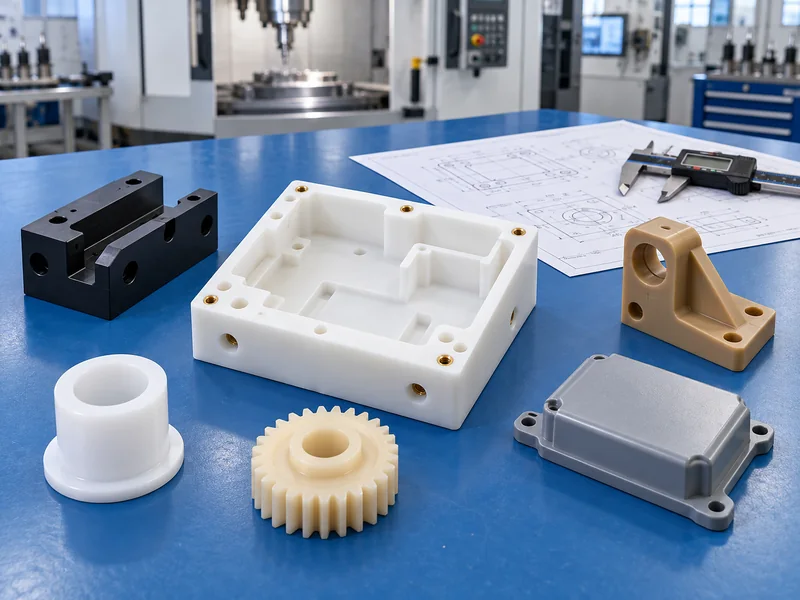
What Are Plastic Manufacturing Products?
Plastic manufacturing products can refer to many different processes, from molded consumer goods to industrial components. This page focuses on custom engineering-plastic parts machined from plastic plate, rod, block, tube or other suitable stock.
Unlike standard catalog products, these CNC machined plastic parts are defined by the buyer’s drawing, material grade, operating environment, dimensions, fits, threads, surface requirements, quantity and inspection needs.
Why CNC Machining Is Used for Custom Plastic Parts
- No dedicated mold is required for each custom geometry
- Suitable for prototypes and low-volume validation
- Useful when the exact properties of solid engineering-plastic stock are required
- Supports precision bores, threads, pockets, grooves and multi-face features
- Can move from samples to repeat OEM production after approval
Custom Plastic Manufacturing Products We Machine
The right plastic manufacturing products route depends on the material, geometry, operating environment, quantity and functional fit.
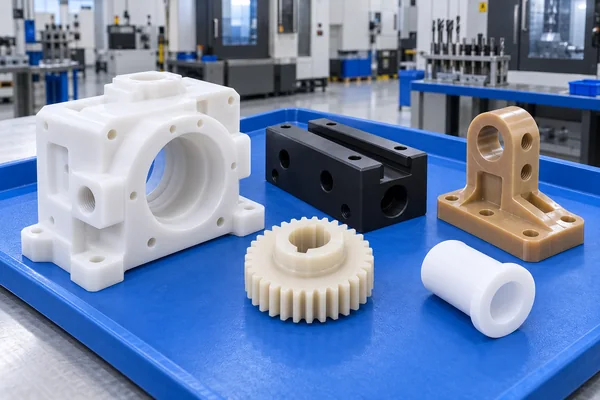
Custom Plastic CNC Machined Parts
Made-to-drawing engineering-plastic components for industrial, electronic, automation and equipment assemblies.
Selection cue: Use this route when the project combines several plastic geometries or requires one coordinated engineering review.
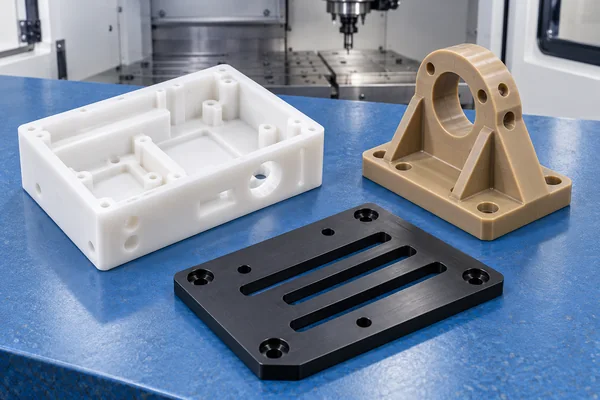
Plastic CNC Milled Parts
Plastic housings, covers, plates, fixtures, inspection nests, pockets and multi-face components.
Selection cue: Best for flat surfaces, cavities, slots, mounting features and complex prismatic geometry.
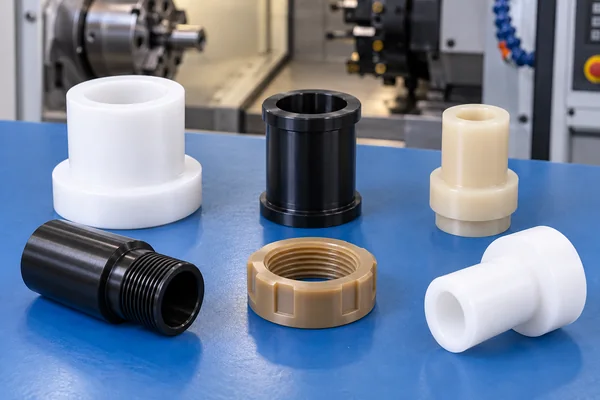
Plastic CNC Turned Parts
Plastic bushings, sleeves, spacers, pins, rollers, rings and cylindrical components.
Selection cue: Best for round parts requiring controlled ID, OD, concentricity, runout or thread features.
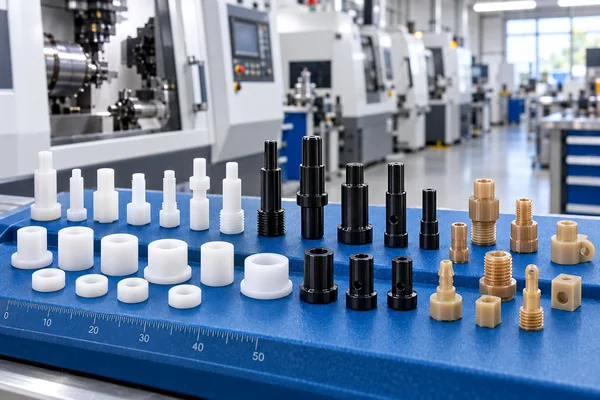
Swiss-Machined Plastic Parts
Small-diameter and slender plastic pins, spacers, guides and precision components where suitable.
Selection cue: Best when small-part support, stability and repeatability are important.
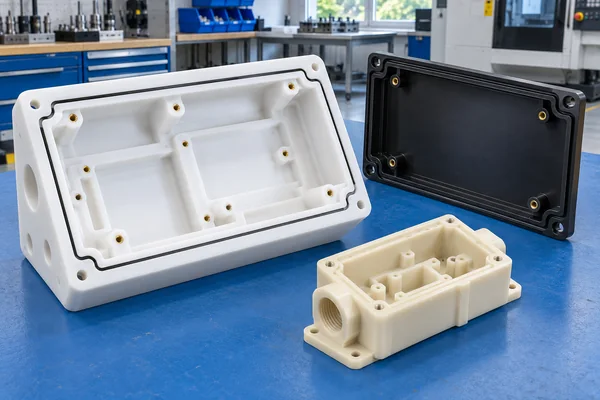
Plastic Housings and Enclosures
Electrical-isolation housings, sensor covers, protective shells and equipment enclosures.
Selection cue: Review thin walls, flatness, pockets, mounting interfaces and environmental exposure.
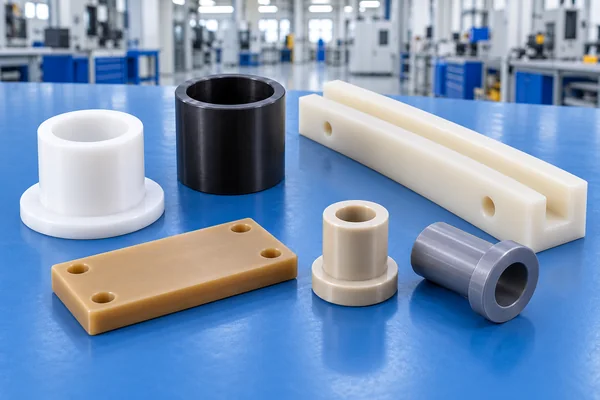
Plastic Bushings, Sleeves and Guide Parts
Low-friction bushings, wear sleeves, guide rings, spacers, rollers and non-marring components.
Selection cue: Review material behavior, moisture, load, temperature, friction and functional fit.
Which CNC Process Fits Your Plastic Manufacturing Products?
Plastic process selection should follow the material grade, geometry, wall thickness, tolerance, quantity and functional features. The same plastic grade may require a different route for a housing, sleeve or precision pin.
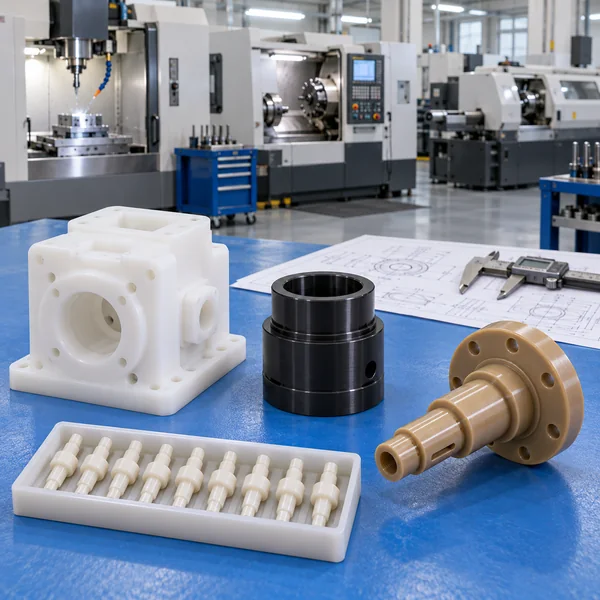
Send the drawing when the process is unclear. LuckyHXS can review the plastic manufacturing products requirements before recommending a route.
| Part Geometry | Recommended Process | Typical Parts | Main Review Point |
|---|---|---|---|
| Flat faces, pockets, cavities and multi-face geometry | CNC Milling | Housings, covers, fixtures and inspection nests | Wall thickness, clamping, tool access and flatness |
| Cylindrical geometry | CNC Turning | Bushings, sleeves, spacers, rings and rollers | ID/OD fit, concentricity, roundness and heat control |
| Small and slender geometry | Swiss Machining where suitable | Pins, small guides and precision spacers | Bar support, deflection and repeatability |
| Round base with off-axis features | Turn-Mill where suitable | Complex adapters and ported components | Setup reduction and feature alignment |
| Simple rotational repeat parts | Automatic Lathe where suitable | Spacers, pins and basic cylindrical parts | Quantity, cycle time and functional tolerance |
Engineering Plastics for Plastic Manufacturing Products
Material selection affects friction, wear, moisture behavior, chemical resistance, temperature stability, dimensional change, strength and machining response.
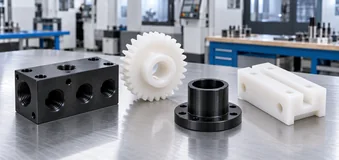
POM / Acetal
Low moisture absorption, good dimensional stability, low friction and wear resistance. Common for bushings, sleeves, pins, spacers and fixtures. Watch for internal stress and asymmetric-machining distortion.

Nylon / PA
Tough and wear-resistant for guides, rollers, wear pads and mechanical components. Moisture absorption can affect dimensions, so the operating humidity and measurement condition should be confirmed.
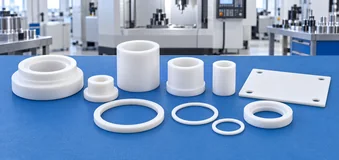
PTFE
Very low friction and strong chemical resistance. Creep, softness and deformation under load must be considered for fits, threads and thin walls.
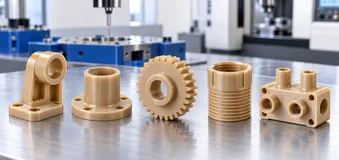
PEEK
High-performance engineering plastic for demanding temperature, chemical and mechanical requirements where the specific grade is confirmed.
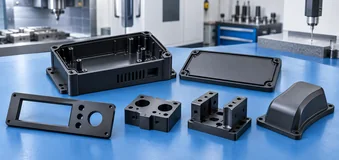
ABS
Useful for selected housings, covers, fixtures and prototypes where impact resistance and machinability are suitable.
Note: Final material grade and availability are confirmed during drawing review and quotation.
Choose Plastic Manufacturing Products by Function

Low-Friction Motion
Consider POM, PTFE or another suitable grade for bushings, sleeves, guides and wear surfaces.

Moisture-Exposed Components
Review nylon moisture absorption, dimensional stability and the actual operating environment.

Chemical-Contact Components
Confirm chemical exposure, temperature and pressure before selecting PTFE, PEEK or another suitable material.

Electrical Isolation
Consider suitable engineering plastics for non-conductive spacers, mounts, covers and insulators.

High-Temperature Requirements
Confirm the actual temperature cycle and grade before selecting PEEK or other high-performance material.

Impact and Mechanical Loads
Review strength, toughness, wall thickness, clamping and functional load together.
Material selection should be based on the actual operating environment rather than the plastic name alone.
What to Provide for an Accurate Plastic Manufacturing Products Quote
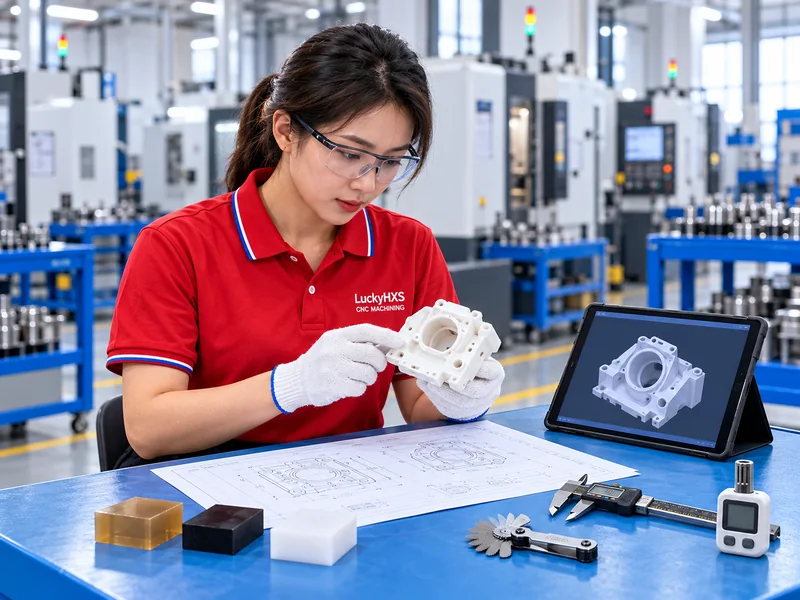
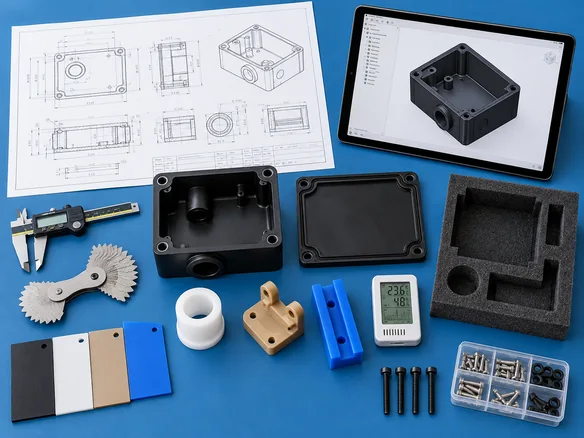
Plastic components can change dimensionally with temperature, moisture, load, time and clamping. A complete RFQ helps the engineering team review these conditions before machining.
- Latest 2D drawing revision
- 3D STEP, STP or IGES file where available
- Exact plastic material and grade
- Operating temperature
- Humidity or moisture exposure
- Chemical exposure
- Load, friction or wear requirements
- Critical dimensions, fits and GD&T
- Thread, press-fit or insert requirements
- Surface finish and cleanliness requirements
- Prototype and production quantities
- Required inspection documents
Common Problems That Affect Plastic Manufacturing Products
Material and Environment Mismatch
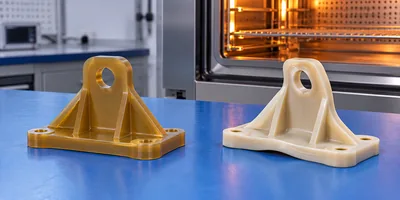
Different polymers respond differently to temperature, humidity, load and chemicals. Confirm the real service environment before machining.
Internal Stress and Thin-Wall Warping
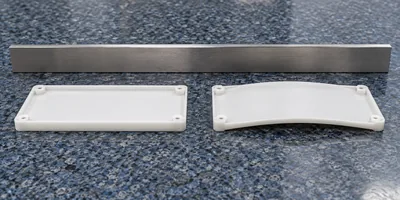
Plastic stock can release internal stress during asymmetric material removal. Review wall thickness, clamping and machining sequence.
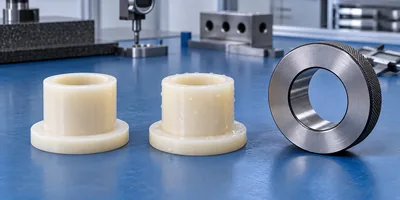
Moisture-Related Dimensional Change
Nylon and other moisture-sensitive materials may change dimensionally. Define measurement and operating conditions.
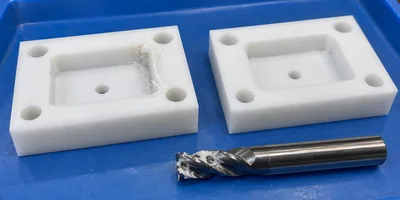
Melting and Built-Up Edge
Cutting heat and tool condition can damage the surface or change dimensions. Review cutting strategy and tool sharpness.
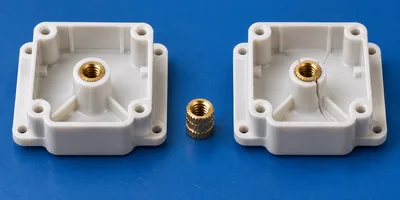
Thread and Press-Fit Failure
Threads, inserts and press fits require material-specific design and inspection.
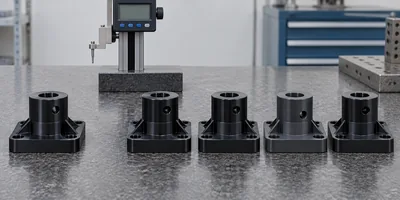
Prototype-to-Batch Drift
Material lots, tool wear, moisture condition, cutting heat and deburring can affect repeat production.
Design Plastic Manufacturing Products Around Material Behavior
Metal-part design rules cannot always be applied directly to engineering plastics. Review the following details before finalizing the drawing.
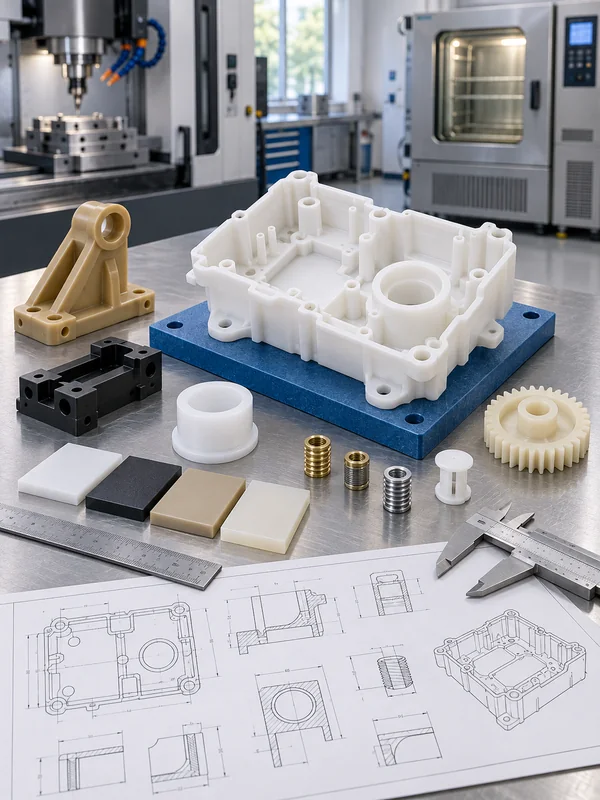
Thin Walls
Thin sections can deform during clamping and change after release.
Deep Pockets
Deep narrow cavities increase tool deflection and heat.
Small Bores
Review tool access, chip removal and bore inspection.
Threads
Confirm thread class, engagement length, entry chamfer and installation method.
Press Fits
Define the mating material, interference or clearance and operating temperature.
Sharp Corners
Use practical radii where possible to reduce tool stress and surface damage.
Clamping Areas
Avoid clamping directly on surfaces that control final fit.
Post-Unclamp Measurement
Measure deformation-sensitive parts after clamping force is removed.
CNC Processes for Plastic Manufacturing Products
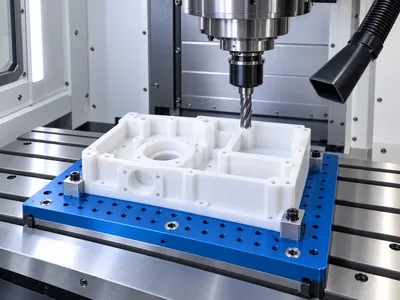
CNC Milling
For housings, fixtures, covers, plates, pockets, slots and multi-face parts.
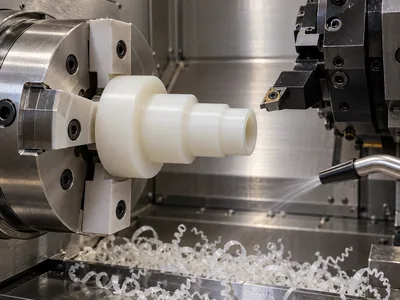
CNC Turning
For bushings, sleeves, spacers, rings, rollers and cylindrical guide components.
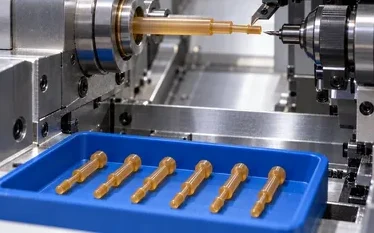
Swiss Machining
For small-diameter and slender parts where suitable.
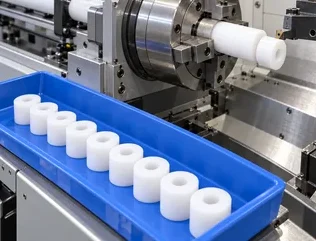
Automatic Lathe Machining
For simple rotational parts when quantity and geometry support the route.
Additional operations: Drilling, boring, threading, grooving, cross drilling, deburring and selected turn-mill operations can be reviewed from the drawing.
The machining route is selected around plastic behavior and final function, not simply around machine availability.
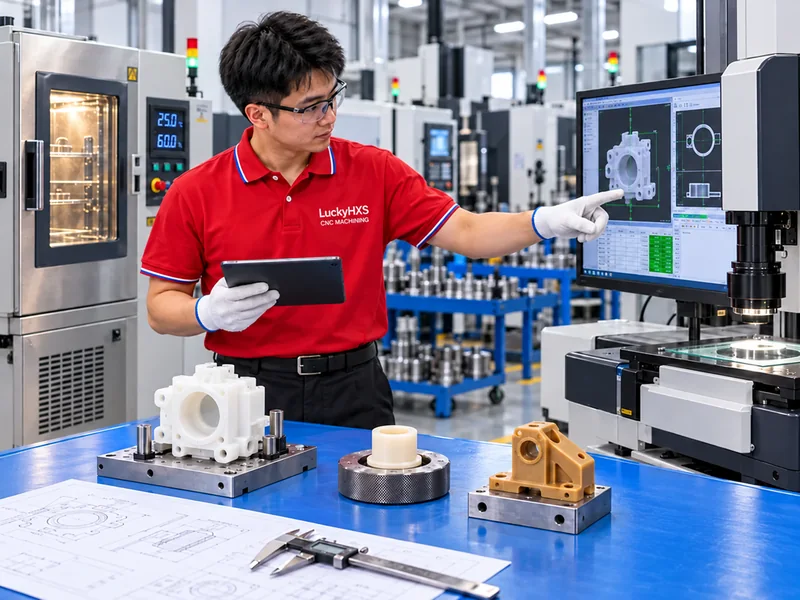
Inspect Plastic Parts Around Their Real Functional Condition
Plastic manufacturing products should be measured under conditions that reflect how the part must fit and operate. A dimension measured while clamped may change after the force is removed.
Focus areas: ID, OD, flatness, roundness, hole position, wall thickness, thread quality, burr removal, surface finish and final assembly fit.
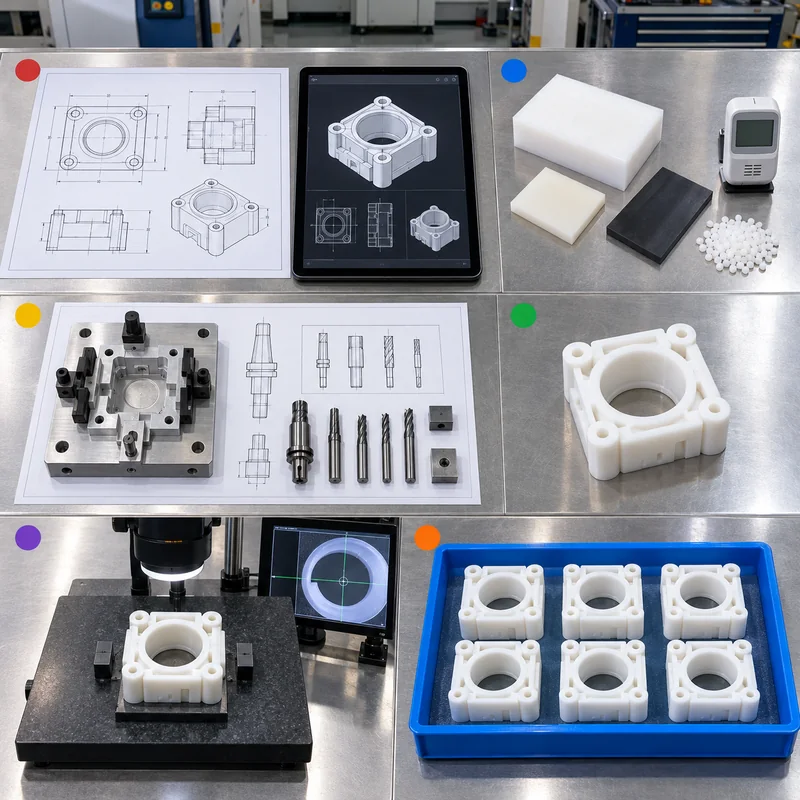
From Plastic Drawing to Repeat Production
Drawing and Revision Review
Confirm material, grade, geometry, quantity and critical features.
Environment Review
Discuss temperature, humidity, chemicals, load, friction and wear.
DFM and Process Planning
Review wall thickness, clamping, tool access, heat and post-unclamp dimensions.
First-Article Production
Machine the initial plastic components using the agreed route.
Inspection and Fit Review
Check dimensions, threads, burrs, surface and functional interfaces.
Repeat Production
Retain approved requirements, inspection points and process controls.
Plastic Manufacturing Products from Prototype to Repeat Orders
CNC machining is useful when a plastic component must be validated in the intended engineering material before a production decision is made.
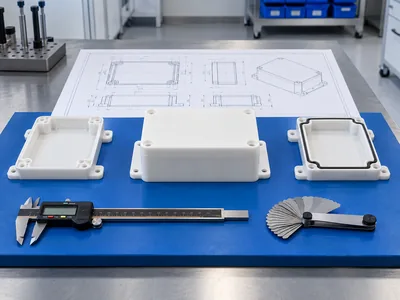
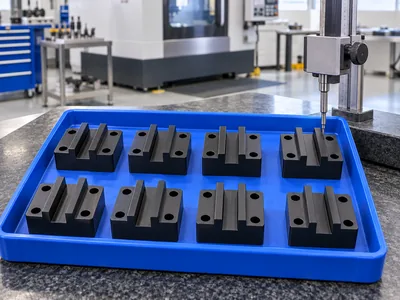
Prototype Validation
Confirm geometry, material, fit, threads, surface and operating assumptions.
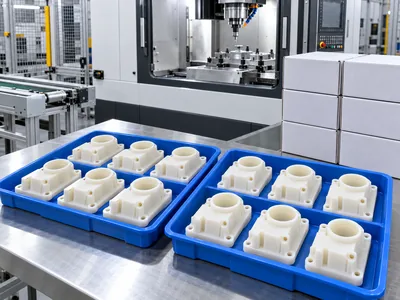
Low-Volume Production
Review process stability, measurement condition and packaging requirements.
Repeat OEM Production
Maintain the approved drawing revision, material, inspection points and batch requirements.
Note: Prototype support can start from one piece depending on the project. Quantity and timing are confirmed after drawing review.
Where Plastic Manufacturing Products Are Used
Industrial Automation
Guide sleeves, low-friction bushings and locating components.
Focus: wear, fit and dimensional stability.
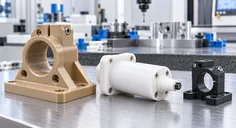
Sensors and Instruments
Sensor housings, insulating parts and precision covers.
Focus: thin walls, fit and electrical isolation.
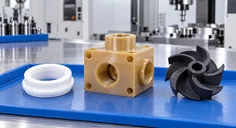
Fluid Control
Plastic manifolds, valve-related components and chemical-resistant interfaces.
Focus: internal burrs and chemical exposure.
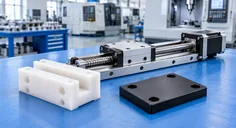
Fixtures and Tooling
Inspection nests, non-marring fixtures and locating blocks.
Focus: datum flatness and repeatability.
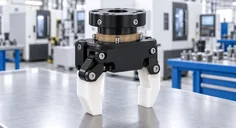
Robotics
Lightweight spacers, guides and wear components.
Focus: mass, friction and thread strength.
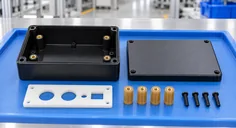
Electronics
Isolation mounts, housings and protective covers.
Focus: non-conductivity, fit and surface quality.
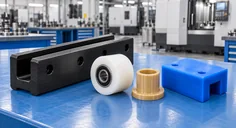
Industrial Machinery
Wear pads, rollers, sleeves and guide components.
Focus: load, friction and moisture behavior.
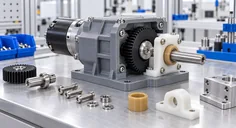
Equipment Assemblies
Custom covers, spacers and interface components.
Focus: appearance, protection and assembly fit.
Plastic Manufacturing Products for Custom Assemblies
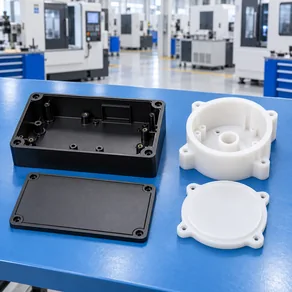
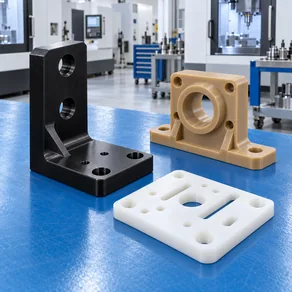
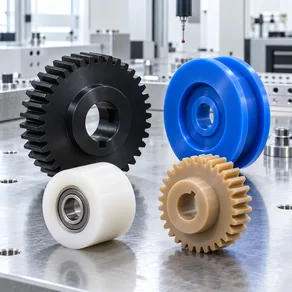
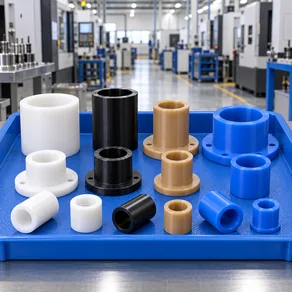
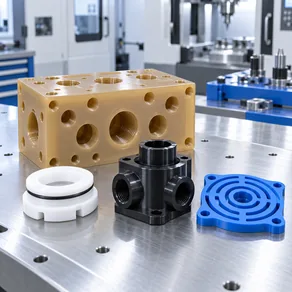
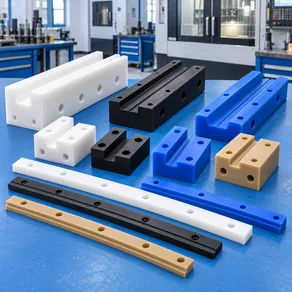
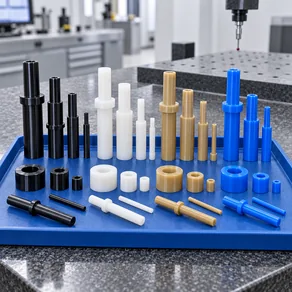
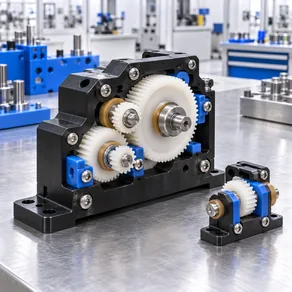
A complete assembly may combine plastic housings, bushings, sleeves, spacers, guides, fixtures and insulation components. LuckyHXS can review the part family together so material, fit and inspection requirements remain coordinated.
Related LuckyHXS Manufacturing Cases
These published cases demonstrate LuckyHXS engineering review, process planning and inspection control. They are aluminum cases and must not be presented as plastic customer cases.
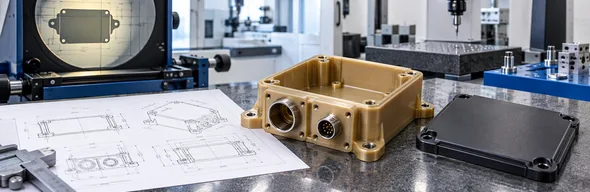
Anonymized Customer Case: Aerospace Sensor Enclosure
- Material: Aluminum 7075
- Process: 5-axis CNC milling
- Quality focus: CMM inspection and 100% visual inspection
Documented result: Selected critical features were controlled to the project requirement, including features referenced at ±0.004 mm.
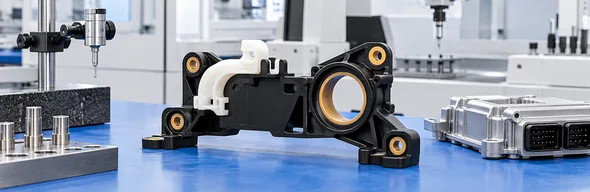
Anonymized Customer Case: EV Charging Control Bracket
- Material: Aluminum 6061
- Process: 4-axis CNC machining
- Quality focus: Dedicated hole-pattern gauge and repeat-production inspection
Documented result: The manufacturing route was organized around stable hole positioning and repeatable assembly fit.
Plastic Application Examples
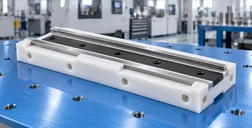
POM Guide Sleeve for Automation
Application Example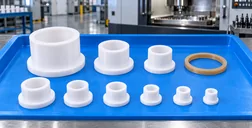
PTFE Low-Friction Sleeve
Application Example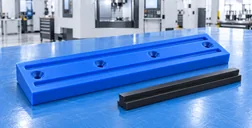
Nylon Wear Pad
Application Example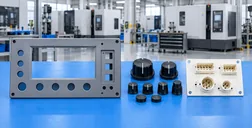
PEEK Chemical-Resistant Component
Application Example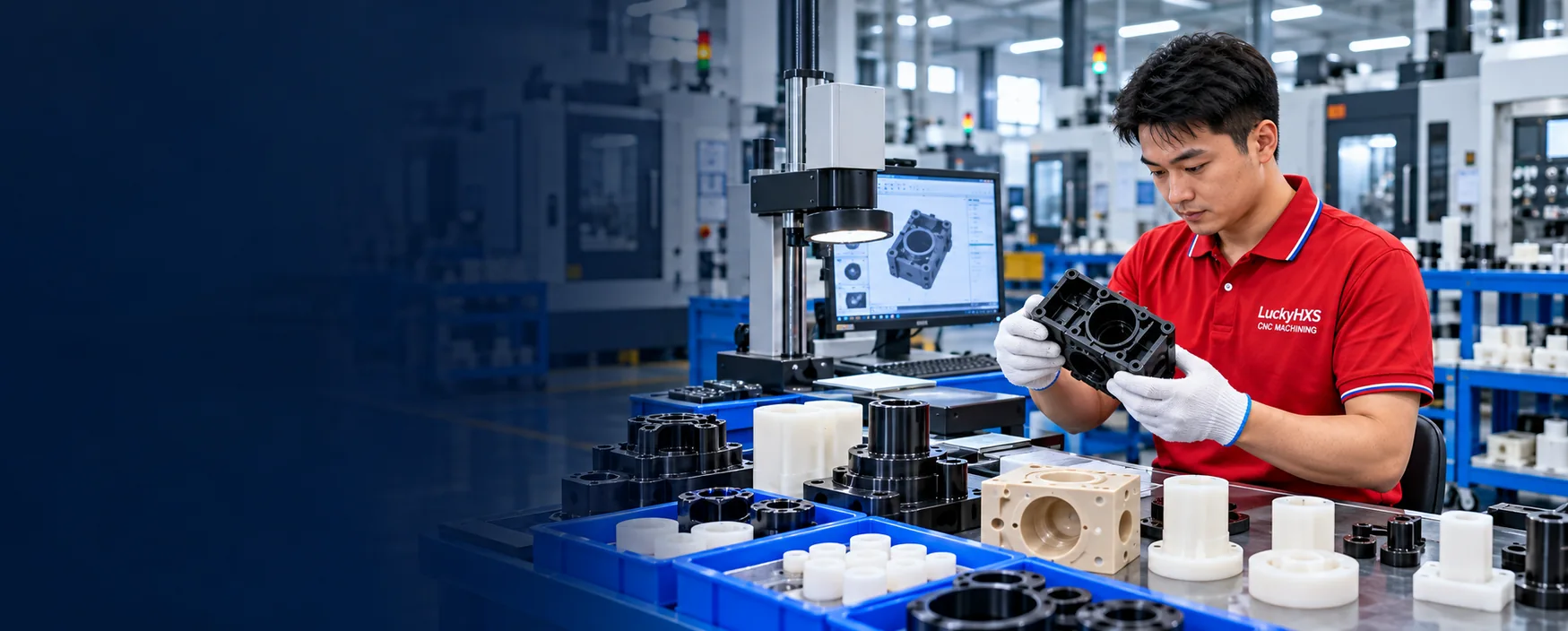
Why Choose LuckyHXS for Plastic Manufacturing Products?
Material-Aware Engineering Review
Plastic grade, moisture, temperature, load and chemical exposure are reviewed before machining.
Multiple CNC Process Options
Milling, turning, Swiss and automatic-lathe routes support different plastic geometries.
Prototype-to-Production Support
The project can move from sample validation to repeat production after approval.
Post-Unclamp Dimensional Review
Deformation-sensitive components are evaluated after clamping force is removed.
Drawing-Based Inspection
Dimensions, threads, wall thickness, burrs and functional fits are reviewed according to the drawing.
Direct Technical Communication
Material, environment, quantity and inspection questions can be clarified before production.
What Affects Plastic Manufacturing Products Cost and Timing?
Plastic manufacturing products are quoted according to the material, stock size, geometry, quantity, tolerance, process route, inspection and finishing requirements.
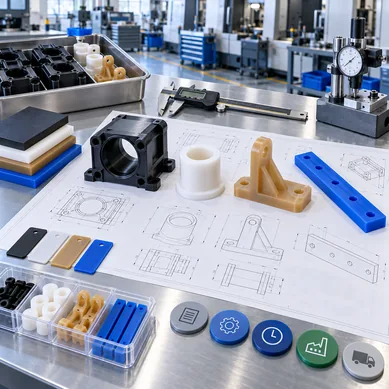
Practical guidance: Provide the initial quantity and expected repeat volume when possible. Apply tight tolerances only to functional features and define the real operating environment before quoting.
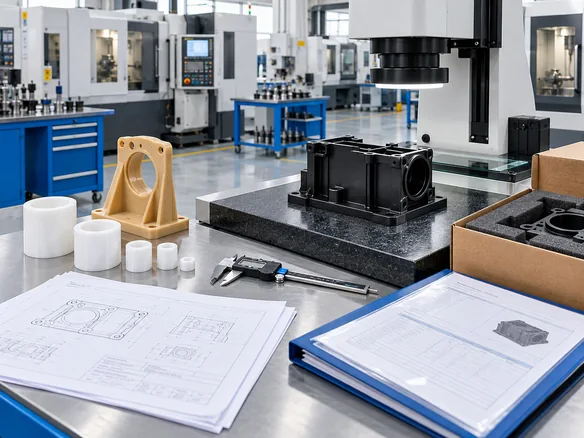
How to Choose a Plastic Manufacturing Products Supplier
- Can the supplier confirm the exact plastic grade?
- Can the supplier review temperature, humidity, chemicals and load?
- Can the supplier machine from the latest drawing revision?
- Can the supplier select milling, turning, Swiss or automatic-lathe processing?
- Can the supplier control thin walls, bores, threads and press fits?
- Can the supplier measure parts after clamping force is removed?
- Can prototypes move into repeat production without changing requirements?
- Can drawings and project information be handled confidentially?
The right plastic manufacturing products supplier should understand material behavior and final assembly fit, not only cutting speed.
Plastic Manufacturing Products FAQ
What plastic manufacturing products does LuckyHXS make?
Which engineering plastics can be machined?
Is CNC machining better than 3D printing for plastic parts?
Can you machine plastic threads and small holes?
How do you prevent plastic parts from warping?
Does humidity affect plastic CNC parts?
Can LuckyHXS support plastic prototypes and repeat orders?
What information is needed for a plastic manufacturing products quotation?
Prepare Your Plastic Manufacturing Products RFQ
A complete technical package helps LuckyHXS review the material behavior, machining route, inspection condition and total project requirements before quotation.
If the exact plastic grade or machining process is not yet confirmed, send the drawing and explain the intended application. The engineering team can review the requirements before quotation.
Start Your Plastic Manufacturing Products Project
Send your drawing, CAD file or project summary to LuckyHXS. We will review the plastic grade, operating environment, part geometry, quantity, critical features, surface requirements and inspection expectations before confirming the machining route and quotation.
Contact LuckyHXS
admin1@lucky-hxs.com
Phone / WhatsApp
+86 13342931453
Location
Shenzhen Bao’an Songgang, China