
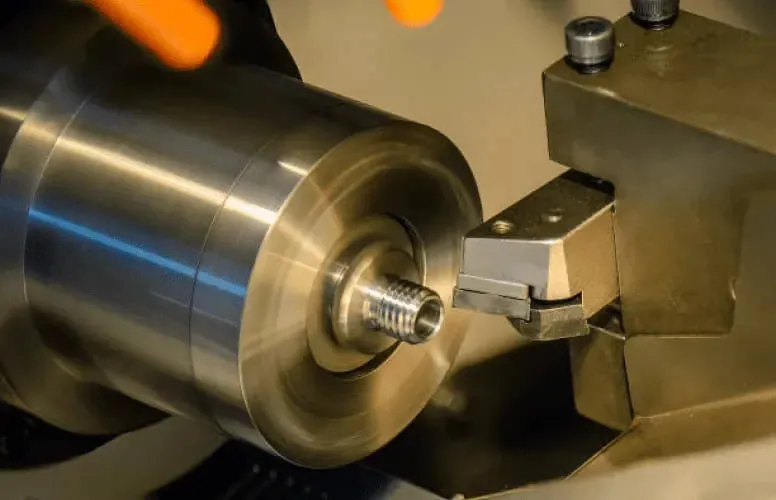
CNC turning is a precise manufacturing process that uses Computer Numerical Control (CNC) to automate the turning of materials on a lathe. It involves rotating a workpiece while a cutting tool removes material to create cylindrical parts with high accuracy. This process is widely used in industries requiring complex geometries and tight tolerances.
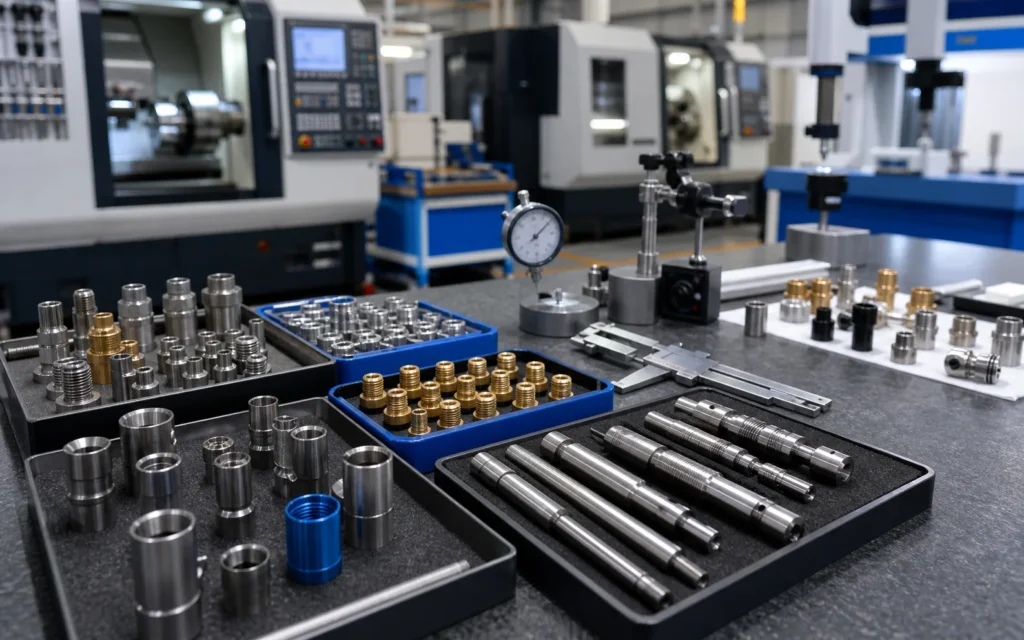
Typical CNC turning parts include precision shafts, bushings, sleeves, pins, threaded inserts, connectors, and other custom cylindrical components. Depending on part size and geometry, these components may be produced using CNC turning centers, Swiss-type CNC lathes, or turn-mill machines.
What is CNC Turning?
CNC turning is a machining process where a computer-controlled lathe rotates the workpiece while cutting tools shape it into precise designs. This method is ideal for manufacturing cylindrical parts such as shafts, bushings, and pulleys, leveraging automation for consistent results.
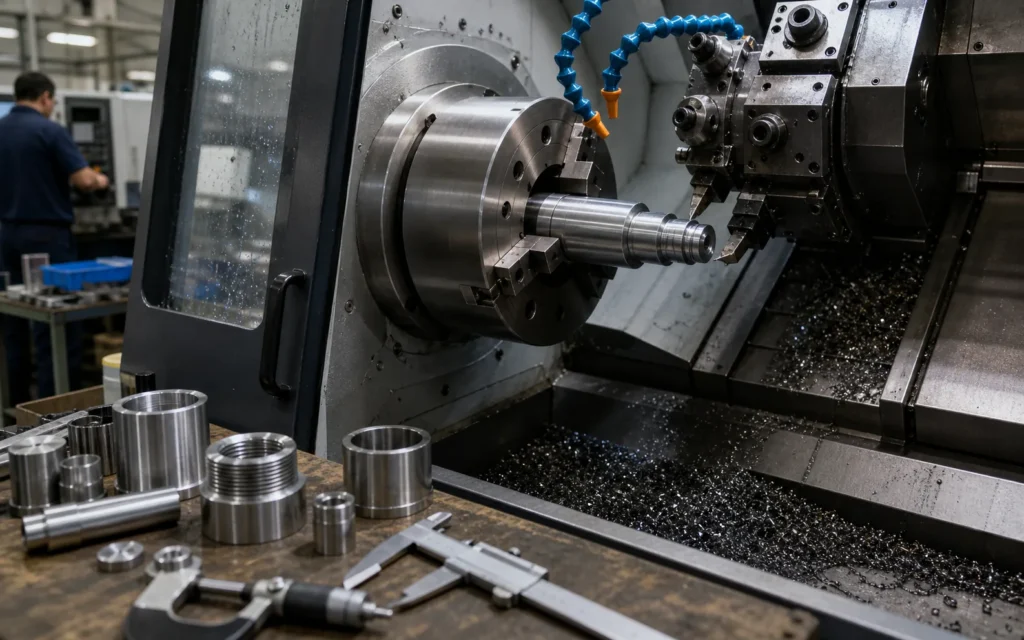
For custom CNC turning projects, commonly machined materials include stainless steel, aluminum, brass, copper, free-machining steel 1214 and 1215, and engineering plastics such as POM. Material selection affects machinability, tool wear, surface finish, dimensional stability, and production efficiency.
Key Benefits of CNC Turning
- Precision: Achieves tight tolerances for high-quality results.
- Speed: Automates machining for faster production cycles.
- Versatility: Handles various materials like metals, plastics, and composites.
- Repeatability: Produces identical parts with minimal deviation.
- Cost-Effectiveness: Reduces waste and manual labor costs.
Luckyhxs Pro Tip: Always choose tooling materials compatible with your workpiece to optimize performance and extend tool life.
How Does CNC Turning Work?
CNC turning works by rotating the workpiece on a spindle while stationary cutting tools remove material to achieve the desired shape. A CNC controller interprets digital designs and executes precise movements, ensuring consistent accuracy throughout the process.
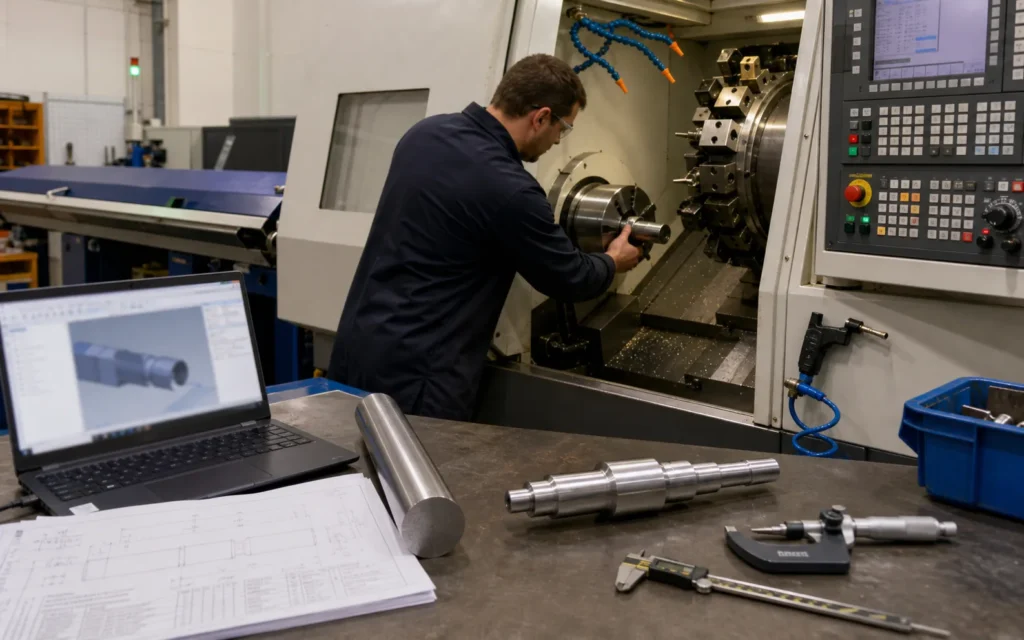
Depending on part geometry, CNC turning may be combined with drilling, boring, threading, grooving, and other secondary machining operations. Cylindrical parts with cross holes, milled flats, slots, or multiple complex features may be better suited to turn-mill machining or Swiss CNC machining with live tooling.
Process Flow in CNC Turning
- Design Creation: CAD software generates the part design.
- Programming: CAM software converts the design into machine-readable G-code.
- Setup: The workpiece is mounted on the lathe, and tools are installed.
- Machining: The CNC lathe rotates the material while the cutting tools shape it.
- Finishing: Final touches are applied to meet specifications.
Luckyhxs Pro Tip: Regularly inspect and maintain your CNC machine to avoid downtime and ensure machining accuracy.
What are the Applications of CNC Turning Machines?
CNC turning machines are utilized in industries such as automotive, aerospace, medical, and electronics to produce precision components. These machines excel in creating cylindrical parts, including engine components, surgical instruments, and threaded fasteners.
Common CNC Turning Applications
- Automotive & EV: Motor shafts, locating pins, sleeves, threaded components, and precision turned parts.
- Aerospace: Precision fittings, nozzles, shafts, sleeves, and small cylindrical components.
- Medical Devices: Stainless steel sleeves, precision connectors, pins, and sensor components.
- Electronics: Brass threaded inserts, copper contact pins, connector parts, and precision fittings.
- Electronics: Brass threaded inserts, copper contact pins, connector parts, and precision fittings.
- Micro Motors & Precision Instruments: Small-diameter shafts, slender pins, sleeves, and tight-tolerance t
Luckyhxs Pro Tip: Consider surface finishes and secondary operations like threading to enhance part functionality for specific applications.
What is CNC Turning Operation?
CNC turning operations involve material removal techniques such as facing, threading, grooving, and boring to achieve specific shapes and dimensions. These operations are executed with high precision, automating tasks that were previously manual.
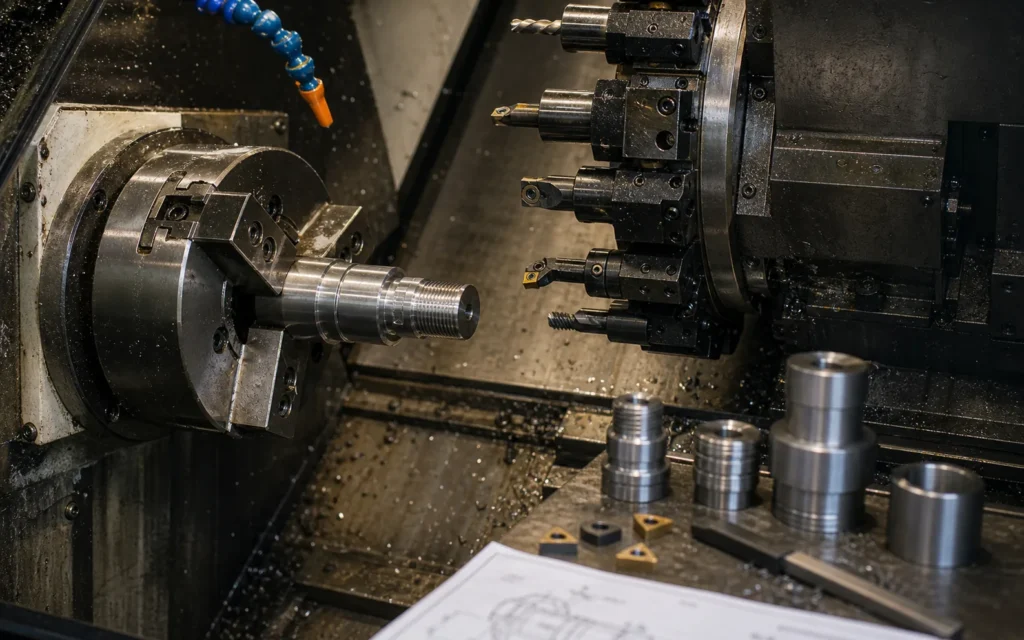
Types of CNC Turning Operations
- Facing: Creating a flat surface perpendicular to the axis.
- Turning: Shaping the exterior diameter of the workpiece.
- Threading: Cutting helical grooves for screws or bolts.
- Boring: Enlarging existing holes with accuracy.
- Grooving: Cutting narrow channels on the workpiece.
Different CNC turning operations are selected according to part geometry and function. Straight turning is commonly used for precision shafts and pins, boring for bushings and sleeves, threading for threaded inserts, nuts, connectors, and fittings, and grooving for shafts, sleeves, and sealing-related components.
Luckyhxs Pro Tip: Use specialized tools for each operation to maximize efficiency and maintain quality.
What Are the 5 Common Types of CNC Machines?
The five common types of CNC machines include CNC lathes, milling machines, routers, plasma cutters, and laser cutters. Each type serves a specific machining purpose, providing flexibility across industries.
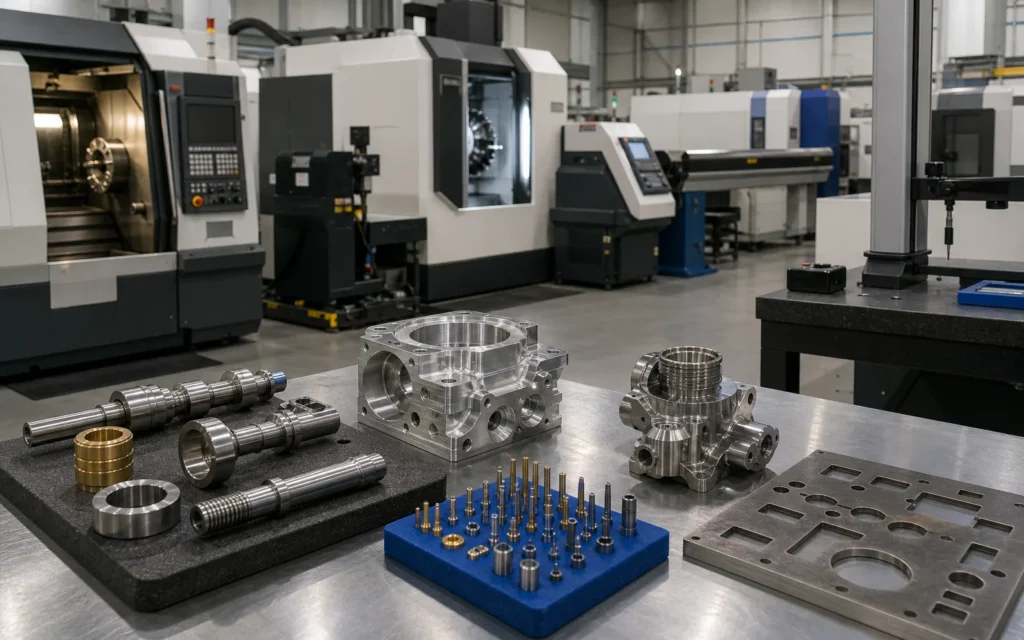
Types of CNC Turning Machines
Based on our internal data and market analysis, here is the breakdown:
| CNC Machine Type | Material Compatibility |
|---|---|
| CNC Lathe | CNC lathes are commonly used for shafts, bushings, sleeves, pins, nuts, and other cylindrical CNC turning parts. |
| CNC Turning Center | Metals,CNC turning centers provide automated turning capability for precision turned parts requiring stable dimensional control and repeat production. |
| Swiss-Type CNC Lathe | Swiss-type CNC lathes are suitable for small-diameter, slender, and tight-tolerance parts such as precision shafts, contact pins, connector components, and small sleeves. |
| Turn-Mill Center | Turn-mill centers combine turning and milling operations for cylindrical parts with cross holes, milled flats, slots, threads, and other complex machined features. |
| Automatic Lathe | Automatic lathes are commonly used for efficient production of small precision turned parts, inserts, pins, spacers, nuts, and hardware components. |
Luckyhxs Pro Tip: Match your machine type to the complexity and material of your project for optimal results.
CNC Turning Materials
Common materials for CNC turning include stainless steel, aluminum, brass, copper, free-machining steel, and engineering plastics, selected based on strength, machinability, corrosion resistance, and part application.

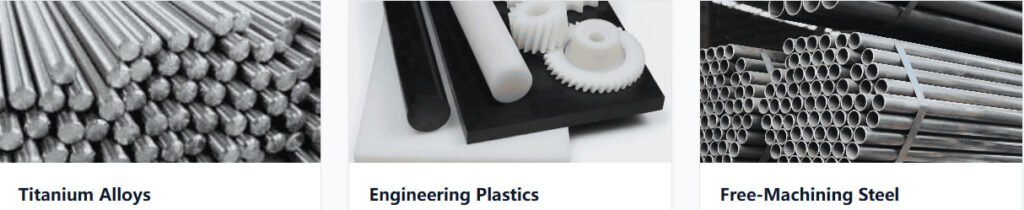
What Materials Are Commonly Used in CNC Turning?
- Stainless Steel CNC Turning: Stainless steel 303, 304, 316, and 316L are commonly used for precision shafts, sleeves, connectors, fittings, and corrosion-resistant CNC turned parts. Material grade selection depends on machinability, corrosion resistance, strength, and application requirements.
- Aluminum CNC Turning: MAluminum 6061, 6063, and 7075 can be CNC turned into lightweight sleeves, threaded components, spacers, fittings, and custom cylindrical parts. Aluminum is often selected where low weight and efficient machining are important.
- Brass and Copper CNC Turning: Brass and copper are commonly used for threaded inserts, conductive pins, connectors, nuts, sleeves, and precision fittings. Grades such as C3604, H59, and H62 can be selected according to machining and functional requirements.
- Free-Machining Steel 1214 and 1215: Free-machining steel 1214 and 1215 are suitable for shafts, pins, bushings, fasteners, and threaded parts requiring efficient cutting and stable batch production.
- Engineering Plastics: Engineering plastics such as POM, PEEK, PTFE, and nylon can be machined into bushings, spacers, sleeves, insulation parts, and low-friction precision components.
Luckyhxs Pro Tip: Choose materials based on machinability, tolerance, and application requirements to improve part quality and production efficiency.
Conclusion
CNC turning is an efficient machining process for precision shafts, bushings, sleeves, pins, threaded inserts, connectors, and other cylindrical components. The right machine, material, tooling, tolerance strategy, and inspection method depend on part geometry and production requirements.
For custom CNC turning parts, send your 2D or 3D drawings, material, quantity, tolerance, and surface finish requirements. LuckyHXS supports precision CNC turning, Swiss CNC machining, turn-mill machining, and prototype-to-batch production for custom industrial components.