
Aerospace CNC Machining Services for Custom Precision Parts
LuckyHxs crafts precision CNC components for aerospace applications, tailored to customer designs. Our expertise spans brackets, housings, shafts, pins, bushings, sleeves, and intricate lightweight geometries, utilizing advanced CNC milling, turning, Swiss, and multi-axis machining techniques.
Aerospace-style parts should not be controlled as a list of unrelated dimensions. Functional datums, hole patterns, thin-wall geometry, common axes, final surface condition and repeat-production requirements must be reviewed together.
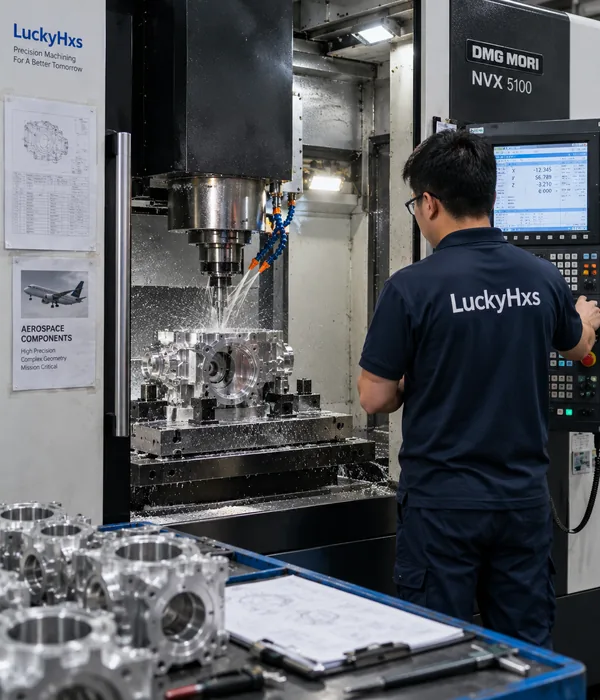
CNC Machining Support for Aerospace Applications From a Precision Parts Manufacturer
LuckyHxs manufactures custom CNC components from customer drawings and supports aerospace-related mechanical applications through process selection, machining, inspection, surface finishing and repeat-production control.
Important Qualification Notice
Aerospace-specific certifications, traceability, FAI formats, special-process approvals and customer supplier qualifications must be confirmed before quotation. Machining capability ≠ Aerospace program qualification.
Aerospace CNC Machining Is About Functional Relationships—not Just Tight Dimensions
Individual Features PASS ≠ Complete Functional Geometry PASS.
Lightweight Geometry
- ▪ Thin Wall Stress Control
- ▪ Deep Pocket Machining
- ▪ Rib Structure Stability
- ▪ Weight Reduction Features
Functional Relationships
- ▪ Datum Network Integrity
- ▪ True Position & Hole Patterns
- ▪ Common Axis & Runout
- ▪ Interface Alignment
Production Control
- ▪ Material Verification
- ▪ First Article Inspection (FAI)
- ▪ Feature-Specific Inspection
- ▪ Batch Repeatability Control
Custom CNC Machined Components for Aerospace Applications
We manufacture mechanical components for aerospace-related assemblies, focusing on functional geometry and drawing requirements.
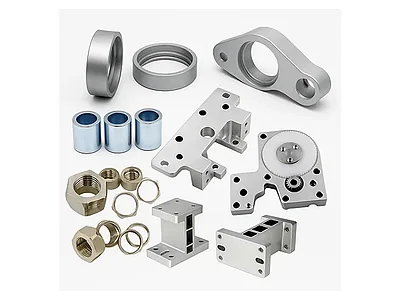
Structural Brackets & Mounts
Equipment brackets, sensor mounts, lightweight structural supports.
Focus: Hole Patterns, True Position
Principle: Individual Holes PASS ≠ Complete Mounting Geometry PASS.
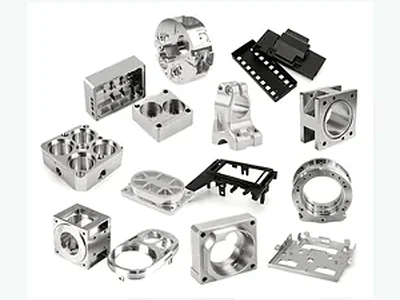
Housings & Enclosures
Avionics enclosures, instrument bodies, sensor housings.
Focus: Thin Wall, Deep Pocket, Flatness
Principle: Individual Features PASS ≠ Complete Housing Geometry PASS.
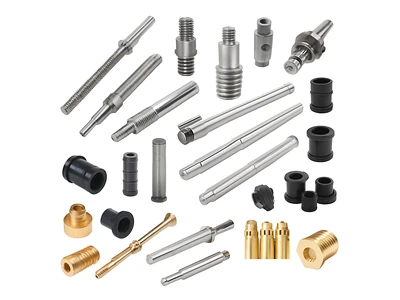
Shafts, Pins & Rotational
Stepped shafts, guide pins, actuator components.
Focus: Runout, Common Axis, Journals
Principle: OD PASS + Journal PASS ≠ Functional Common Axis PASS.
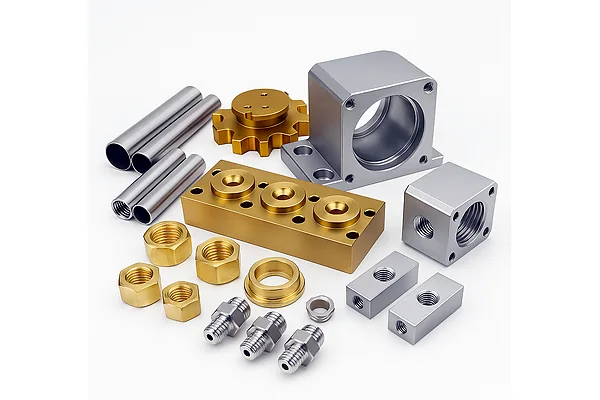
Bushings, Sleeves & Spacers
Guide bushings, thin-wall sleeves, precision spacers.
Focus: Wall Thickness, Bore-to-OD
Principle: ID PASS + OD PASS ≠ Functional Bushing Geometry PASS.
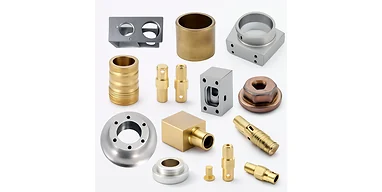
Sensor & Instrument Parts
Optical mounts, sensor bodies, adjustment components.
Focus: Precision Bore, Fine Thread
Principle: Feature Size PASS ≠ Functional Alignment PASS.
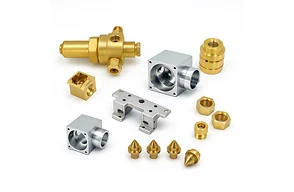
Fluid-Control & Valve Parts
Valve bodies, sleeves, nozzles, ported fittings.
Focus: Internal Passages, Cross Holes, Burrs
Principle: Hole Diameter PASS ≠ Internal Passage Condition PASS.
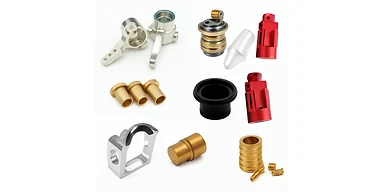
Connector & Avionics Parts
Connector bodies, mechanical contacts, threaded shells.
Focus: Small Diameter, Orientation Features
Principle: Small Part PASS ≠ Complete Connector Interface PASS.
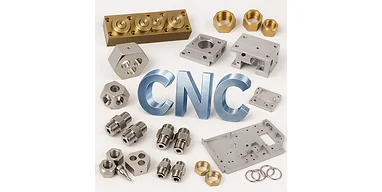
Complex 5-Axis Parts
Multi-surface lightweight structural components.
Focus: Multi-Datum Networks, Angled Holes
Principle: Every Face Can PASS While the Complete Multi-Surface Relationship Still FAILS.
Choose the CNC Process Around the Aerospace Part Geometry
Aerospace part geometry should select the process—not the marketing name.
CNC Milling
Standard 3/4-axis milling for flat, prismatic, or pocketed geometries.
5-Axis / Multi-Axis
Maintains related features under fewer datum transfers.
CNC Turning
Precision lathe operations for concentric, cylindrical profiles.
Swiss CNC
Sliding headstock machining for small, slender, feature-dense parts.
Turn-Mill
Combines turning with live tooling for off-axis features.
Material Name Alone Does Not Define an Aerospace Material Requirement
Material Grade PASS ≠ Material Requirement PASS.
Aerospace material requirements may include specific tempers, raw material standards, mill certificates, heat/lot traceability, and customer-approved sources. These must be confirmed prior to quotation.
Aluminum
6061, 6063, 6082, 7075.
Best for: Lightweight brackets, housings, instrument bodies.
Stainless Steel
303, 304, 316, 316L.
Best for: Shafts, pins, fittings, robust instrument components.
Titanium
Project-Specific Review
Grade, condition, and documentation must be confirmed during RFQ.
Other Materials
Brass, Copper, POM, Nylon, PTFE, ABS.
Where suitable for aerospace-related mechanical/connector applications.
Why Aerospace-Style CNC Parts Still Fail After Individual Dimensions Pass
Procuring complex machined parts requires looking beyond the basic print. Here are the 10 most common engineering and supply chain failures.
Individual Features Pass, but the Complete Functional Geometry Still Fails
A bracket may have correct hole diameters, but if the hole pattern or multi-face datum relationship is incorrect, the assembly fails.
Thin-Wall Geometry Distorts After Release
The lightweight part passes while clamped, but springs and warps out of free-state tolerance.
3. Hole Sizes Pass, but Multi-Face Hole Position & Angular Relationships Still Fail
4. Diameters Pass, but Runout & Common-Axis Relationships Still Fail
5. Everything Is Tightly Toleranced, but the True CTQs Are Not Prioritized
6. Material Grade Is Correct, but Condition or Traceability Is Wrong
7. External Geometry Passes, but Hidden Burrs Remain Inside
8. Machined Part Passes, but Surface Finishing Changes the Final Fit
The Prototype Passes, but Critical Geometry Drifts Across Repeat Production
First article approval does not guarantee automatic batch repeatability without strict tool, fixture, and in-process controls.
10. Part Is Machinable, but Required Supplier Qualification Was Never Confirmed
Individual Features Pass, but the Complete Functional Geometry Still Fails
Aerospace components should not be evaluated as a list of unrelated dimensions. A housing may have a correct bore and mounting face, but the relationship between them may still be wrong.
The LuckyHxs Approach
CTQ Identification → Functional Datum → Process Selection → Functional Verification
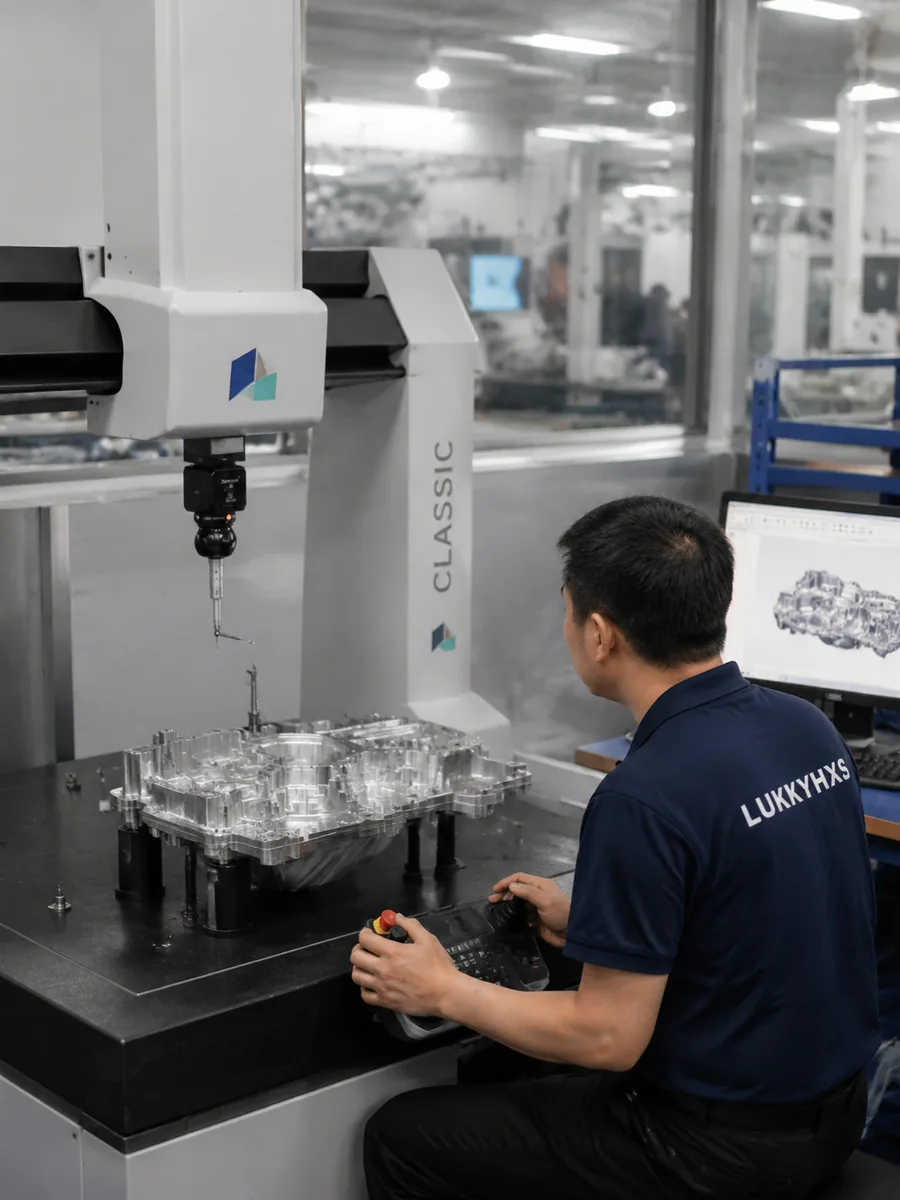
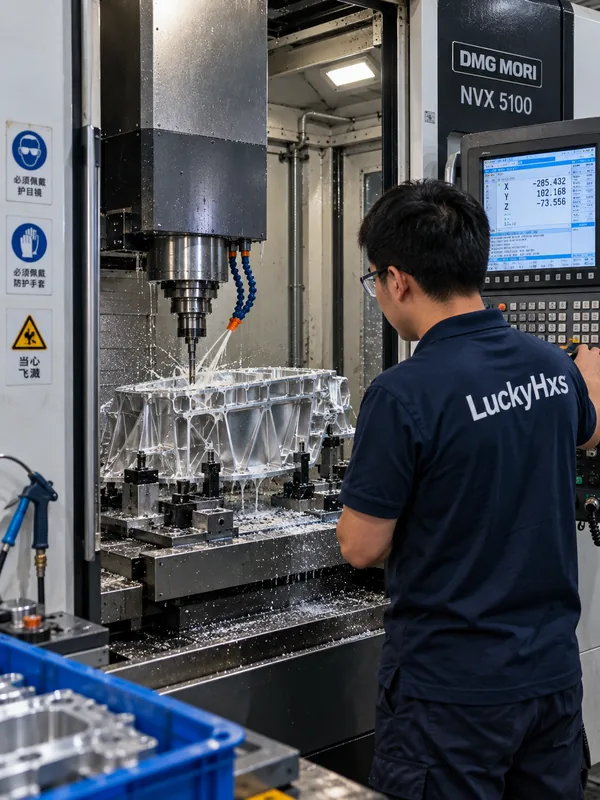
The Lightweight Part Passes While Clamped, but Thin-Wall Geometry Distorts After Release
Lightweight aerospace-style designs often remove a large percentage of original stock. Thin walls, ribs, and deep pockets react differently after cutting. Machining dimension PASS under clamping ≠ Free-state geometry PASS.
Feature Size Is Not the Same as Feature Relationship
Multi-Face Hole Geometry
Every hole can pass individually while the multi-face relationship still fails.
Hole Diameter PASS ≠ Complete Hole-Pattern Geometry PASS.
Rotational Aerospace Geometry
Correct diameters do not automatically create a correct rotational axis for shafts, pins, or sleeves.
OD PASS + ID PASS ≠ Functional Common Axis PASS.
Before an Aerospace RFQ, Confirm the Required Supplier Qualification
Machining Capability ≠ Aerospace Program Qualification.
Part Requirements
- Geometry & Tolerance
- Material Grade
- GD&T
- Surface Finish
Program Requirements
- Required QMS Certification
- Approved Supplier Status
- FAI Format (e.g., AS9102)
- Traceability Level
Must be confirmed before quotation.
Inspection Method Should Follow Feature Function
We do not claim every part gets full CMM inspection. Methods are selected based on drawing requirements.
From Aerospace Drawing to Repeat CNC Production
Aerospace-Related Mechanical Applications
- Aircraft Equipment Mechanical Components
- UAV & Drone Mechanical Components
- Avionics Mechanical Housings & Mounts
- Sensor & Instrument Assemblies
- Ground Support / Test Equipment
13-Step Manufacturing Workflow
Aerospace manufacturing risk should be identified before production—not at final inspection.
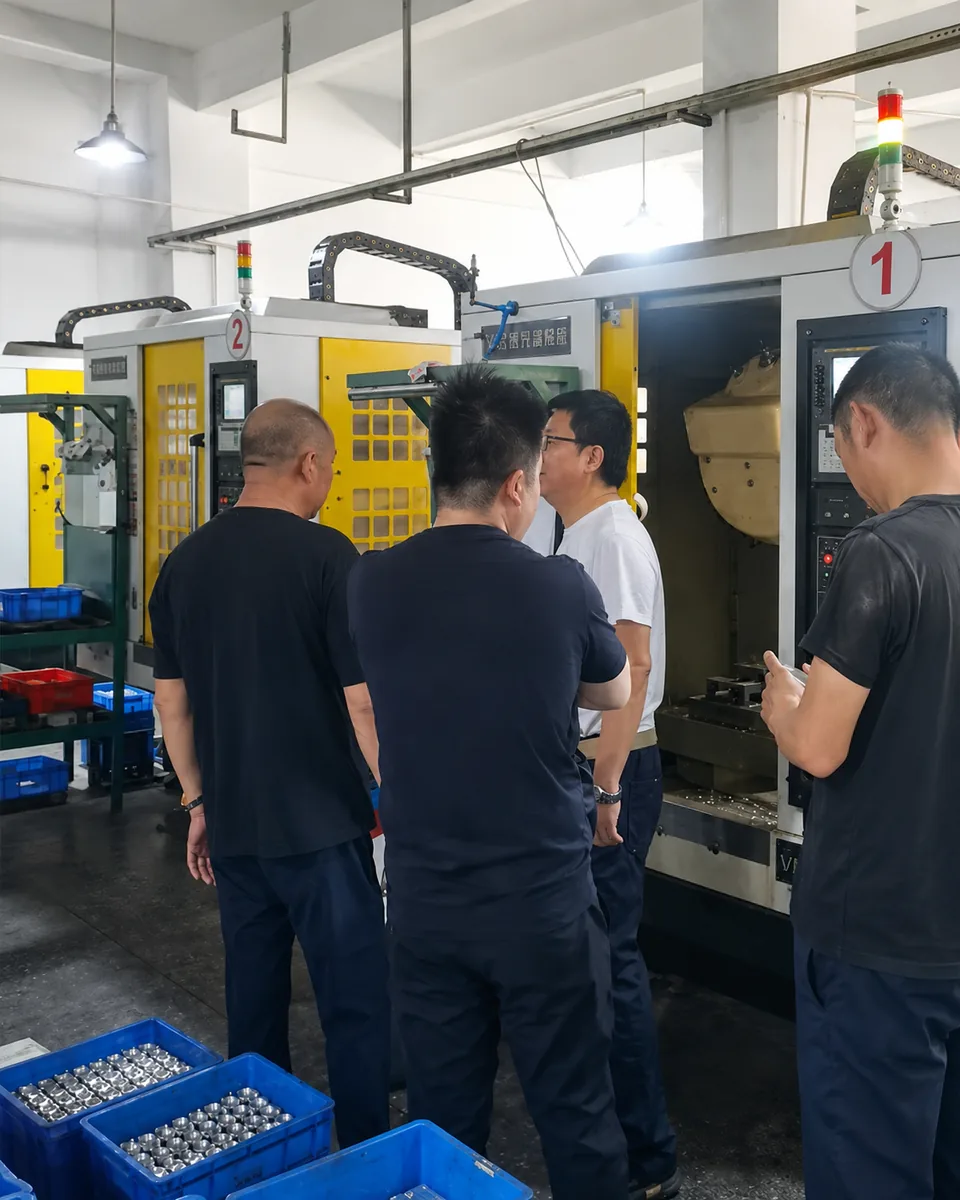
A CNC Manufacturing Partner You Can Verify
Real factory, real machines, real compliance documents.
What Is Aerospace CNC Machining? Processes, Parts & Applications
Aerospace CNC machining is the use of computer-controlled milling, turning and multi-axis machining processes to manufacture precision mechanical components used in aircraft, UAV, space, avionics, instrument and aerospace-related equipment.
Why CNC Machining?
CNC machining is chosen for its repeatable programmed geometry, ability to create complex features and precision holes, and its capacity to maintain tight multi-surface relationships. It is highly effective from prototype to repeat production across machinable high-strength materials.
What Makes Aerospace Different?
Aerospace CNC Machining Is Not Just Tight Tolerance—it Is Controlled Functional Geometry.
Unlike standard commercial parts, aerospace components are heavily constrained by weight reduction (thin walls, deep pockets), complex datum networks, specific material traceability requirements, and stringent supplier qualification gates.
Aerospace CNC Machining FAQ
What aerospace parts can be CNC machined?
What materials can LuckyHxs machine for aerospace applications?
Can LuckyHxs machine thin-wall aerospace parts?
Is LuckyHxs AS9100 certified?
What should I send for an aerospace CNC machining quote?
Need an Aerospace CNC Part Reviewed Around Its Actual Functional Geometry?
Why Aerospace Buyers Choose LuckyHxs
-
Drawing-Based Manufacturing Review
Engineers review material, GD&T, critical features and machining requirements before quotation.
-
Precision Process Control
CNC turning, milling, Swiss machining and inspection processes support complex aerospace components.
-
Prototype to Repeat Production
From first article validation to repeat batches, production requirements are controlled consistently.
-
Quality Verification Before Shipment
Critical dimensions and functional features are checked before delivery.
Typical review includes: Material | Tolerance | Quantity | Surface Finish | Inspection Requirements