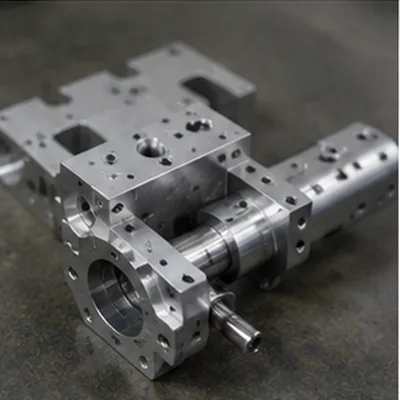
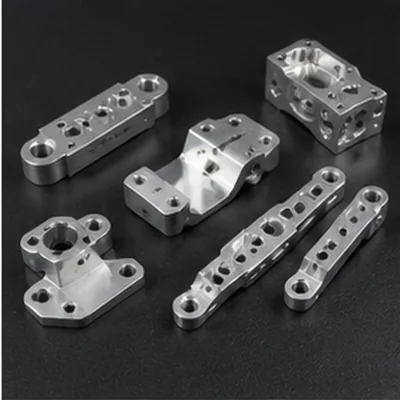
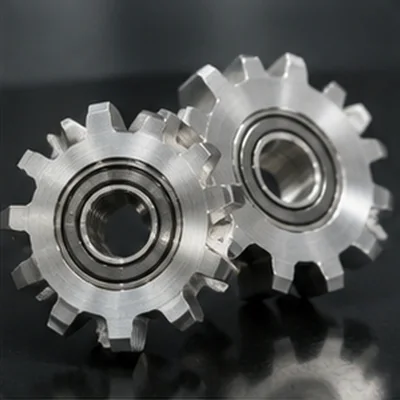
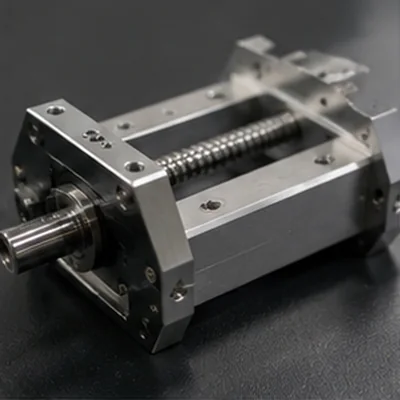
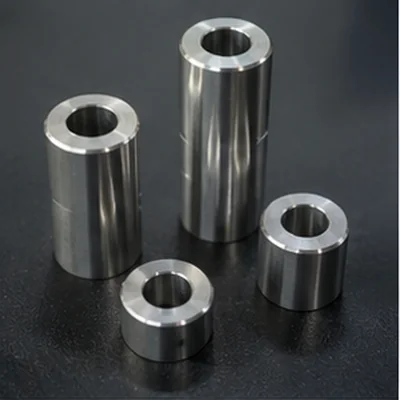
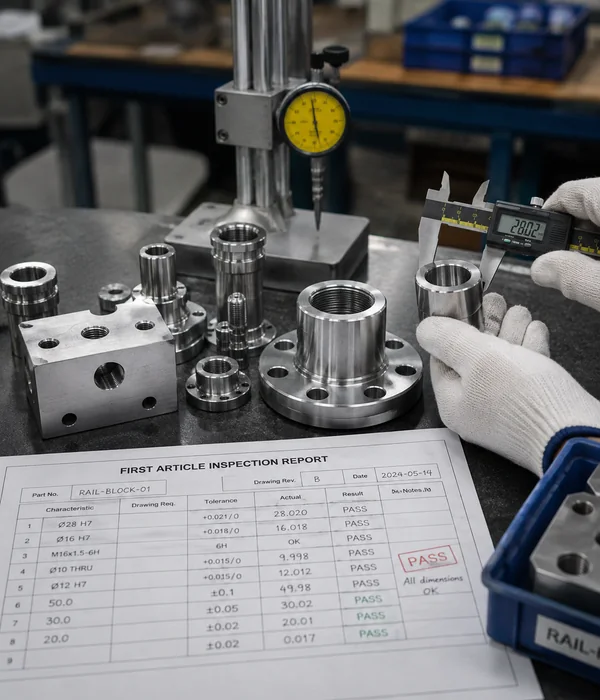
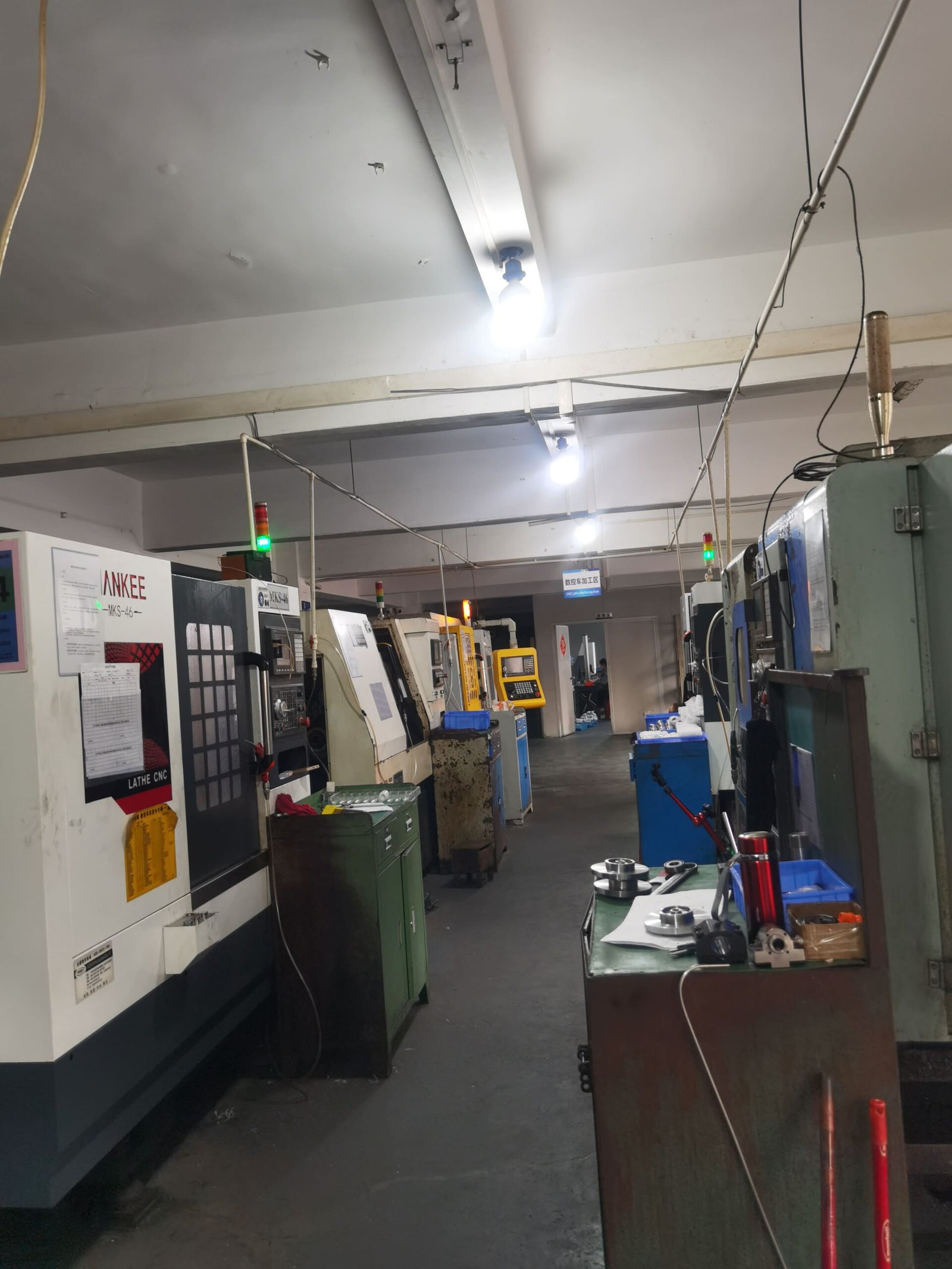
LuckyHxs delivers precision CNC machined fittings and components for rail equipment and industrial railway needs, including threaded adapters, bushings, pins, and pneumatic parts. From prototype to production, we ensure quality and reliability.
20+ Years CNC Experience
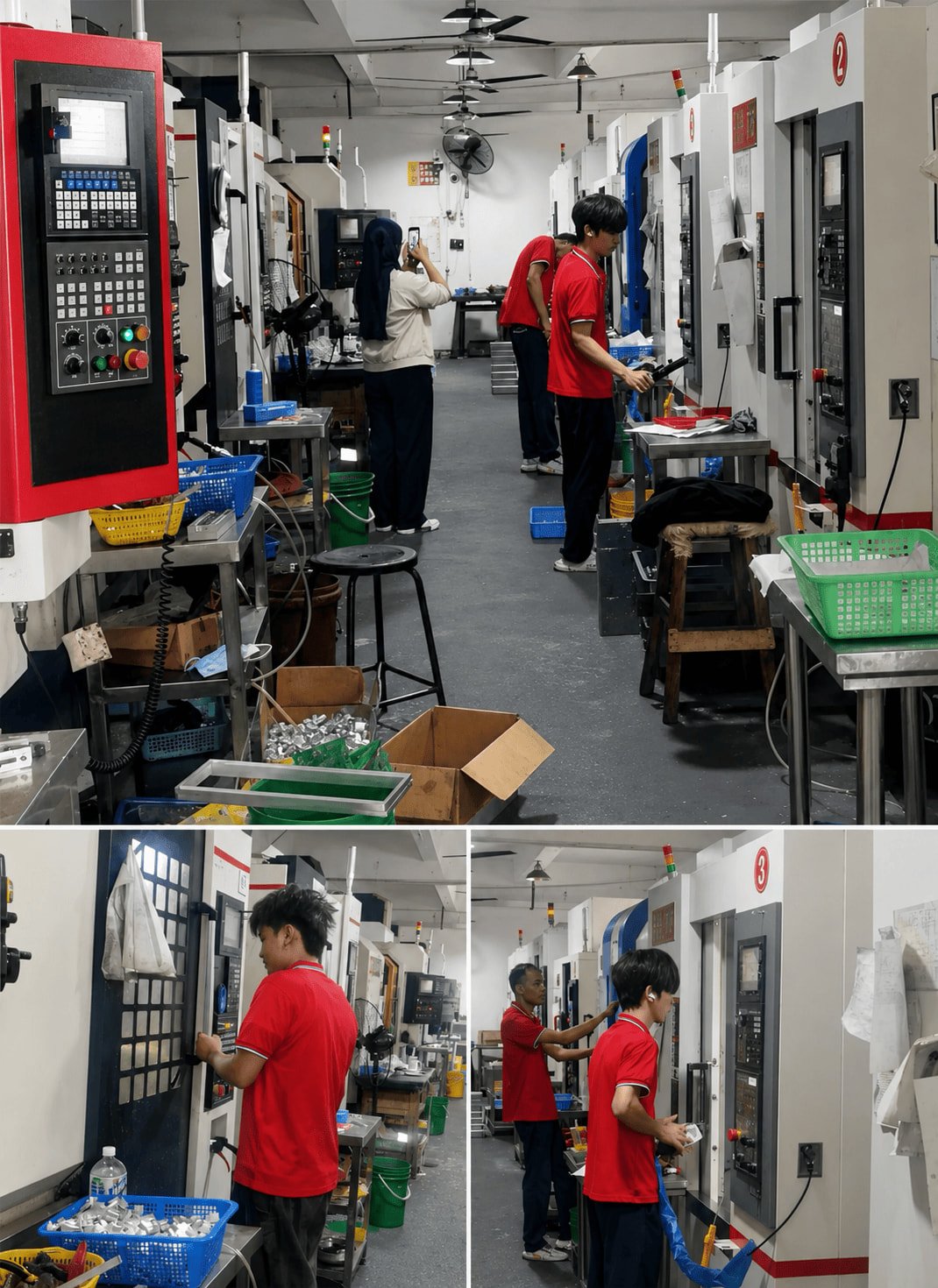
153 Precision Machines
Standard Tolerance Ref: ±0.01 mm
Prototype to Batch Production
Made to Your DrawingTurning + Milling + Turn-MillInterface & Fit ReviewRepeat-Batch Control
Steel / Stainless Steel / Aluminum / Brass according to project
Tolerance
Standard Reference ±0.01 mm
Feature-specific capability confirmed by drawing.
Looking for a custom railroad fitting or replacement component?
LuckyHxs manufactures made-to-drawing CNC parts. We are not a stock rail-fastener or railcar-coupler retailer.
What Are CNC-Machined Railroad Fittings?
In this page, “railroad fittings” refers to custom machined mechanical and equipment interfaces—not every component used on railway track or rolling stock. They are the precision components designed to perform specific mechanical functions within rail assemblies.
Custom CNC manufactured to your 2D drawings and 3D CAD files.
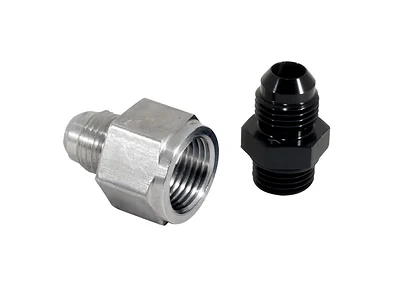
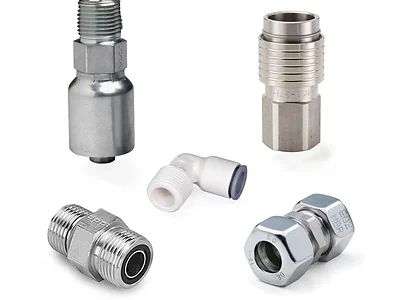
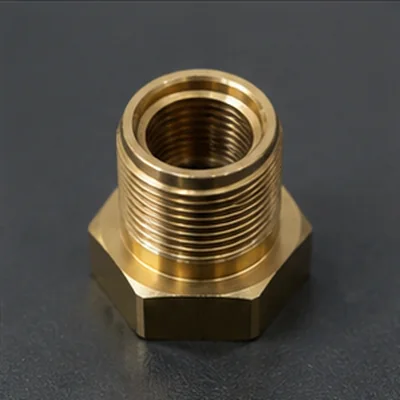
Railroad Threaded Fittings & Adapters
Custom interface fittings, male/female adapters, and connector bodies. A railroad fitting can pass its thread gauge and still fail if the bore, shoulder or mating interface is positioned incorrectly.
Features: Internal/External Thread, Hex, Sealing Face
Buyer Watch: Thread-to-Bore Concentricity
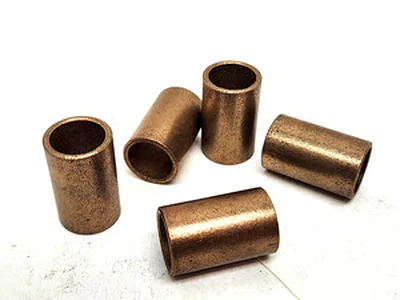
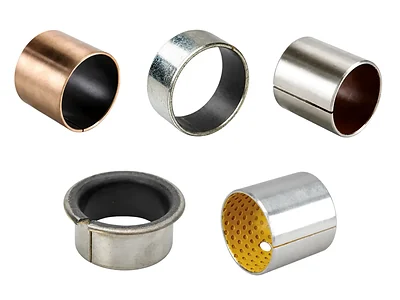
Railroad Bushings & Wear Sleeves
Precision guide bushings, spacer sleeves, and flanged bushings for long-term maintenance replacement. ID PASS + OD PASS ≠ Functional Fit PASS without correct concentricity.
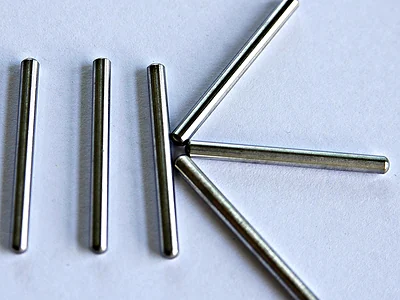
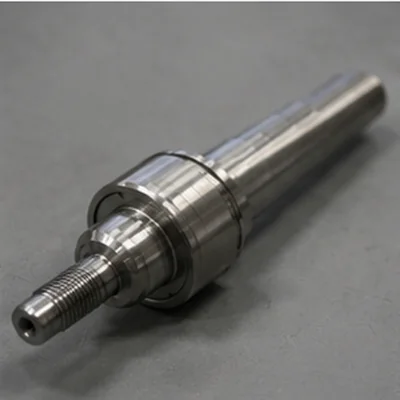
Shoulder pins, cross-hole pins, and clevis-type locating components. A locating pin must be controlled around how it positions and retains the mating assembly—not diameter alone.
Custom machined pneumatic and fluid-control components according to drawings. Hole Diameter PASS ≠ Internal Passage PASS if intersecting burrs remain.
Features: Main Bore, Radial Port, Sealing Surface
Buyer Watch: Internal Chips & Port Orientation
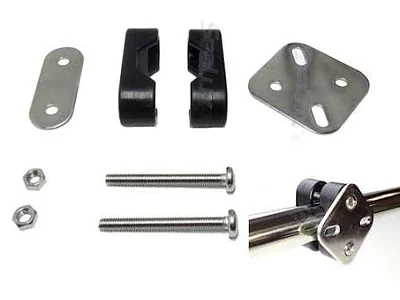
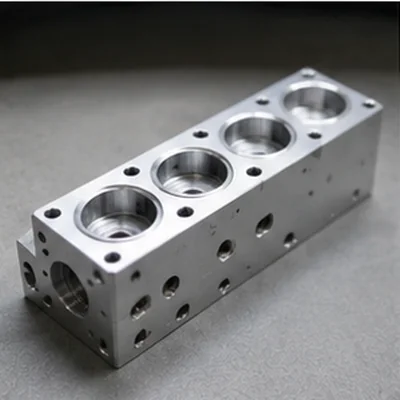
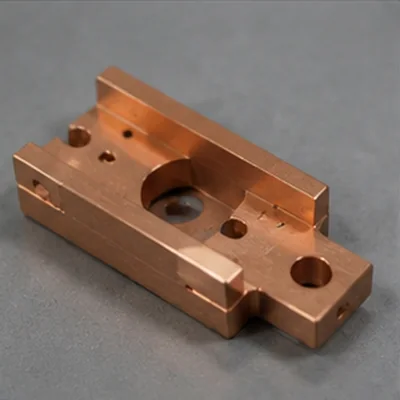
Rail Equipment Mounting Blocks & Brackets
CNC milled mounts for rail inspection equipment, monitoring machinery, and sensor support. Hole pattern and datum surface parallelism are critical for assembly.
Features: Hole Pattern, Pocket, Datum Surface
Buyer Watch: Datum Relationship & Flatness
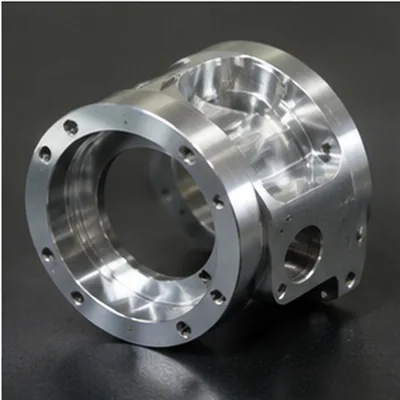
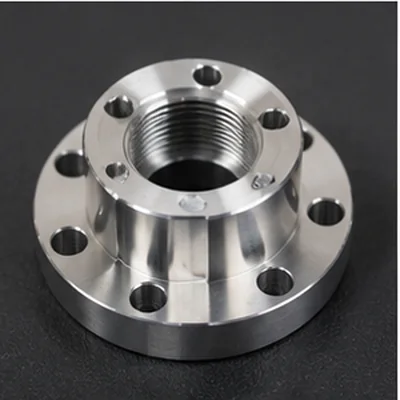
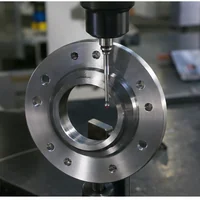
Railroad Flanges, Hubs & Interface Parts
Precision mounting flanges and equipment hubs. Pilot PASS + Hole Pattern PASS ≠ Interface PASS if both features do not share the correct datum.
Features: Pilot Diameter, Bolt Pattern, Face Runout
Buyer Watch: Pilot-to-Bolt Pattern Alignment
Rail Sensor & Instrument Components
Machined housings, connector bodies, and probe components for rail monitoring, inspection, and condition-monitoring assemblies.
Features: Small Bore, Connector Opening, Slot
Buyer Watch: Connector Alignment & Burr Control
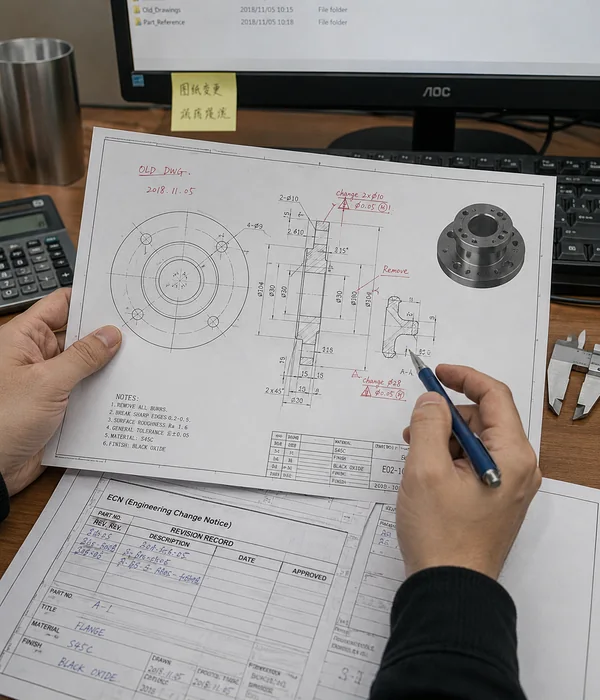
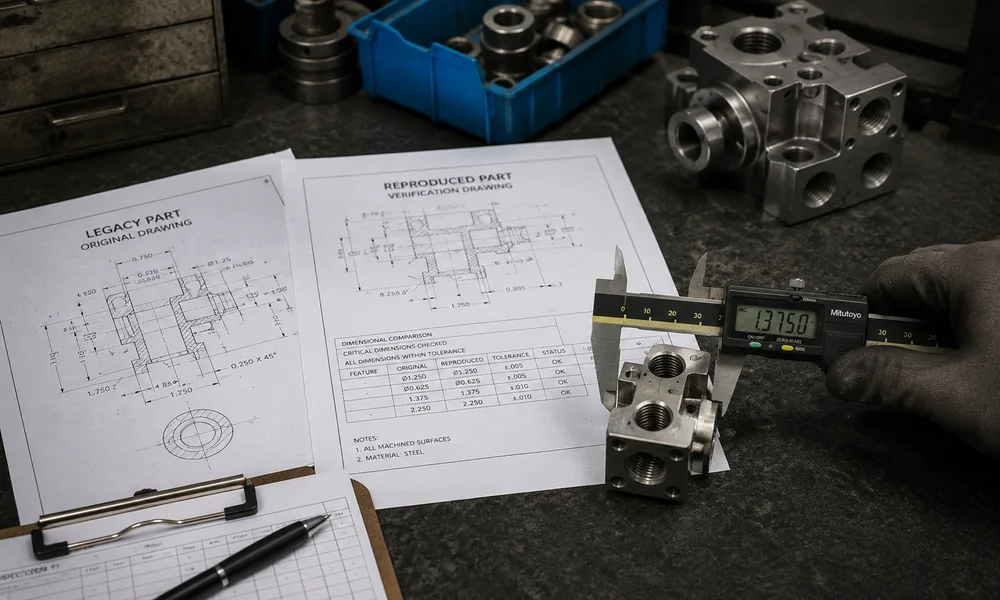
Custom Railroad Replacement & Legacy Parts
Drawing-based or sample-based reproduction of obsolete fittings. If a legacy sample is supplied, critical dimensions and interfaces must be confirmed.
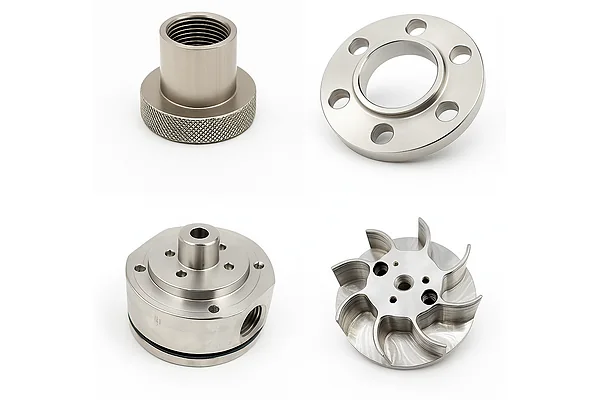
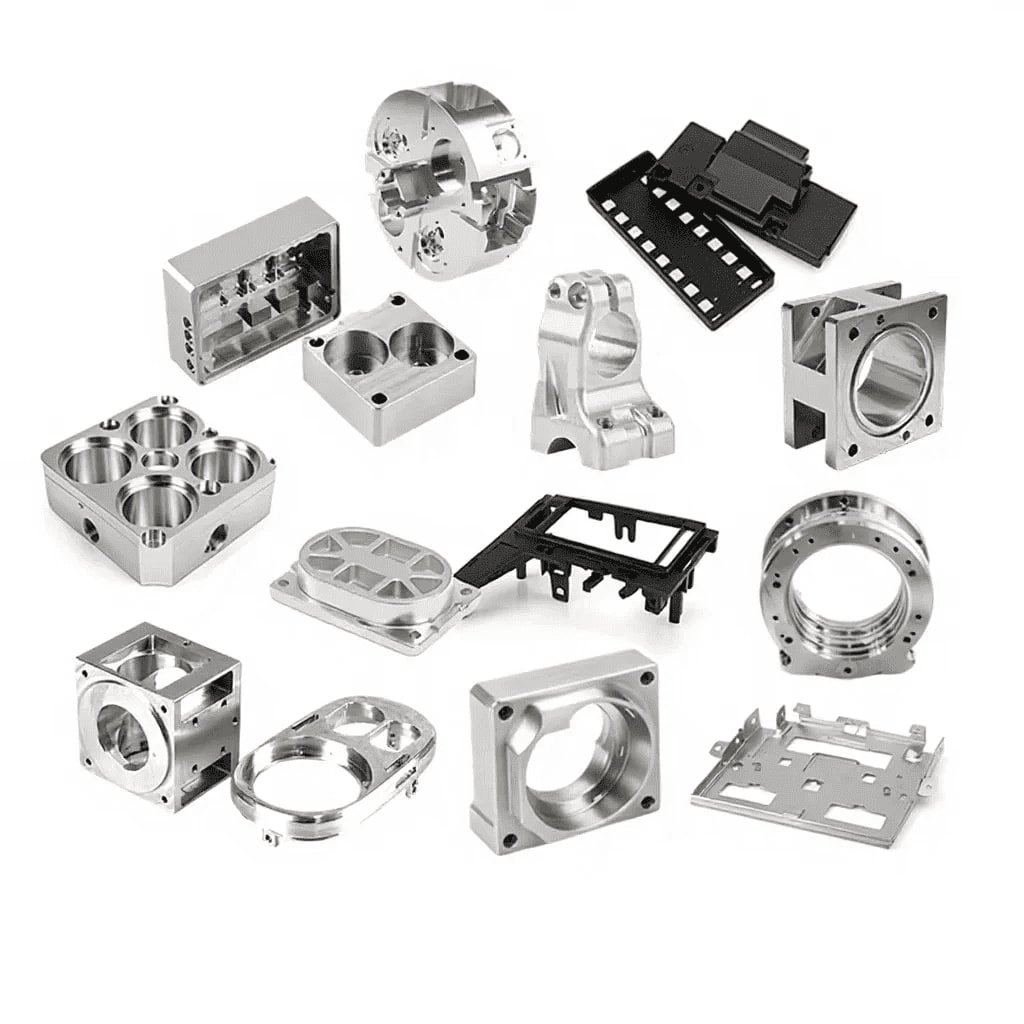
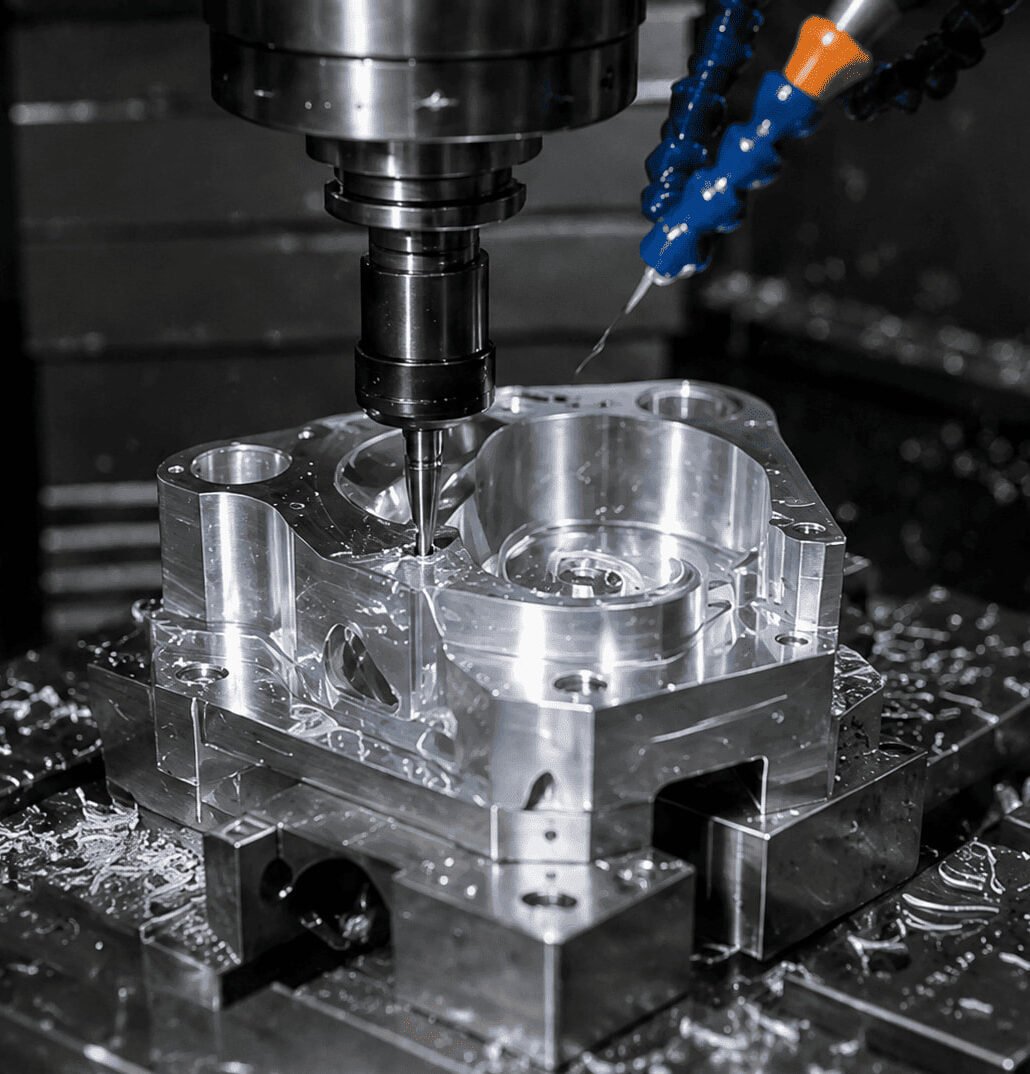
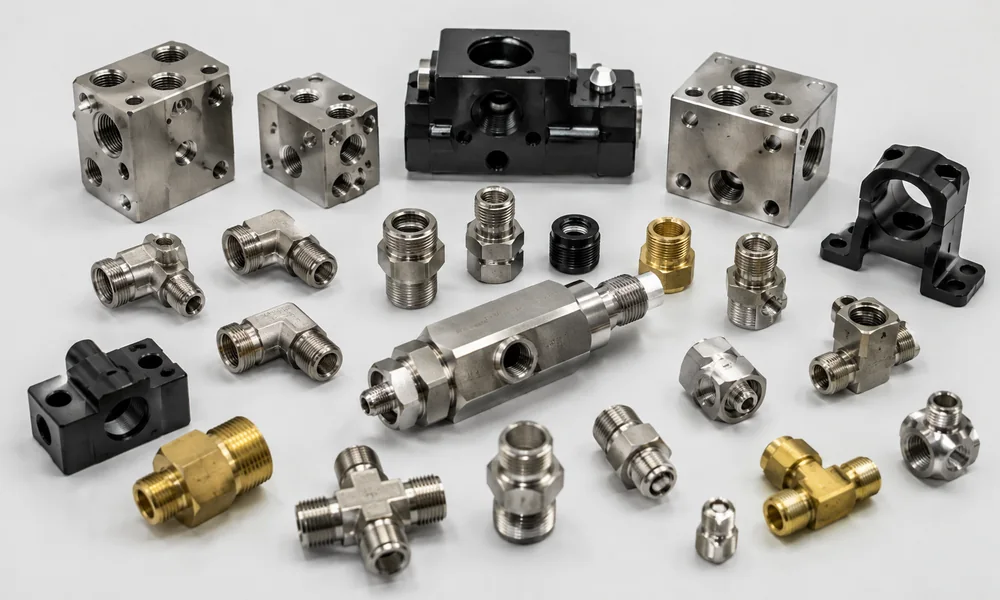
Custom CNC-Machined Railroad & Rail Equipment Parts
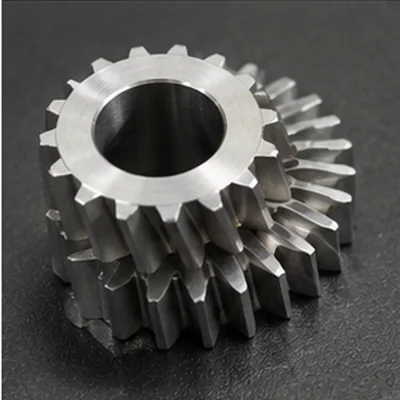
Examples of precision turned and milled interfaces.
Where Custom CNC-Machined Rail Components Are Used
Different rail equipment functions require specific machined interfaces.
Rail Maintenance Equipment
Typical Part: Threaded Adapter / Pin / Sleeve
Function: Mechanical connection or positioning
Buyer Concern: Replacement fit + repeat interchangeability
Rail Inspection Equipment
Typical Part: Sensor Body / Mounting Block
Function: Sensor support and alignment
Buyer Concern: Hole position + mounting datum
Pneumatic / Fluid Systems
Typical Part: Valve Body / Multi-port Connector
Function: Air or fluid routing
Buyer Concern: Internal burrs + port orientation
Industrial Rail Machinery
Typical Part: Flange / Hub / Heavy Sleeve
Function: Power transmission interface
Buyer Concern: Pilot-to-bolt concentricity
Monitoring Assemblies
Typical Part: Probe Housing / Connector Body
Function: Environmental protection for electronics
Buyer Concern: Thread fit + sealing surface
Legacy Equipment Repair
Typical Part: Obsolete Custom Fitting
Function: Restoring older equipment operation
Buyer Concern: Drawing revision + material match
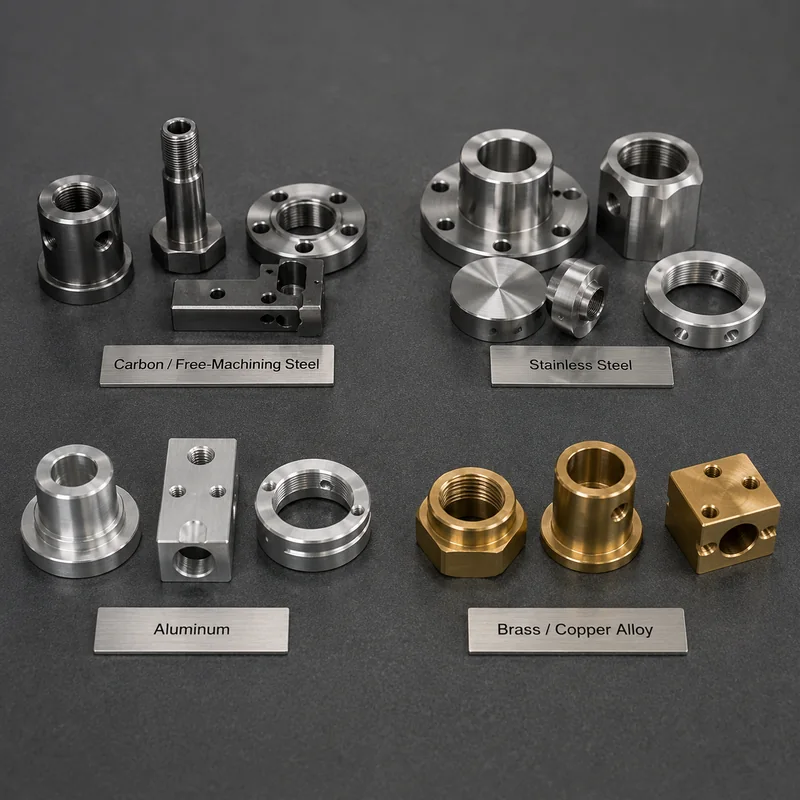
Materials for CNC-Machined Railroad Fittings
Material selection must revolve around load, wear, corrosion, temperature, mating material, and the specific railroad environment. There is no universal "best" material.
Carbon / Free-Machining Steel
Suitable for pins, sleeves, studs, and general mechanical components (e.g., 1214/1215). Buyer Watch: Requires corrosion protection (plating/blackening) and final treatment review.
Stainless Steel
Ideal for exposed fittings, connector bodies, and sensor components (e.g., 303, 304, 316/316L). Buyer Watch: Confirm exact grade, thread galling risks, and surface finish.
Aluminum
Used in monitoring equipment, lightweight mounts, and sensor housings (e.g., 6061, 7075). Buyer Watch: Galvanic corrosion in mixed-metal environments, load limits, and anodizing requirements.
Brass / Copper Alloy
Applied in specific connector, instrument, or bushing applications. Buyer Watch: Wear rates and mating material compatibility.
Why Railroad Replacement Parts Fail Even When Dimensions Look Correct
Common risks when sourcing custom CNC machined rail components.
Risk 01
Drawing Dimensions Match, but the Railroad Specification Does Not
Missing material conditions, outdated revisions, or unconfirmed OEM approval requirements lead to rejected parts.
Risk 02
Holes, Threads & Mounting Faces Lose Their Functional Relationship
Individual features pass inspection, but incorrect concentricity or datum alignment causes assembly failure.
Risk 03
Prototype Passes, but Repeat Batches Lose Interchangeability
Process drift, tool wear, or unrecorded critical-to-quality features cause long-term replacement issues.
4. Vibration Failure
Parts fit initially but loosen under cyclic rail loads due to poor thread fit.
5. Thread Gauging vs Assembly
Threads pass GO/NO-GO but fail installation due to incorrect shoulder position.
6. Internal Burrs & Chips
Cross holes retain burrs, contaminating pneumatic or fluid systems.
7. Material Condition
Correct steel grade used, but wrong heat treatment applied.
8. Environmental Corrosion
Surface protection fails to match the harsh outdoor railway environment.
9. Reverse Engineering Errors
Copying a worn sample without confirming original engineering tolerances.
10. Missing Traceability
Parts pass physical inspection but lack required material or batch documentation.
Core Challenge 01
Dimensions Pass, but the Railroad Interface or Specification Does Not
The Challenge: A buyer provides an old drawing, part number, or sample. The machined fitting matches the raw dimensions, but the project requires a specific drawing revision, material standard, or OEM approval.
Why It Happens: Use of incomplete drawings, unconfirmed legacy changes, or assuming standard material properties without checking the required heat treatment or condition.
Customer Consequence: The part cannot be released to the rail assembly, documentation is rejected, and replacement orders are delayed.
LuckyHxs Approach
Confirm drawing revision and mating interfaces.
Ask for applicable customer/OEM/rail requirements.
Identify inspection and documentation needs before quoting.
Note: Parts are manufactured to customer drawings. Any railroad-specific approval must be confirmed before quotation.
Core Challenge 02
Holes, Threads & Ports Pass Individually but Fail the Final Assembly
The Challenge: On threaded adapters, valve bodies, or mounting blocks, the thread gauge passes and the hole diameter is correct, but the part fails to install.
Why It Happens: The thread axis is misaligned, radial port orientation is wrong, shoulder position is shifted, or cross-hole burrs interfere with the mating component.
The Reality: Inspecting interface relationships is more critical than checking dimensions in isolation.
LuckyHxs Approach
Define functional datum
Thread-to-bore relationship
Hole / port orientation
Cross-hole intersection review
Core Challenge 03
Prototype Passes, but Repeat Batches Lose Interchangeability
The Challenge: The first article fits perfectly. Months later, a repeat replacement batch arrives—threads are tight, hole patterns have shifted, and the part no longer interchanges.
Why It Happens: Uncontrolled supplier process changes, fixture variations, thread tool wear, or failing to lock down the critical-to-quality features after prototype approval.
The Reality: Prototype Approval ≠ Automatic Long-Term Interchangeability.
LuckyHxs Approach
First Article Verification & Feature Identification.
In-process thread and burr review.
Repeat-order requirement retention and batch identification.
A Worn Railroad Sample Is Not the Original Engineering Definition
When supplying an old part, directly copying its current geometry is risky. It may be worn, corroded, or previously modified.
1
Existing Part Review
Review wear, corrosion, and repair history. Identify mating interfaces.
2
Engineering Definition
Check available old drawings. Create controlled CAD. Confirm material & datums.
3
Approved Replacement
Prototype machining and fit verification with the customer.
4
Repeat Production
Lock down manufacturing definition for long-term interchangeability.
Important: If the component is a safety-critical railway part, customers must provide original engineering and approval requirements. We cannot infer load ratings or fatigue requirements from a physical sample.
Railroad Fittings Need Functional Interfaces, Not Just Correct Threads
Thread Gauge PASS is only one part of fitting acceptance.
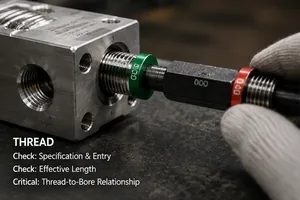
THREAD
Check: Specification & Entry
Check: Effective Length
Critical: Thread-to-Bore Relationship
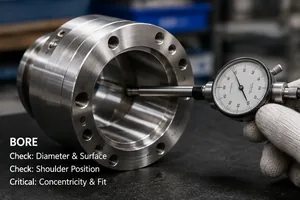
BORE
Check: Diameter & Surface
Check: Shoulder Position
Critical: Concentricity & Fit
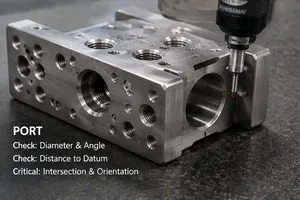
PORT
Check: Diameter & Angle
Check: Distance to Datum
Critical: Intersection & Orientation
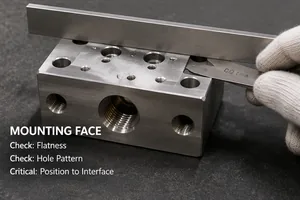
MOUNTING FACE
Check: Flatness
Check: Hole Pattern
Critical: Position to Interface
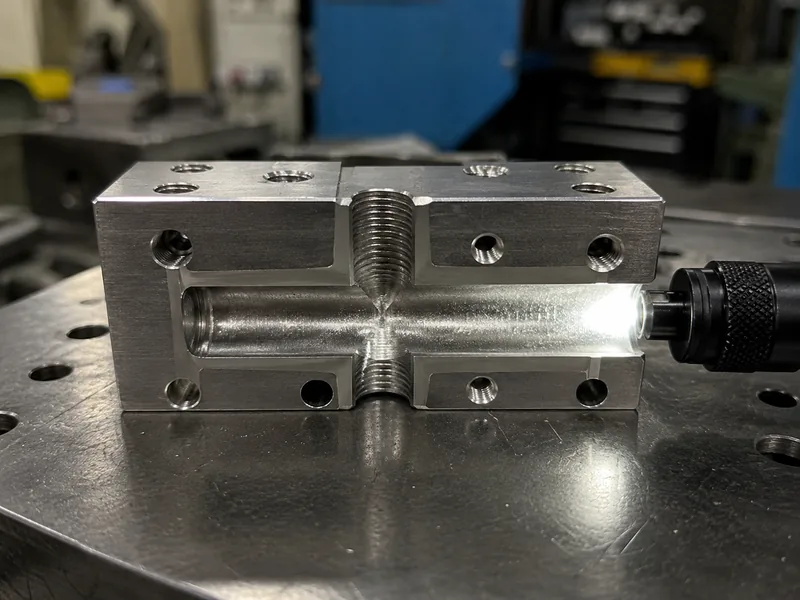
Hole Diameter PASS Does Not Mean the Internal Passage Is Clean
In pneumatic fittings, valve bodies, and fluid adapters, an internal burr or metal chip can cause seal damage, assembly interference, or downstream contamination.
Critical Intersections We Review:
Main BoreCross HoleRadial PortBlind HoleThread Exit
The Control Process
Machining → Cross-Hole Intersection Review → Feature-Specific Deburring → Internal Cleaning → Visual/Magnified Review Where Appropriate → Final Verification.
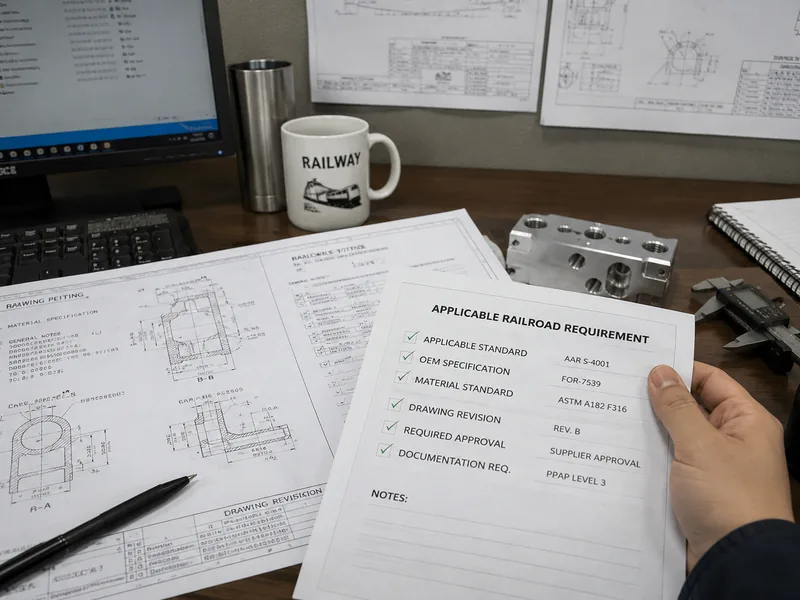
Confirm the Applicable Railroad Requirement Before Production
Different railroad projects and components can be governed by different customer specifications, OEM drawings, material standards, and inspection requirements.
North American projects may involve AAR requirements where applicable, while infrastructure projects might reference AREMA recommendations. ISO9001 is not a substitute for project-specific railroad approvals where those approvals are required.
What to Provide With Your RFQ:
Applicable Standard
Drawing Revision
OEM Specification
Required Approval
Material Standard
Documentation Req.
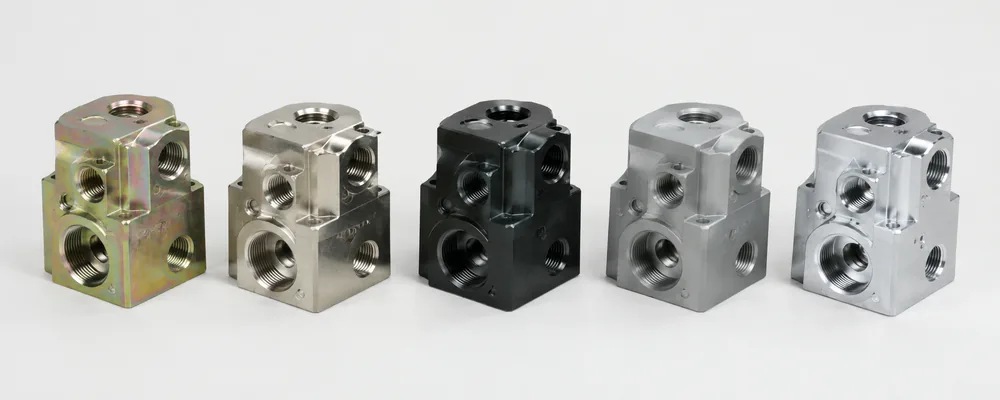
Choose Surface Protection Around the Real Rail Environment
Surface protection should be selected according to material, exposure environment (moisture, salt, dust, outdoor storage), mating components, and customer specification.
Zinc Plating
Nickel Plating
Blackening
Anodizing
Polishing
Critical dimensions and thread fits may need review after finishing thickness is applied.
CNC Processes for Custom Railroad & Rail Equipment Fittings
The process should follow the part geometry and functional interfaces—not a generic machine list.
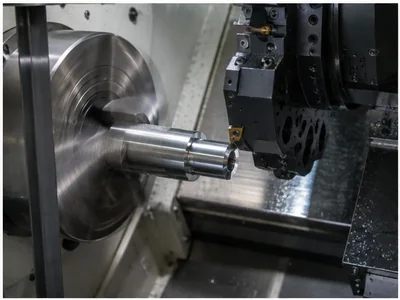
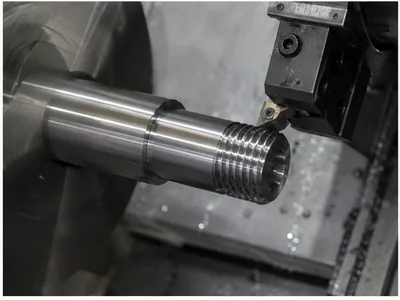
CNC Turning
Suitable for fittings, adapters, pins, bushings, sleeves, and flanges.
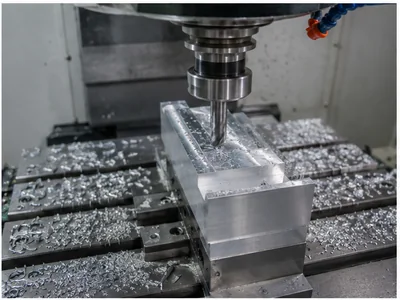
CNC Milling
Suitable for mounting blocks, brackets, interface components, and sensor housings.
Turn-Mill
Suitable for threaded fittings with hex, cross holes, radial ports, flats, or slots.
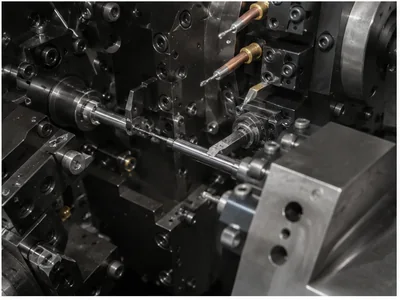
Swiss Machining
Suitable for small-diameter, slender, repeat precision components.
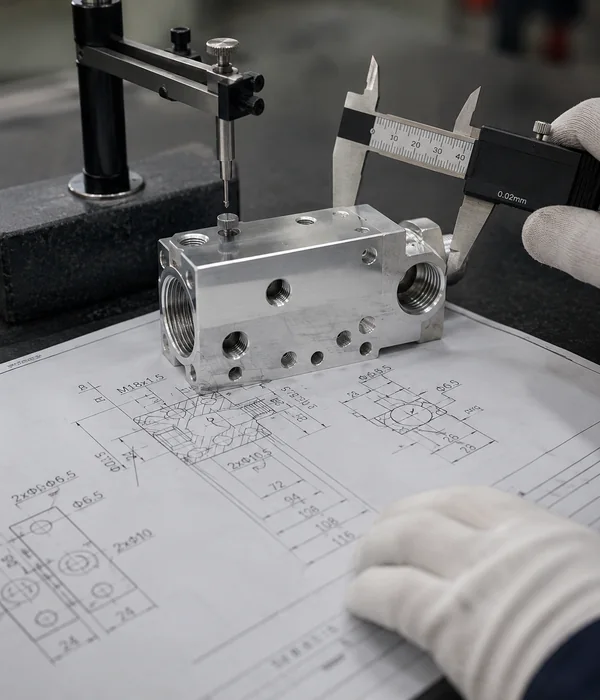
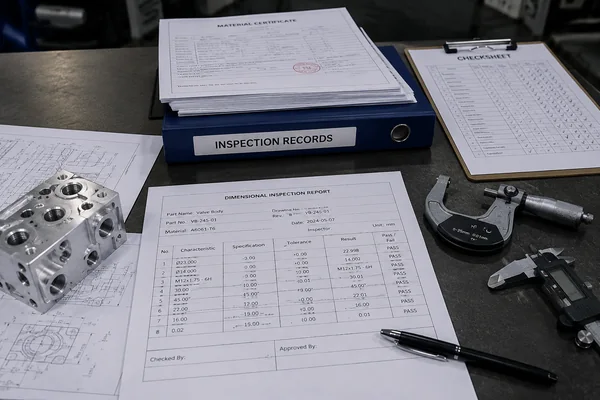
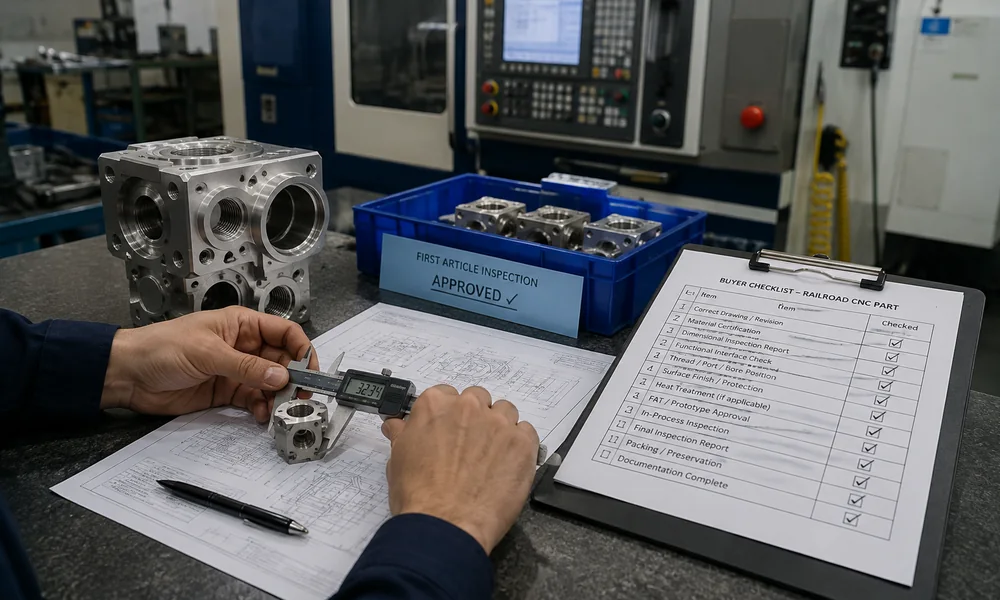
Part Quality and Documentation Must Be Controlled Together
A part can pass dimensionally and still be difficult for the customer to release if the required documents are missing. Inspection methods are selected according to drawing and project requirements.
12-Step Control Flow
1. RFQ Review
7. First Article Verification
2. Drawing Revision Review
8. In-Process Inspection
3. Material Confirmation
9. Thread / Bore / Port Review
4. Applicable Spec Review
10. Burr / Surface Review
5. Functional Datum ID
11. Final Batch Verification
6. Process Planning
12. Repeat-Order Retention
Documentation such as Dimensional Inspection Reports, Material Documentation, and Batch Identification are provided according to order requirement and where agreed.
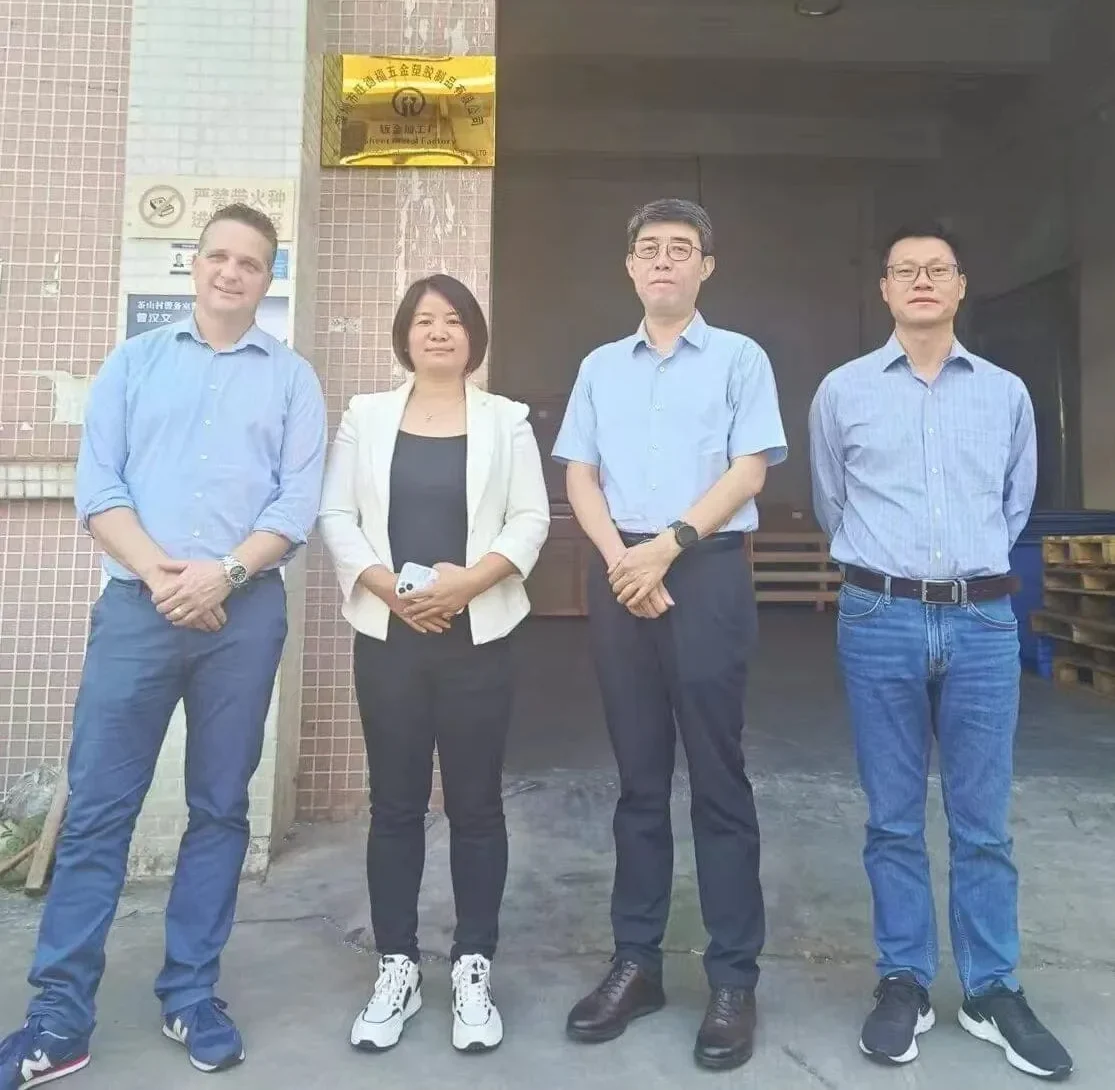
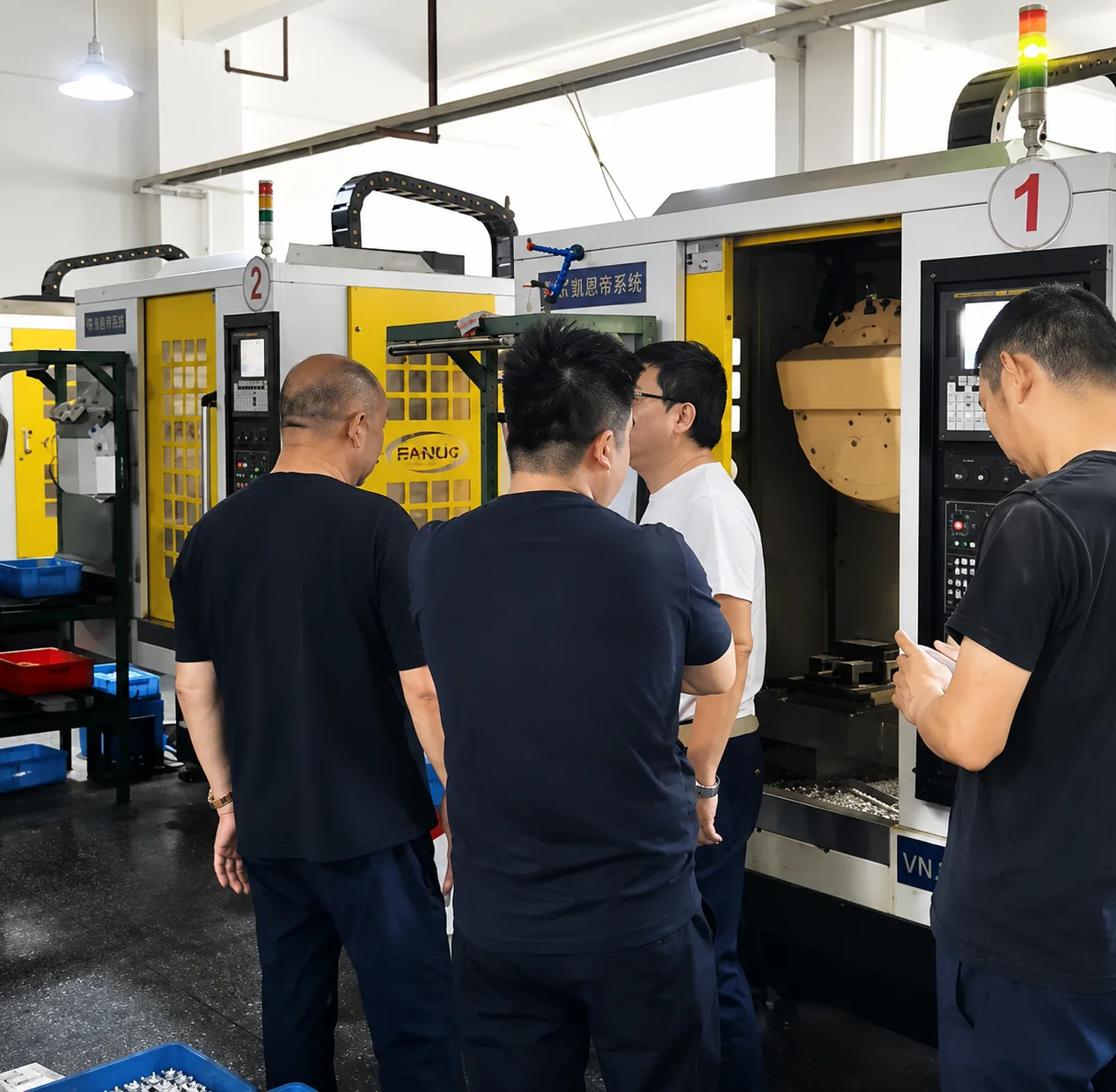
A CNC Manufacturing Partner You Can Verify
Real capabilities. Real facility.
Certificates & Compliance Documents
ISO9001CEREACHROHSTEST REPORT
Factory Visit
Production Review
Technical Discussion
Quality Review
See How LuckyHxs CNC Parts Are Machined and Inspected
What Are Railroad Fittings? Types, Applications & CNC-Machined Features
Railroad fittings are not one single standardized product category. In CNC machining, the term can include drawing-based mechanical interfaces used to connect, locate, guide, mount, route or control equipment within rail-related assemblies. Not every railroad fitting is a track fastener.
Mounting Fittings: Blocks and brackets relying on datum relationships.
Flanges & Interfaces: Power or structural connections.
Sensor / Instrument Components: Housings for condition monitoring.
Replacement Components: Custom reproduction of legacy interfaces.
Common CNC Features
These parts typically involve precision Thread, Bore, Shoulder, Hole Pattern, Cross Hole, Radial Port, Groove, and Mounting Face features.
How Are Legacy Railroad Replacement Parts Reproduced Without Losing Interchangeability?
An old railroad equipment component may still be physically available even when the original supplier, CAD file or current production drawing is not. The challenge is that the used part may no longer represent its original dimensions. Worn Sample ≠ Original Design Definition.
Why Direct Copying Fails
The old part might be worn, corroded, distorted, previously repaired, modified, or manufactured to an older revision.
The Proper Reproduction Workflow
Existing Part → Available Drawing Review → Wear & Interface Evaluation → Dimensional Measurement → Controlled CAD / Drawing → Material Confirmation → Critical Datum Review → Prototype → Fit Verification → Approved Manufacturing Definition → Repeat Production
What Cannot Be Recovered From Geometry Alone?
Geometry does not reveal Original Material Condition, Heat Treatment, Fatigue Requirement, Original Tolerance, Load Rating, or Required Railroad Approval. These must be confirmed from customer engineering information. Projects involving regulated or safety-critical components require the customer’s applicable engineering and approval requirements before manufacturing.
How Do You Choose a Railroad CNC Machining Manufacturer?
A suitable railroad CNC machining supplier should be evaluated around the specific drawing, interfaces, material, inspection and documentation requirements—not generic claims about precision.
The Buyer Checklist
Can the supplier work from the correct drawing revision?
How are legacy replacement dimensions verified?
Can they identify functional datums and mating interfaces?
Can they confirm material and treatment requirements?
Can they manufacture both turned and milled fittings?
How are prototype-to-repeat-batch requirements retained?
How are threads and bores inspected?
What dimensional and material documentation can be supplied?
How are radial ports and cross-hole positions verified?
Can they identify when railroad-specific approvals need confirmation?
How are internal burrs and chips reviewed?
How are secondary processes controlled?
How are sealing or mating faces inspected?
Can they review the drawing before giving a production commitment?
Supplier Warning Signs
Quotes without reviewing the drawing, cannot explain inspection method, cannot identify critical interface, changes material without approval, no drawing revision control, or claims railroad certification without proof.
LuckyHxs follows a strict process from Drawing Review, CNC Turning/Milling, First Article, In-Process Inspection, to Final Verification and Repeat Production.
Frequently Asked Questions About Railroad Fittings CNC Machining
What are CNC-machined railroad fittings?
In custom manufacturing, railroad fittings are precision machined mechanical interfaces used to connect, locate, guide, mount, route, or control equipment within rail-related assemblies. They are typically made to customer drawings rather than being standard track fasteners.
What types of railroad fittings can be CNC machined?
We machine threaded adapters, bushings, sleeves, pins, pneumatic valve bodies, equipment mounting blocks, flanges, sensor housings, and custom legacy replacement parts based on 2D drawings and 3D CAD files.
Can you manufacture railroad replacement parts from an old sample?
An old sample is a possible project starting point. However, worn geometry, material, heat treatment, original tolerances, and approval requirements must be confirmed by the customer to establish an approved engineering definition before manufacturing.
What materials are used for CNC-machined railroad fittings?
Common materials include Carbon/Free-Machining Steel (e.g., 1214/1215), Stainless Steel (303, 304, 316), Aluminum (6061, 7075), and Brass/Copper alloys. The choice depends on load, wear, corrosion resistance, and customer specification.
Can you manufacture threaded and pneumatic rail equipment components?
Yes, according to customer drawings and project requirements. We machine custom valve bodies and pneumatic adapters, focusing on bore relationships and port orientations.
How do you control cross holes and internal burrs?
We review cross-hole intersections during process planning, apply feature-specific deburring, perform internal cleaning, and conduct visual or magnified reviews where appropriate to prevent assembly interference.
Can you provide inspection or material documents?
Project-specific documentation, such as Dimensional Inspection Reports and Material Documentation, can be reviewed during quotation and supplied where agreed and where applicable.
Does LuckyHxs have AAR M-1003 certification?
LuckyHxs should not be represented as AAR M-1003 certified unless current certification is verified. Buyers should provide any AAR, OEM, railroad, or project-specific approval requirements with the RFQ so applicability can be reviewed before quotation.
How much does railroad fittings CNC machining cost?
Cost depends on Material, Part Size, Geometry, Threads, Holes, Setup, Quantity, Tolerance, Heat Treatment, Surface Finish, Inspection, Documentation, and any Replacement-Part Engineering Work required.
What information should I send for a railroad CNC machining quote?
Please provide: 2D Drawing, 3D CAD, Current Drawing Revision, Material & Condition, Quantity, Critical Dimensions, Mating Interfaces, Heat Treatment, Surface Finish, Applicable Specifications, Required Approvals, Inspection/Documentation Requirements, and an existing sample if applicable.
Need a Railroad Fitting That Still Fits the Existing Assembly?
Send your 2D/3D drawing, current revision, material, quantity, mating-interface dimensions, threads, bores, hole positions, surface requirements and any railroad- or OEM-specific specifications. For legacy replacement projects, include the existing part and any available original documentation.
Trusted CNC Partner
High-Precision CNC Machining
Partner with an industry leader. We provide OEM and ODM support with uncompromising quality, offering fast 3-day sample delivery for your critical projects.