
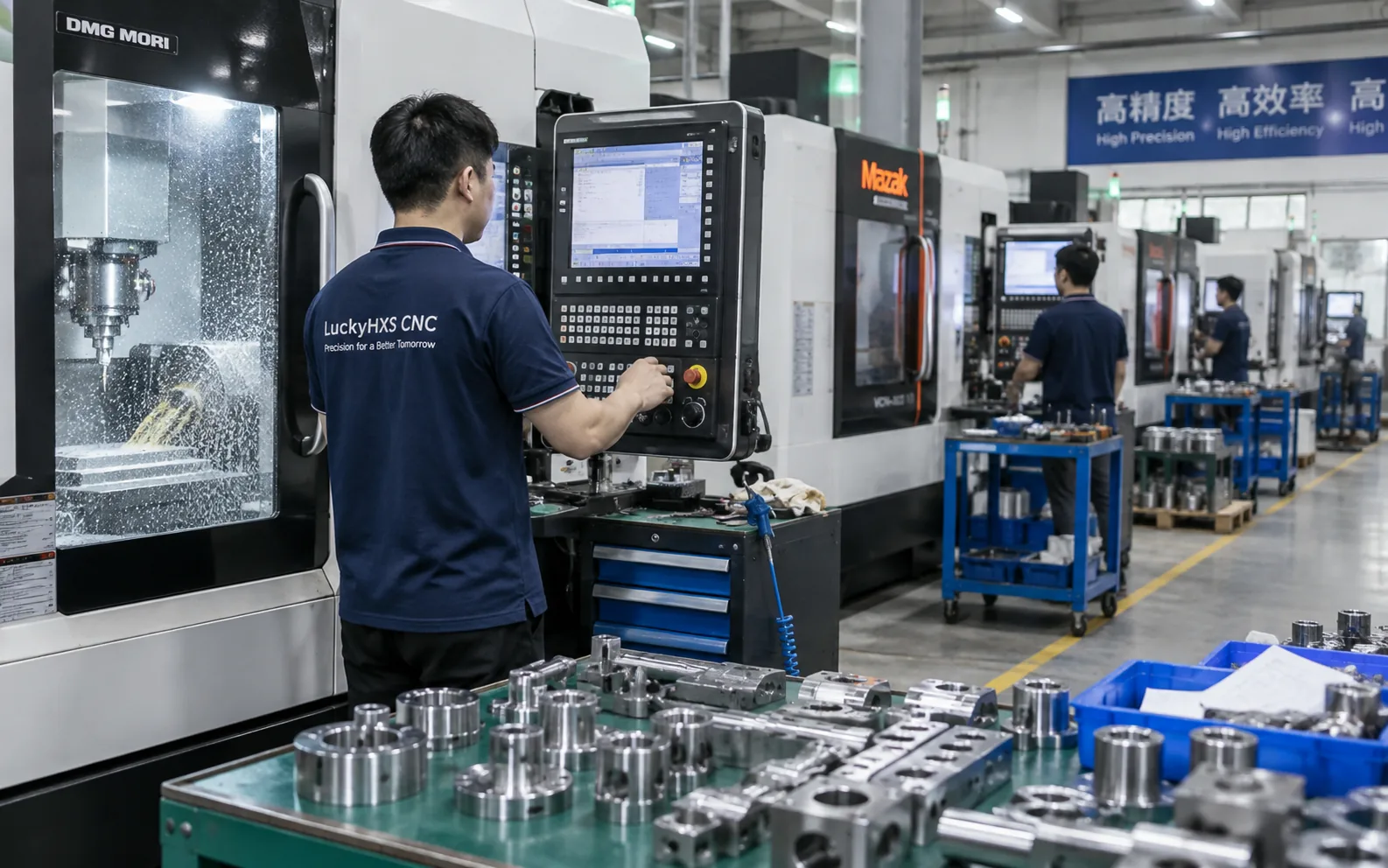
Industrial CNC machining uses computer-controlled equipment to produce accurate, repeatable components for demanding production environments. From CNC turning for industrial parts to CNC milling for industrial parts and CNC turn-mill machining, these processes help manufacturers improve consistency, reduce manual error, and scale precision CNC machining for industrial applications across aerospace, automotive, energy, medical, electronics, and heavy equipment sectors.
Video Guide: This overview explains what CNC machining is and how computer-controlled cutting supports modern industrial production.
What Is Industrial CNC Machining?
Industrial CNC machining is the use of computer-controlled machine tools to cut, drill, mill, turn, and finish materials into precise industrial components. It includes CNC turning, CNC milling, and CNC turn-mill machining, enabling manufacturers to produce complex parts with tight tolerances, repeatable quality, and efficient production workflows.
Video Guide: This video gives a general explanation of CNC machining principles and why they matter for precision industrial part production.
Core Definition and Scope
Industrial CNC machining converts digital designs into finished components by controlling tool movement through programmed instructions. Instead of relying only on manual operation, CNC machines follow G-code or CAM-generated toolpaths to remove material from metal, plastic, and engineered composites.
Common CNC machining processes include:
- CNC turning for industrial parts: Rotates the workpiece while a cutting tool shapes cylindrical features such as shafts, bushings, pins, and threaded parts.
- CNC milling for industrial parts: Uses rotating cutting tools to create slots, pockets, contours, holes, and complex 3D surfaces.
- CNC turn-mill machining: Combines turning and milling in one setup, reducing handling time and improving alignment accuracy.
- Precision CNC machining: Focuses on tight tolerances, surface finish control, repeatability, and quality assurance.
- CNC machining for industrial applications: Supports production of parts used in machinery, automation systems, transportation equipment, electronics, medical devices, and energy infrastructure.
Luckyhxs Pro Tip: When we evaluate a CNC project, we first look at geometry, tolerance, material, and production volume. Choosing turning, milling, or turn-mill machining early prevents unnecessary setups and helps control both cost and lead time.
From CAD to Finished Part: The CNC Machining Workflow
CNC machining works by turning CAD designs into machine instructions that guide cutting tools with high accuracy. The workflow typically includes design review, CAM programming, material setup, tool selection, machining, inspection, and finishing. This controlled process allows industrial parts to be produced consistently across prototypes and production runs.
Video Guide: This video illustrates how CNC machining works from programmed control to material removal and finished part production.
Step-by-Step Production Workflow
A CNC machining project begins with a digital model and ends with inspected, usable parts. Each step influences accuracy, surface finish, cost, and delivery time.
Typical CNC machining process flow:
- Design and drawing review: Engineers check part geometry, tolerances, material requirements, surface finish, and critical features.
- DFM analysis: The part is reviewed for manufacturability, including tool access, wall thickness, hole depth, corner radii, and setup strategy.
- CAM programming: Software converts CAD geometry into toolpaths, speeds, feeds, and cutting sequences.
- Machine setup: Operators prepare fixtures, tools, raw material, work offsets, and inspection references.
- Machining operation: CNC turning, milling, drilling, tapping, boring, or turn-mill operations remove material according to the program.
- In-process inspection: Critical dimensions are checked during production to prevent scrap and maintain repeatability.
- Finishing: Parts may receive deburring, polishing, anodizing, plating, heat treatment, passivation, or other secondary processes.
- Final quality control: Dimensional reports, visual checks, and packaging confirm that the parts meet specifications.
Luckyhxs Pro Tip: We recommend confirming inspection requirements before production starts. If a part needs CMM reporting, material certificates, or surface treatment documentation, planning this upfront avoids delays after machining.
Is AI going to replace CNC machinists?
AI will not fully replace CNC machinists, but it will change how they work. AI can assist with programming, toolpath optimization, predictive maintenance, and quality analysis, while skilled machinists remain essential for setup decisions, troubleshooting, fixture planning, tolerance control, and real-world manufacturing judgment.
Video Guide: This video highlights advantages of CNC machining, providing useful context for how automation supports rather than eliminates skilled manufacturing work.
Human Expertise in an Automated Shop
AI and automation are becoming more common in CNC machining, especially in quoting, scheduling, toolpath generation, tool wear prediction, and inspection data analysis. However, machining still involves physical variables that require experienced decision-making.
AI can improve:
- Programming efficiency: Suggesting toolpaths, speeds, feeds, and machining strategies.
- Process stability: Monitoring vibration, tool wear, heat, and machine load.
- Quality control: Detecting trends in inspection data before parts drift out of tolerance.
- Maintenance planning: Predicting spindle, tool, or machine issues before failures occur.
Machinists remain critical for:
- Selecting practical workholding methods.
- Understanding cutting behavior in real materials.
- Adjusting setups when drawings and reality do not match perfectly.
- Preventing chatter, distortion, burrs, and tolerance stack-up.
- Validating whether a program is safe and production-ready.
Luckyhxs Pro Tip: We treat AI as a productivity tool, not a replacement for machining knowledge. The best results come when experienced machinists use digital tools to make faster, better-informed decisions on the shop floor.
What are the benefits of CNC machining?
The main benefits of CNC machining include high precision, repeatability, material versatility, efficient production, complex geometry capability, and consistent quality. For industrial applications, CNC machining reduces human error, supports scalable manufacturing, and enables reliable production of functional components with tight tolerances and demanding performance requirements.
Video Guide: This video explains key CNC benefits and why manufacturers use CNC machining for accurate, repeatable production.
Practical Advantages for Industrial Manufacturing
CNC machining is widely used because it balances accuracy, flexibility, and production efficiency. It can support one-off prototypes, small batches, and larger production runs while maintaining consistent part quality.
Based on our internal data and market analysis, here is the breakdown:
| Benefit | Why It Matters | Industrial Impact |
|---|---|---|
| High precision | Produces tight tolerances and accurate features | Better fit, function, and assembly reliability |
| Repeatability | Delivers consistent parts across batches | Lower variation and fewer rejected components |
| Material flexibility | Works with aluminum, steel, stainless steel, brass, copper, titanium, plastics, and more | Supports diverse engineering requirements |
| Complex geometry | Creates pockets, threads, contours, slots, holes, and 3D profiles | Enables advanced part designs |
| Fast prototyping | Converts CAD designs into parts quickly | Shortens development cycles |
| Scalable production | Supports both low-volume and repeat orders | Improves supply chain flexibility |
| Quality control | Integrates inspection and process monitoring | Reduces defect risk |
Luckyhxs Pro Tip: If cost and precision are both priorities, we often recommend relaxing non-critical tolerances while keeping tight tolerances only on functional features. This can significantly reduce machining time without sacrificing performance.
Is CNC a hard job?
CNC can be challenging because it combines technical drawing interpretation, machine setup, tooling knowledge, programming, measurement, and problem-solving. However, with proper training and structured processes, CNC work becomes manageable. The difficulty depends on part complexity, tolerance requirements, machine type, material, and production expectations.
Skills Required for CNC Work
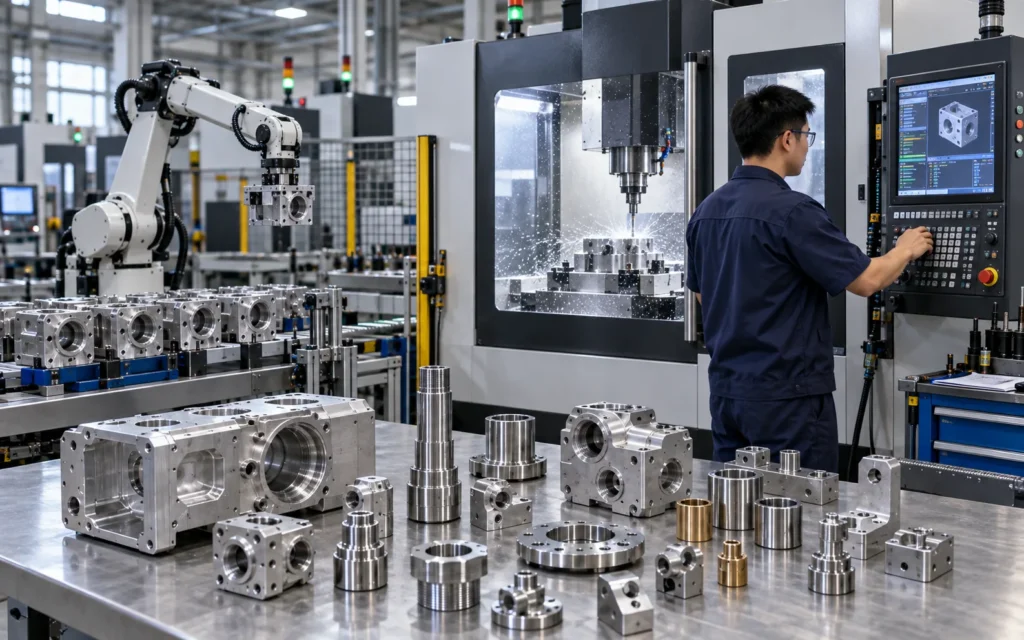
CNC machining is not only button-pressing. A skilled CNC professional understands how design, materials, tooling, machine behavior, and inspection interact. Entry-level operators may start with loading parts and checking dimensions, while advanced machinists handle setup, programming, and process improvement.
Important CNC skills include:
- Blueprint reading: Understanding dimensions, tolerances, datums, GD&T, and surface finish symbols.
- Tooling knowledge: Selecting end mills, drills, inserts, taps, boring tools, and tool holders.
- Material understanding: Adjusting cutting conditions for aluminum, steel, stainless steel, titanium, brass, plastics, and composites.
- Measurement capability: Using calipers, micrometers, height gauges, bore gauges, CMMs, and surface roughness tools.
- Problem-solving: Identifying causes of chatter, burrs, tool wear, poor finish, and dimensional drift.
- Machine setup: Aligning fixtures, setting offsets, proving programs, and controlling repeatability.
Luckyhxs Pro Tip: For beginners, we suggest learning inspection first. If you can measure parts correctly and understand why a dimension is wrong, you will become much stronger at setup, programming, and troubleshooting.
Key Features & Comparison
Key CNC machining features include accuracy, automation, repeatability, multi-axis capability, material compatibility, and process flexibility. Comparing CNC turning, CNC milling, and CNC turn-mill machining helps manufacturers select the most efficient method based on part shape, complexity, tolerance needs, production volume, and setup requirements.
Video Guide: This video reviews multiple CNC applications, showing how different CNC processes serve a wide range of industrial use cases.
Process Selection and Capability Comparison
Selecting the right CNC process depends on geometry and production goals. Round parts often suit turning, prismatic parts often suit milling, and complex parts with both rotational and milled features often benefit from turn-mill machining.
Based on our internal data and market analysis, here is the breakdown:
| CNC Process | Best For | Typical Parts | Main Advantages | Key Considerations |
|---|---|---|---|---|
| CNC turning | Cylindrical and rotational components | Shafts, pins, spacers, bushings, threaded fittings | Fast cycle times, excellent concentricity, efficient material removal | Less suitable for complex flat or prismatic features |
| CNC milling | Flat, contoured, pocketed, and 3D parts | Brackets, housings, plates, molds, manifolds | High geometry flexibility, multi-axis capability, precise feature control | May require multiple setups for complex parts |
| CNC turn-mill machining | Parts needing both turning and milling | Valve bodies, connectors, complex shafts, hydraulic parts | Fewer setups, better alignment, shorter lead times | Requires advanced equipment and programming |
| Precision CNC machining | Tight-tolerance functional components | Aerospace parts, medical components, automation parts | High accuracy, repeatability, controlled quality | Cost increases with tighter tolerances and inspection needs |
| Multi-axis CNC machining | Complex angled or contoured geometry | Impellers, aerospace brackets, complex enclosures | Reduced setups, advanced geometry capability | Higher programming and machine costs |
Luckyhxs Pro Tip: We do not choose the most advanced process by default. The best process is the one that meets the drawing requirements with the fewest setups, stable quality, and the most efficient cycle time.
Cost & Buying Factors
CNC machining cost depends on material, part complexity, tolerance requirements, machining time, setup count, surface finish, inspection needs, and order volume. Buyers should evaluate not only unit price but also manufacturability, lead time, quality control, supplier capability, communication, and long-term production stability.
Video Guide: This CNC applications video provides additional context for how process choice and use case can influence machining requirements.
Pricing Drivers and Supplier Evaluation
CNC machining pricing is shaped by both engineering and production factors. A simple aluminum plate with standard tolerances may be economical, while a stainless steel part with deep pockets, tight tolerances, and multiple finishes will cost more.
Based on our internal data and market analysis, here is the breakdown:
| Cost Factor | Impact on Price | How to Optimize |
|---|---|---|
| Material type | Harder or specialty materials increase tool wear and machining time | Choose practical materials that meet performance needs |
| Part complexity | More features, deep cavities, and tight radii increase cycle time | Simplify geometry where possible |
| Tolerances | Tight tolerances require slower machining and more inspection | Apply tight tolerances only to critical features |
| Surface finish | Polishing, anodizing, plating, and coating add cost and lead time | Specify finish based on function, not appearance alone |
| Setup quantity | Multiple setups increase labor and alignment risk | Use DFM to reduce repositioning |
| Order volume | Larger quantities spread setup cost across more parts | Batch repeat orders when possible |
| Inspection requirements | CMM reports and full documentation add quality-control time | Define inspection level clearly before quoting |
| Lead time | Urgent jobs may require schedule priority | Plan production earlier when possible |
When choosing a CNC machining supplier, review:
- Equipment capability for turning, milling, and turn-mill machining.
- Experience with your material and industry.
- Tolerance and inspection capability.
- Ability to provide DFM feedback.
- Communication speed and engineering support.
- Consistency across repeat orders.
Luckyhxs Pro Tip: When requesting a quote from Luckyhxs, include 2D drawings, 3D files, material grade, surface finish, quantity, and inspection requirements. Complete information helps us quote faster and recommend cost-saving improvements.
Conclusion
Industrial CNC machining is essential for producing accurate, reliable, and repeatable parts across modern industries. By understanding CNC machining processes, applications, benefits, costs, and supplier selection factors, buyers can make better decisions and achieve stronger results from CNC turning, CNC milling, and CNC turn-mill machining projects.
Video Guide: This video focuses on aerospace CNC machining, demonstrating how precision CNC machining supports demanding industrial applications.
Final Takeaways for Industrial Buyers
CNC machining remains one of the most important manufacturing methods for functional industrial components. It supports rapid prototyping, production machining, precision tolerances, and a wide range of materials. The right process depends on the part’s geometry, tolerance requirements, production volume, and end-use environment.
Key points to remember:
- Use CNC turning for efficient production of round and cylindrical parts.
- Use CNC milling for housings, plates, brackets, pockets, and complex profiles.
- Use CNC turn-mill machining when a part needs both turned and milled features.
- Use precision CNC machining when dimensional accuracy and repeatability are critical.
- Control cost by reviewing tolerances, materials, finishes, and setup requirements early.
- Choose a supplier that provides engineering support, quality control, and reliable communication.
For industrial CNC machining support, Luckyhxs can help review drawings, optimize manufacturability, and produce precision components for demanding applications.
Luckyhxs Pro Tip: The best CNC results come from early collaboration. If you share your design intent, functional surfaces, and production goals before machining starts, we can help improve quality, reduce risk, and make the project more cost-effective.