
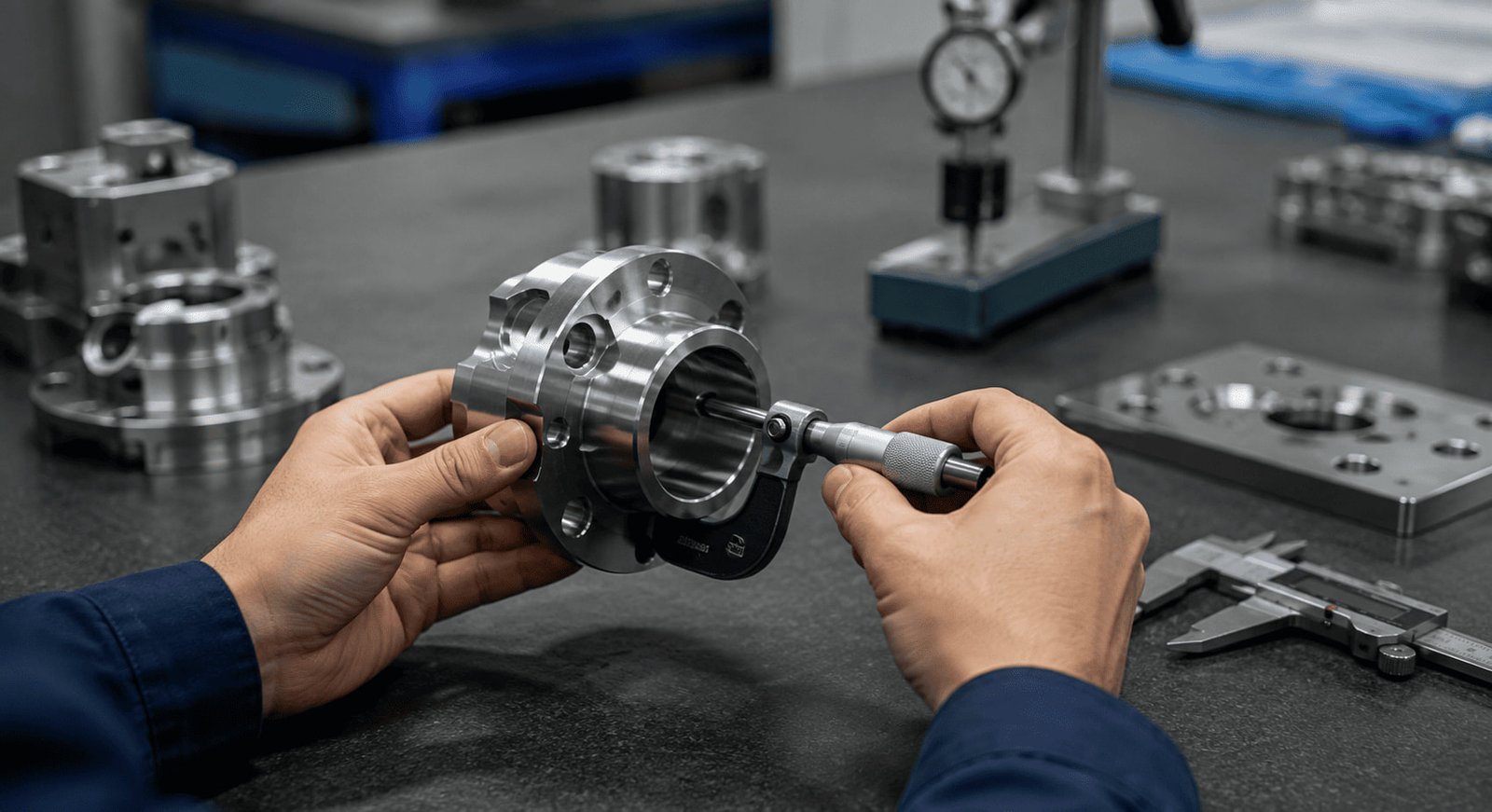
CNC machining delivery dates change because every order combines material availability, part geometry, tolerance level, quantity, finishing, inspection, and shop capacity. For Aluminum CNC Parts, Stainless Steel Parts, Brass & Copper Parts, Plastic CNC Machined Parts, and Free-Machining Steel Parts, the fastest projects are usually those with clear drawings, standard materials, reasonable tolerances, and approved files before production starts.
What is Aluminum CNC Parts,Stainless Steel Parts,Brass & Copper Parts,Plastic CNC Machined Parts,Free-Machining Steel Parts?
These are custom CNC Machining Parts produced from different material families to meet functional, dimensional, and environmental requirements. Aluminum is lightweight, stainless steel is corrosion-resistant, brass and copper offer conductivity, plastics reduce weight and friction, while free-machining steel supports efficient production of shafts, pins, sleeves, and inserts.
Material Families Used in CNC Production
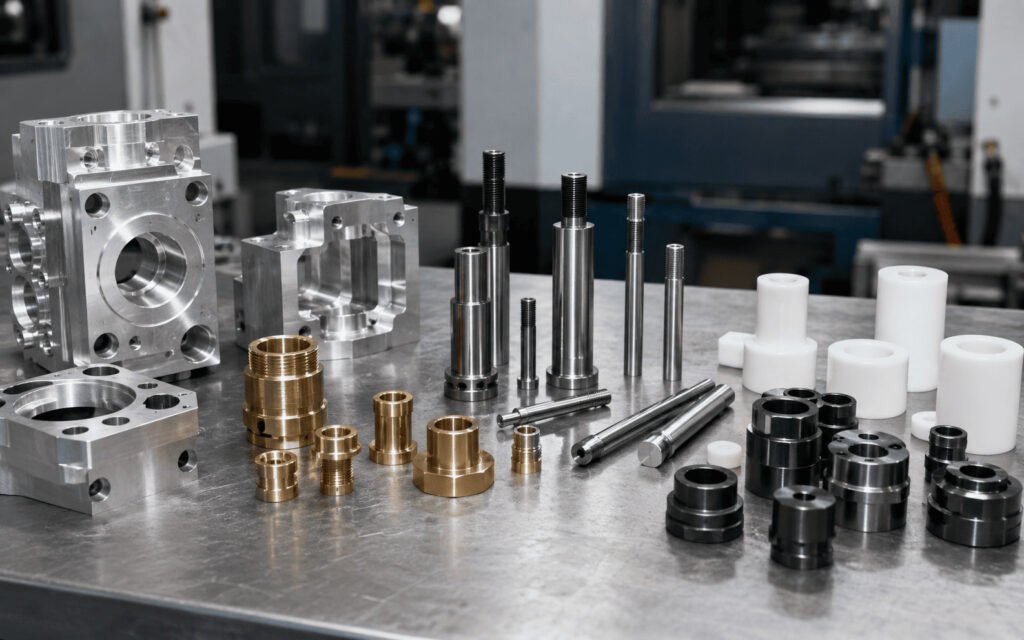
CNC machining removes material from a solid blank using programmed cutting tools. The selected material strongly affects machining speed, tool wear, surface finish, tolerance stability, and lead time. At Luckyhxs, material selection is reviewed together with part geometry, batch size, tolerance needs, and finishing requirements before quoting production timing.
Common applications include Precision Shafts, Bushings & Sleeves, Precision Pins, Threaded Inserts, cnc turning parts, cnc milling parts, cnc lathe parts, swiss machined parts, and CNC turning-milling parts.
Based on our internal data and market analysis, here is the breakdown:
| Material Category | Typical Advantages | Common CNC Applications | Lead Time Impact |
|---|---|---|---|
| Aluminum CNC Parts | Lightweight, fast machining, good surface finish | Housings, brackets, fixtures, covers | Usually shorter due to high machinability |
| Stainless Steel Parts | Strength, corrosion resistance, durability | Shafts, pins, medical or industrial components | Longer due to slower cutting and tool wear |
| Brass & Copper Parts | Electrical/thermal conductivity, stable machining | Threaded Inserts, terminals, bushings | Brass is fast; copper may need slower control |
| Plastic CNC Machined Parts | Lightweight, insulating, low friction | Spacers, sleeves, prototypes, wear parts | Depends on deformation and clamping risk |
| Free-Machining Steel Parts | Good productivity, strong mechanical properties | Precision Shafts, sleeves, pins, turned parts | Often efficient for volume turning |
Luckyhxs Pro Tip: I always recommend confirming material grade early, not just the material name. “Aluminum” or “stainless steel” is not enough for accurate scheduling because 6061, 7075, 304, and 316 can each change tooling, stock availability, and machining time.
What is the difference between lead time and delivery time?
Lead time is the total time required to process and manufacture an order, while delivery time usually refers to transportation after production is complete. In CNC machining, customers often use both terms together, but separating production lead time from shipping time gives a more accurate promised arrival date.
Production Time Versus Transit Time
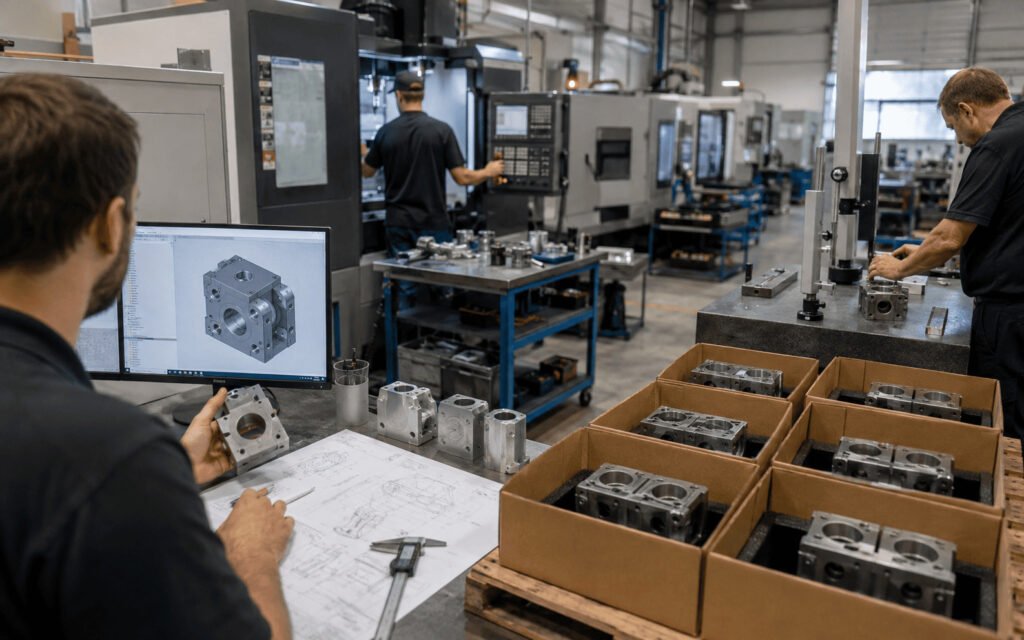
Lead time and delivery time are connected, but they are not identical. Lead time normally starts when all order requirements are confirmed, including drawings, material, quantity, tolerance, finishing, and payment terms. Delivery time starts once the finished CNC Machining Parts leave the factory and enter the logistics process.
Based on our internal data and market analysis, here is the breakdown:
| Term | What It Covers | Typical Start Point | Typical End Point | Main Risk Factors |
|---|---|---|---|---|
| Lead Time | Engineering, purchasing, programming, setup, machining, finishing, inspection | Order and files approved | Parts ready to ship | Material delay, complex geometry, tolerance issues |
| Delivery Time | Freight, customs, local transport, courier handling | Shipment dispatched | Parts received by customer | Customs clearance, weather, carrier delays |
| Total Turnaround Time | Lead time plus delivery time | Project approval | Final receipt | Both factory and logistics risks |
For example, a batch of Aluminum CNC Parts may need 7 working days for production and 3 days for express shipping. The lead time is 7 working days, delivery time is 3 days, and total turnaround time is about 10 working days.
Luckyhxs Pro Tip: I suggest asking suppliers to quote “production lead time” and “shipping transit time” separately. This avoids confusion when parts are finished on schedule but logistics adds extra days.
What is lead time in CNC?
In CNC machining, lead time is the period required to turn approved technical requirements into finished, inspected, and packed parts. It includes engineering review, material procurement, programming, setup, machining, secondary operations, inspection, and documentation, not just the machine cutting time.
What CNC Lead Time Actually Includes
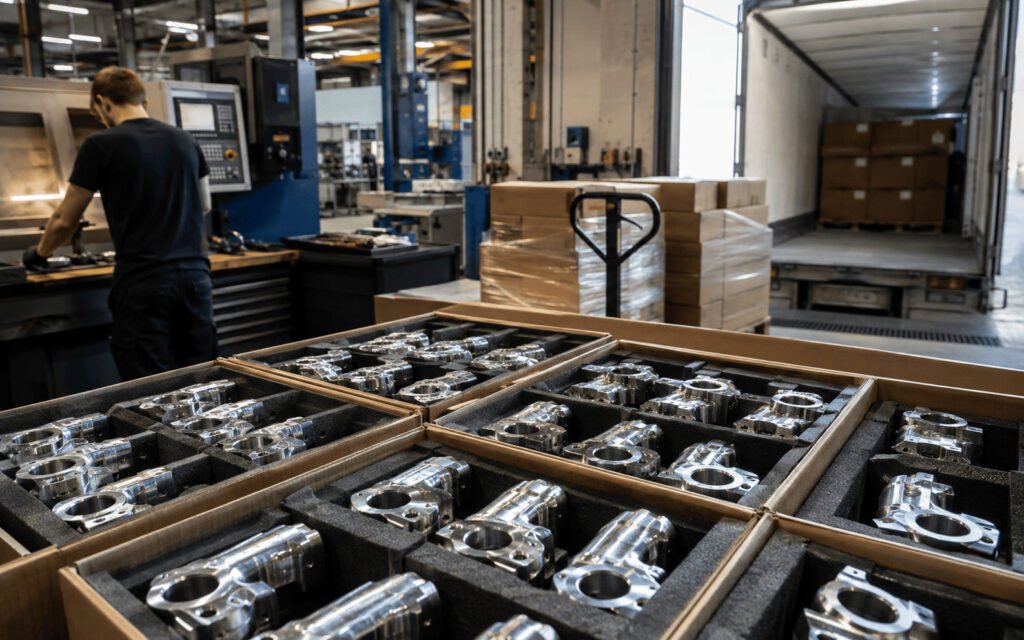
CNC lead time is often misunderstood because actual cutting may only be part of the schedule. A simple brass insert might machine quickly, but waiting for material, plating, inspection reports, or customer approval can extend the project. For precision components, stable planning matters as much as machine speed.
Typical CNC lead time components include:
- RFQ and technical review: Drawing completeness, tolerance review, material confirmation, and manufacturability feedback.
- Raw material sourcing: Stock availability for aluminum, stainless steel, brass, copper, plastics, or free-machining steel.
- CAM programming: Toolpath creation for milling, turning, Swiss machining, or lathe operations.
- Machine setup: Fixtures, collets, jaws, cutters, gauges, and first-article approval.
- Production machining: Actual cycle time multiplied by quantity, plus tool changes and operator checks.
- Secondary operations: Deburring, tapping, heat treatment, anodizing, passivation, plating, or laser marking.
- Quality inspection: Dimensional checks, thread gauges, CMM inspection, surface checks, and reports.
- Packing and shipment preparation: Cleaning, rust prevention, labeling, and protective packaging.
Luckyhxs Pro Tip: I never estimate CNC lead time from cycle time alone. For Precision Shafts, Bushings & Sleeves, and Precision Pins, inspection and handling can be a major part of the schedule, especially when tolerances are tight.
How to calculate delivery lead time?
To calculate delivery lead time, add production preparation, material procurement, machining, finishing, inspection, packing, and shipping transit time. The most reliable estimate uses working days, not calendar days, and includes approval delays, outsourced treatments, customs clearance, and buffer time for high-precision CNC parts.
Practical Lead Time Calculation Formula

A clear formula helps buyers compare quotes accurately. The calculation should begin only after the order is technically complete. If drawings are missing tolerances, material grades, thread standards, or finish requirements, the real countdown has not started yet.
Use this basic formula:
Total Delivery Lead Time =
Engineering Review
+ Material Procurement
+ Programming and Setup
+ Machining Time
+ Secondary Processing
+ Inspection and Documentation
+ Packing
+ Shipping Transit Time
+ Risk Buffer
Example calculation for a medium-complexity CNC batch:
Based on our internal data and market analysis, here is the breakdown:
| Stage | Estimated Time |
|---|---|
| Engineering review and order confirmation | 1 working day |
| Material sourcing | 2 working days |
| CAM programming and machine setup | 1–2 working days |
| Machining production | 3–5 working days |
| Deburring and surface treatment | 2–4 working days |
| Inspection and packing | 1 working day |
| Express shipping | 3–5 working days |
| Estimated total | 13–20 working days |
For urgent orders, some stages can overlap. For example, material can be ordered while programming is prepared, but this only works when the drawing and purchase order are fully approved.
Luckyhxs Pro Tip: I usually add a small buffer for plated, anodized, or passivated parts. Outsourced finishing is one of the most common reasons a CNC order ships later than the machining schedule suggests.
Key Features & Comparison
CNC lead time changes according to material machinability, feature complexity, tolerance level, quantity, finishing, and inspection requirements. Aluminum and brass are often faster, while stainless steel, copper, thin-wall plastics, and high-precision components may require slower cutting, more careful workholding, and longer quality control.
Lead Time Factors by Material and Part Type
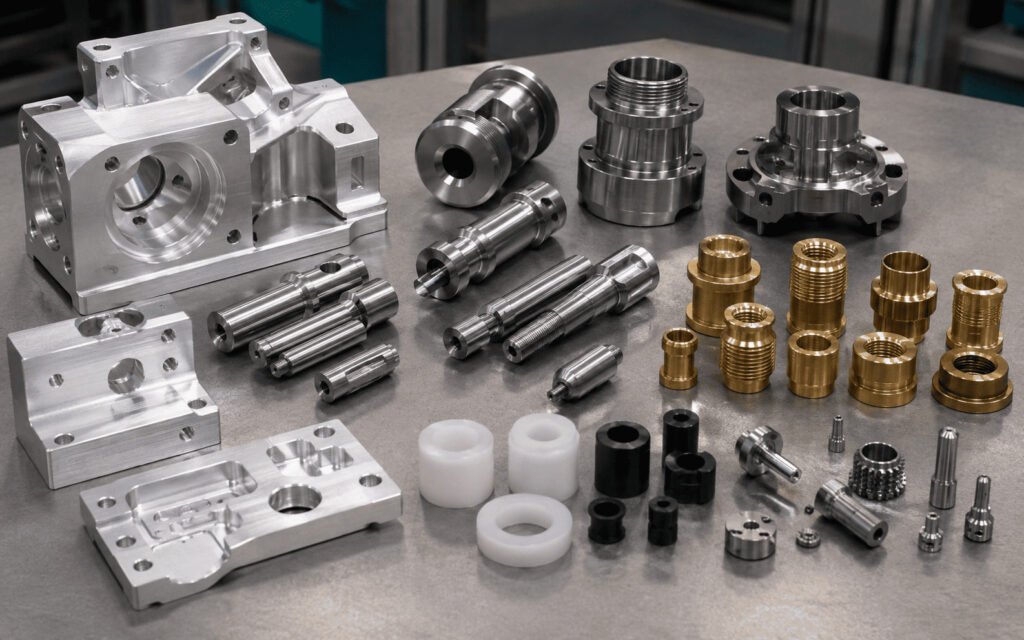
Different CNC Machining Parts require different production strategies. A simple turned spacer may finish quickly, while a thin-walled stainless housing with tight flatness and passivation can take much longer. The comparison below shows how common material and process choices influence delivery planning.
Based on our internal data and market analysis, here is the breakdown:
| Category | Machinability | Typical Processes | Common Parts | Lead Time Tendency | Notes |
|---|---|---|---|---|---|
| Aluminum CNC Parts | High | Milling, turning, drilling, tapping | Brackets, housings, plates | Short to medium | Fast cutting, but anodizing can add time |
| Stainless Steel Parts | Medium to low | Turning, milling, Swiss machining | Precision Shafts, pins, bushings | Medium to long | Tool wear and heat control affect schedule |
| Brass & Copper Parts | Brass high, copper medium | Turning, milling, threading | Threaded Inserts, contacts, sleeves | Short to medium | Copper needs careful chip and heat control |
| Plastic CNC Machined Parts | Material-dependent | Milling, turning, routing | Spacers, bushings, insulators | Short to medium | Deformation and burr control may slow production |
| Free-Machining Steel Parts | High | CNC lathe, Swiss machining | Shafts, sleeves, pins | Short to medium | Excellent for efficient turned production |
| Swiss Machined Parts | High for small precision parts | Swiss turning | Micro shafts, pins, inserts | Medium | Setup may take time, production is efficient |
| CNC Turning-Milling Parts | Medium | Combined turning and milling | Complex rotational parts | Medium to long | Fewer transfers, but programming is more complex |
Key features that usually extend lead time include:
- Tight tolerances below standard machining capability
- Deep internal bores or long slender shafts
- Thin walls that may deform during clamping
- Small threaded holes or special thread standards
- Mirror polishing or cosmetic surface requirements
- Full dimensional inspection reports
- Material certificates or special compliance documents
Luckyhxs Pro Tip: I advise customers to separate “critical” and “non-critical” tolerances on the drawing. If every dimension is marked tightly, the part becomes slower and more expensive even when many features do not need that level of control.
Cost & Buying Factors
CNC machining cost and lead time are closely connected. Faster delivery may require priority scheduling, dedicated setup, express material sourcing, overtime machining, or premium shipping. Buyers can control both cost and timing by choosing suitable materials, realistic tolerances, standard finishes, and production-friendly quantities.
What Buyers Should Check Before Ordering

A strong RFQ package reduces back-and-forth communication and helps suppliers quote accurately. For Luckyhxs, the fastest quotes and most reliable schedules usually come from customers who provide complete technical information at the beginning.
Important buying factors include:
- Material grade
Specify exact grades such as 6061 aluminum, 7075 aluminum, 304 stainless steel, 316 stainless steel, C360 brass, copper, POM, PTFE, PEEK, or free-machining steel. - Quantity and batch plan
Prototype, low-volume, and repeat production orders have different setup and scheduling logic. - Drawing and 3D model quality
Provide both 2D drawings and 3D files when possible. Drawings should define tolerances, threads, surface finish, and inspection points. - Tolerance requirements
Use tight tolerances only where function requires them. - Surface finishing
Anodizing, passivation, black oxide, plating, polishing, and heat treatment can add several days. - Inspection documentation
CMM reports, material certificates, RoHS documents, or first-article reports should be requested before quoting. - Shipping method
Express shipping is faster but more expensive; sea freight lowers cost but increases delivery time.
Based on our internal data and market analysis, here is the breakdown:
| Buying Decision | Lower-Cost Option | Faster Option | Trade-Off |
|---|---|---|---|
| Material | Standard stocked grade | Confirmed local inventory | Special grades may delay production |
| Tolerance | Functional tolerances only | Tight tolerance only on key features | Over-tight tolerances increase inspection time |
| Quantity | Larger batch to spread setup cost | Smaller urgent batch | Unit cost may rise for rush production |
| Finish | As-machined or simple deburr | Priority finishing supplier | Cosmetic finishes may add schedule risk |
| Shipping | Economy freight | Express courier | Faster delivery increases freight cost |
Luckyhxs Pro Tip: I recommend sending your target delivery date with the RFQ, not after the quote. If I know the required date early, I can suggest material substitutions, process changes, or split shipments before the schedule becomes difficult.
Conclusion
CNC delivery time is controlled by more than machine availability. Material choice, drawing clarity, tolerance strategy, quantity, finishing, inspection, and logistics all shape the final schedule. A reliable supplier will identify these variables early and help optimize the project before production begins.
How to Keep CNC Orders on Schedule
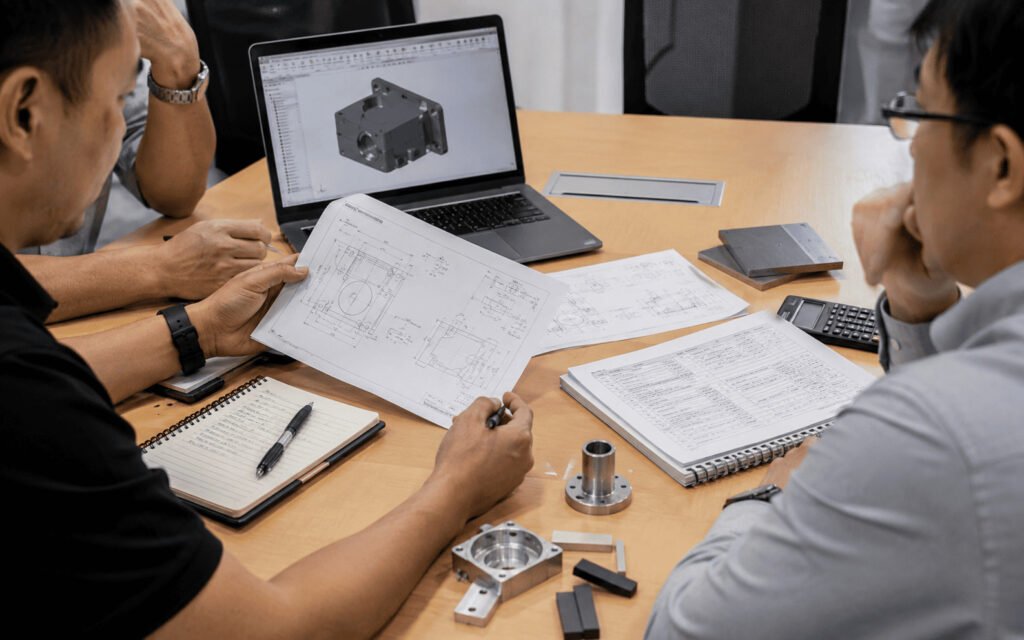
The best way to shorten CNC machining lead time is to remove uncertainty before the order enters production. Clear drawings, approved materials, realistic tolerances, and early communication give the machine shop more control over planning and execution.
To improve delivery reliability:
- Provide complete 2D drawings and 3D models.
- Confirm exact material grades and acceptable alternatives.
- Mark only functional dimensions with tight tolerances.
- Identify cosmetic surfaces and critical inspection features.
- Approve drawings, quotes, and samples quickly.
- Ask for production lead time and shipping time separately.
- Consider split delivery for urgent partial quantities.
Luckyhxs supports CNC Machining Parts across Aluminum CNC Parts, Stainless Steel Parts, Brass & Copper Parts, Plastic CNC Machined Parts, and Free-Machining Steel Parts, including Precision Shafts, Bushings & Sleeves, Precision Pins, Threaded Inserts, cnc turning parts, cnc milling parts, cnc lathe parts, swiss machined parts, and CNC turning-milling parts.
Luckyhxs Pro Tip: If your project has a fixed launch date, I suggest sharing the full schedule with us early. We can often reduce risk by prioritizing long-lead materials, simplifying non-critical features, and planning inspection before machining starts.