
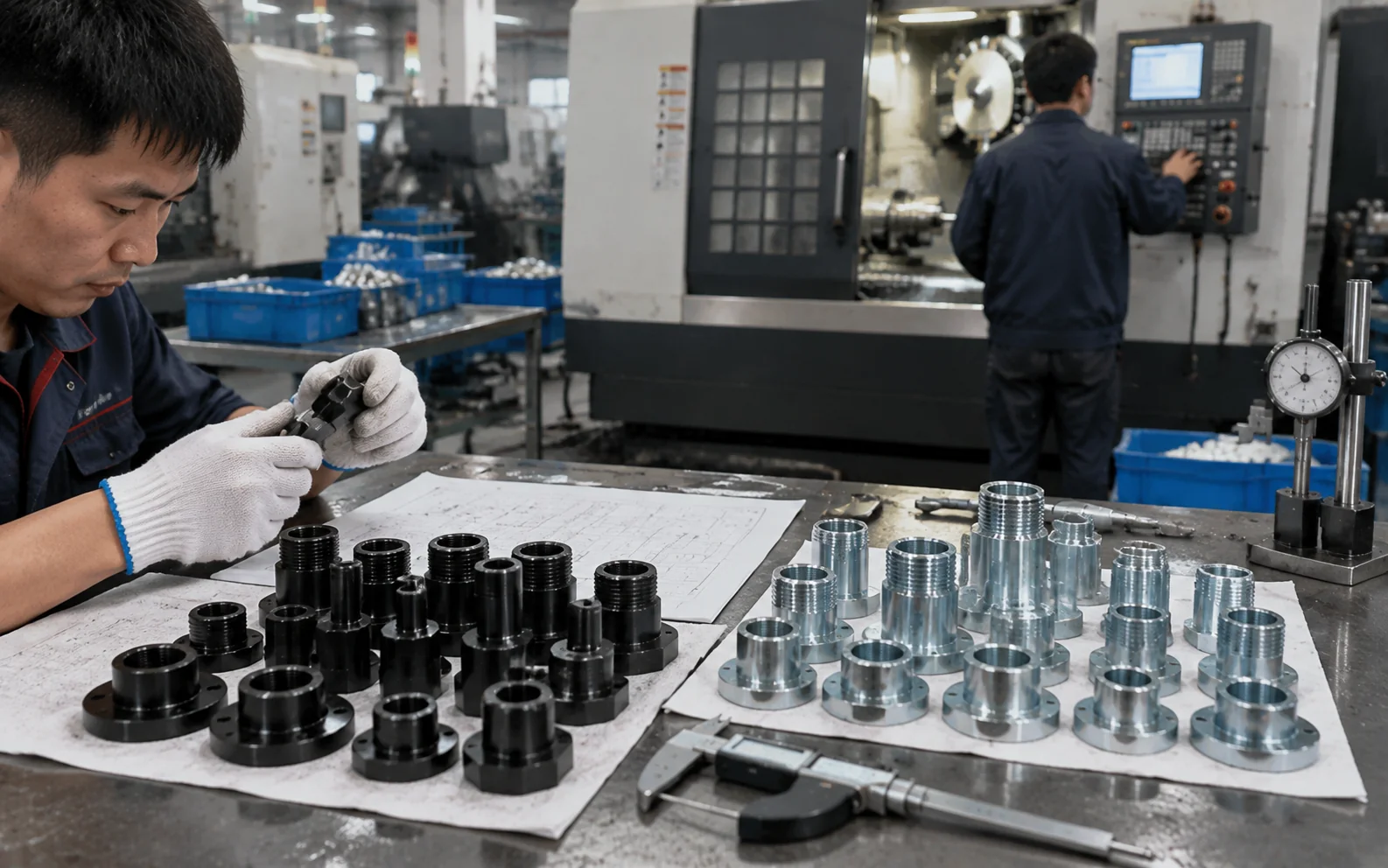
Zinc plating is one of the most practical finishing options for 1214 and 1215 CNC steel parts because it improves corrosion resistance while preserving the dimensional advantages of free-machining steel. For manufacturers using precision free-cutting steel parts, zinc plating helps extend service life, improve appearance, and reduce oxidation risk in storage, shipping, and light-to-moderate operating environments.
Why 1214 & 1215 CNC Steel Parts Need Zinc Plating
1214 and 1215 CNC steel parts are precision-machined components made from free-cutting low-carbon steels designed for high-speed turning, drilling, threading, and milling. Zinc plating services add a protective sacrificial coating that improves corrosion resistance, surface appearance, and storage durability for free-machining steel turned parts and 1215 CNC lathe parts.
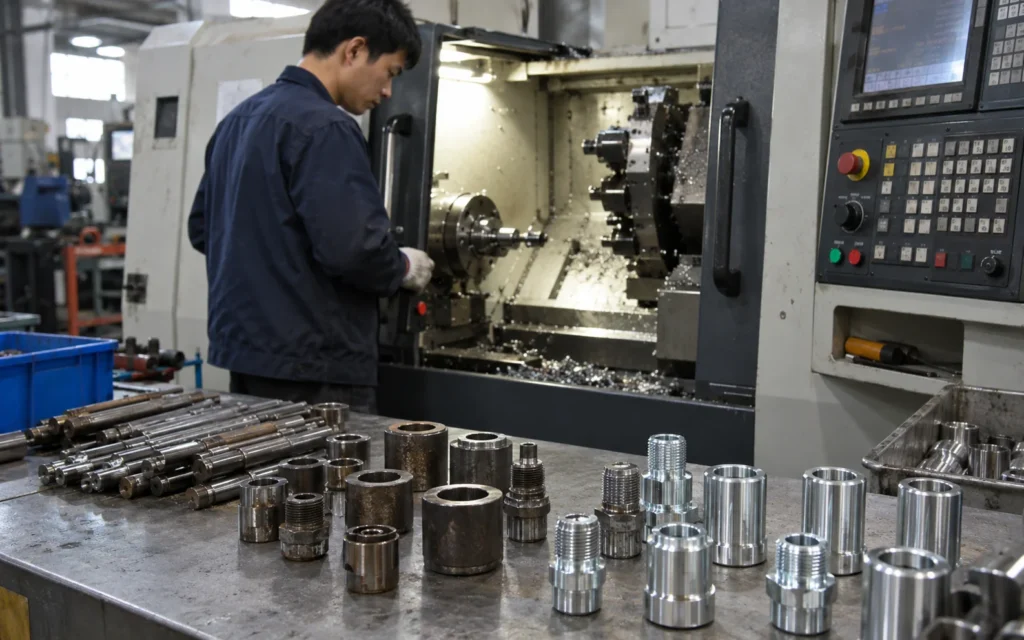
Material and Coating Definition
1214 and 1215 steels are commonly used for automatic lathe parts, bushings, pins, spacers, shafts, fasteners, fittings, and other precision free-cutting steel parts. Their sulfur and phosphorus content improves machinability, chip breaking, and production efficiency, making them ideal for high-volume CNC turning.
However, these steels are not stainless steel. Without surface treatment, they can rust when exposed to humidity, fingerprints, packaging moisture, or mild industrial environments. Zinc plating 1214 steel or 1215 steel creates a protective zinc layer that corrodes preferentially before the base steel, helping delay red rust formation.
Based on our internal data and market analysis, here is the breakdown:
| Item | 1214 Steel | 1215 Steel | Zinc Plating Role |
|---|---|---|---|
| Machinability | Very good | Excellent | Maintains part geometry after machining |
| Typical use | Turned parts, fittings, pins | CNC lathe parts, shafts, inserts | Adds corrosion protection |
| Corrosion resistance untreated | Low | Low | Significantly improved |
| Surface finish after plating | Bright or matte depending on process | Bright or matte depending on process | Improves appearance and handling durability |
| Best-fit applications | Indoor mechanical parts | High-volume precision turned parts | Storage, transport, light-duty exposure |
Luckyhxs Pro Tip: We usually recommend confirming the final plated thickness before machining critical diameters, because even a thin zinc layer can affect thread fit, press-fit features, and precision sliding surfaces.
Zinc Plating Process for 1214 & 1215 Steel CNC Parts
Zinc plated free machining steel works through sacrificial protection. The zinc coating acts as a barrier and corrodes before the underlying 1214 or 1215 steel. With proper cleaning, activation, electroplating, passivation, and sealing, the finished CNC parts gain improved resistance against humidity, oxidation, and handling-related corrosion.
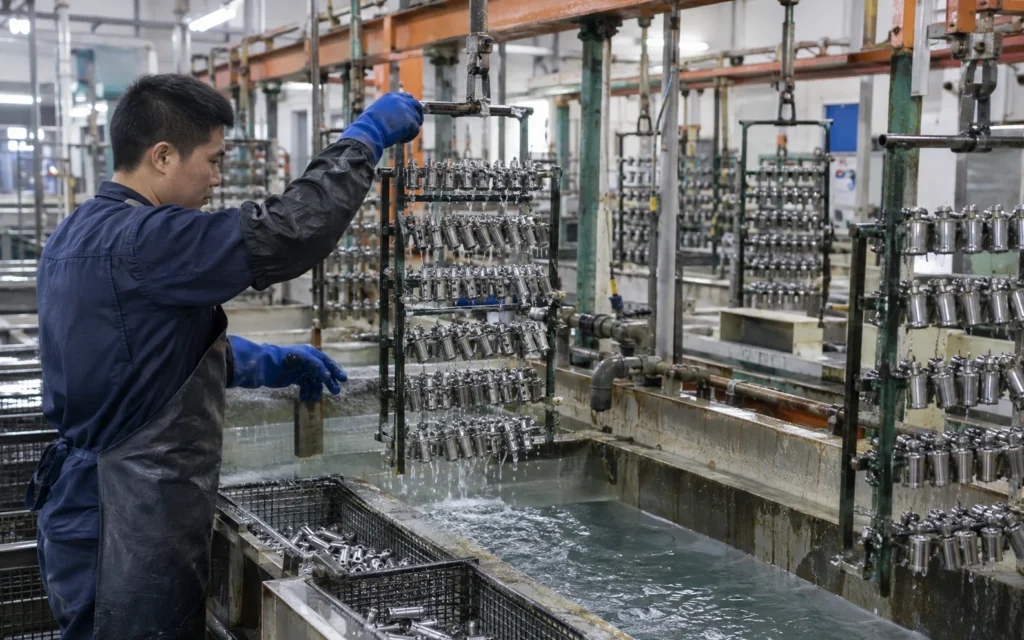
Zinc Plating Process Flow
The plating process must be carefully controlled because free-machining steels contain sulfur-bearing inclusions that can influence surface activity. A reliable zinc plating service prepares the surface thoroughly before electroplating to improve coating adhesion, uniformity, and corrosion performance.
A typical workflow includes:
- Incoming inspection
Parts are checked for burrs, oil, machining residue, dimensional tolerances, and surface defects. - Degreasing and cleaning
Cutting oil, coolant, fingerprints, and shop contaminants are removed from the CNC machined surface. - Acid activation or pickling
Light oxides are removed to activate the steel surface before plating. - Electro-zinc plating
Zinc is deposited onto the 1214 or 1215 steel surface using a controlled electrical current. - Passivation or chromate conversion
Clear, blue, yellow, black, or trivalent passivation can be applied to improve corrosion resistance and appearance. - Optional sealing
A topcoat or sealant can further improve salt spray performance and handling durability. - Final inspection
Coating thickness, appearance, adhesion, thread fit, and functional dimensions are verified.
Luckyhxs Pro Tip: For threaded 1215 CNC lathe parts, I prefer specifying thread class and plating allowance together. This prevents parts from passing plating inspection but failing assembly because of excessive coating buildup.
Benefits of Zinc Plating for 1214 & 1215 CNC Steel Parts
The main benefits are improved corrosion resistance, better storage stability, cleaner appearance, cost-effective protection, and compatibility with high-volume CNC production. Zinc plating helps 1214 and 1215 free-machining steel turned parts remain functional and presentable during transport, warehousing, assembly, and normal indoor or mildly corrosive use.
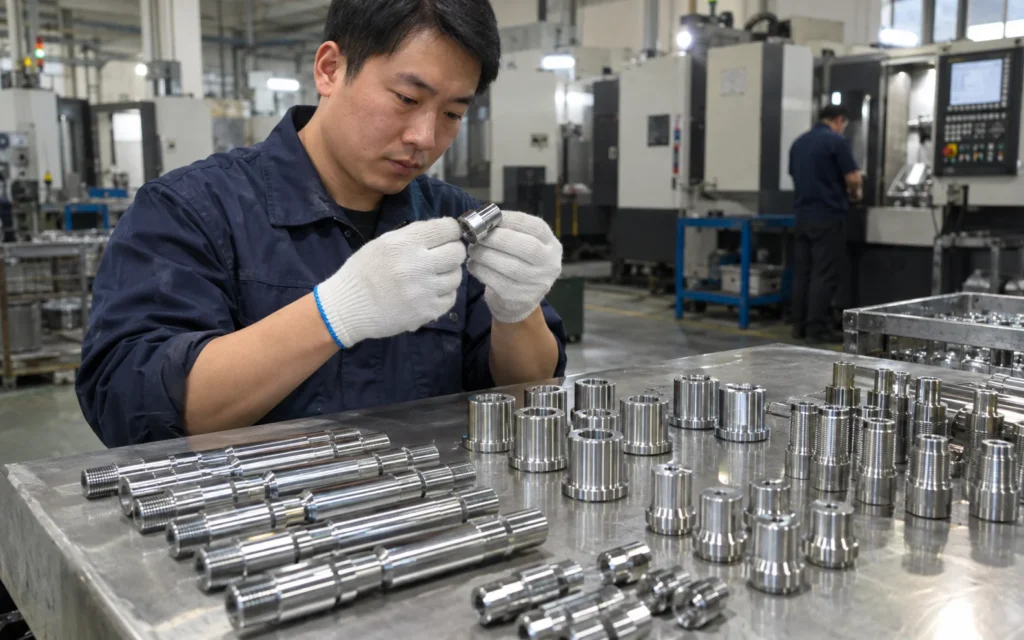
Practical Advantages for Machined Components
Zinc plating is popular because it balances protection, cost, appearance, and process availability. For precision free-cutting steel parts, it is often more economical than stainless steel when the application does not require high corrosion resistance or elevated-temperature performance.
Based on our internal data and market analysis, here is the breakdown:
| Benefit | Why It Matters | Impact on 1214/1215 CNC Parts |
|---|---|---|
| Corrosion protection | Zinc sacrifices itself before steel rusts | Extends storage and service life |
| Cost efficiency | Lower cost than stainless or nickel in many cases | Supports volume production |
| Improved appearance | Bright, blue-white, yellow, or black finishes available | Enhances product presentation |
| Dimensional control | Thin coatings can be specified | Suitable for precision turned parts |
| Assembly protection | Reduces rust on threads, bores, and contact surfaces | Improves installation reliability |
| Supply-chain durability | Protects during shipping and warehousing | Reduces rejected or reworked parts |
Zinc plating is especially useful for parts such as:
- CNC turned shafts
- Threaded inserts
- Spacers and standoffs
- Bushings and sleeves
- Pins and dowels
- Fittings and connector bodies
- Automotive and appliance hardware
- Industrial fastener-style components
Luckyhxs Pro Tip: If the part will be handled frequently before assembly, we often suggest clear or blue-white zinc with a sealant. It keeps the surface cleaner and reduces fingerprint-related oxidation during storage.
How to Store and Maintain Zinc-Plated 1214 & 1215 Steel Parts
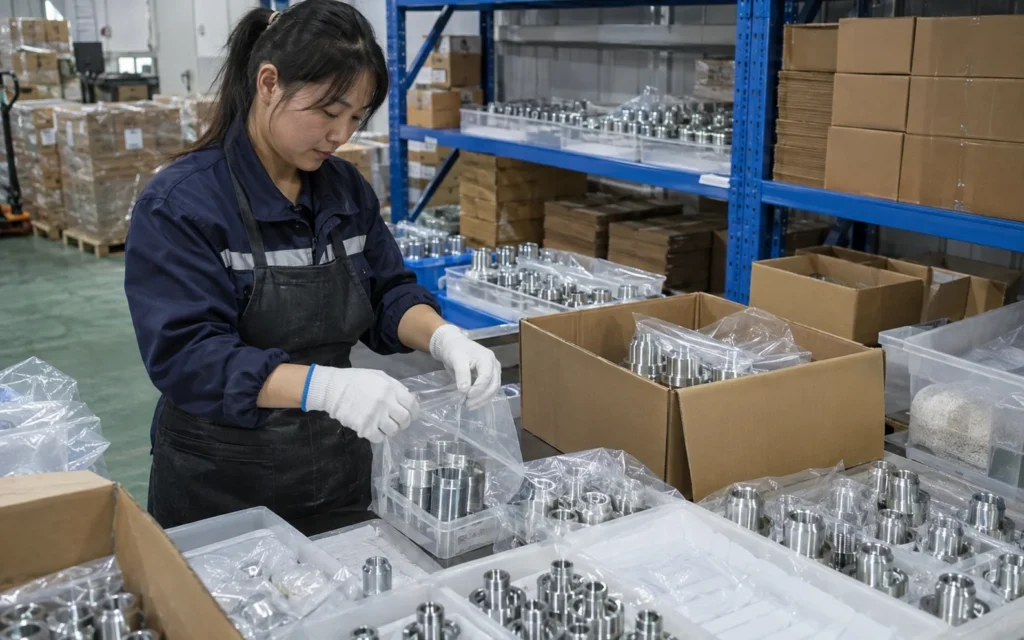
To maintain zinc plated 1214 and 1215 CNC steel parts, keep them dry, avoid abrasive cleaning, prevent exposure to strong acids or alkalis, and use proper packaging during storage. Maintenance is simple, but corrosion resistance depends heavily on environment, coating thickness, passivation type, and handling practices.
Storage and Handling Guidelines
Zinc plating provides effective corrosion protection, but it is not maintenance-free in harsh conditions. White rust can form when plated parts are stored wet, tightly packed without airflow, or exposed to condensation. Proper packaging and handling are essential for maintaining finish quality.
Recommended maintenance practices include:
- Store parts in a dry environment
Keep humidity controlled and avoid direct contact with water or condensation. - Use protective packaging
VCI bags, anti-rust paper, sealed cartons, or moisture barriers help reduce oxidation risk. - Avoid aggressive chemicals
Strong acids, strong alkalis, chlorides, and harsh cleaners can attack zinc coatings. - Do not use abrasive cleaning methods
Wire brushing, grinding, or aggressive tumbling can remove or damage the zinc layer. - Separate plated parts from wet materials
Avoid contact with wet cardboard, untreated wood, or damp packaging foam. - Inspect before assembly
Check threads, contact surfaces, and cosmetic areas for white rust, scratches, or coating damage. - Use compatible lubricants when needed
Light oil or approved assembly lubricant can reduce friction and handling wear.
Luckyhxs Pro Tip: I always advise customers not to seal freshly plated parts in airtight plastic if they are still warm or damp. Trapped moisture is one of the fastest ways to create white rust on zinc plated free machining steel.
Cost Factors for Zinc-Plated 1214 & 1215 CNC Steel Parts
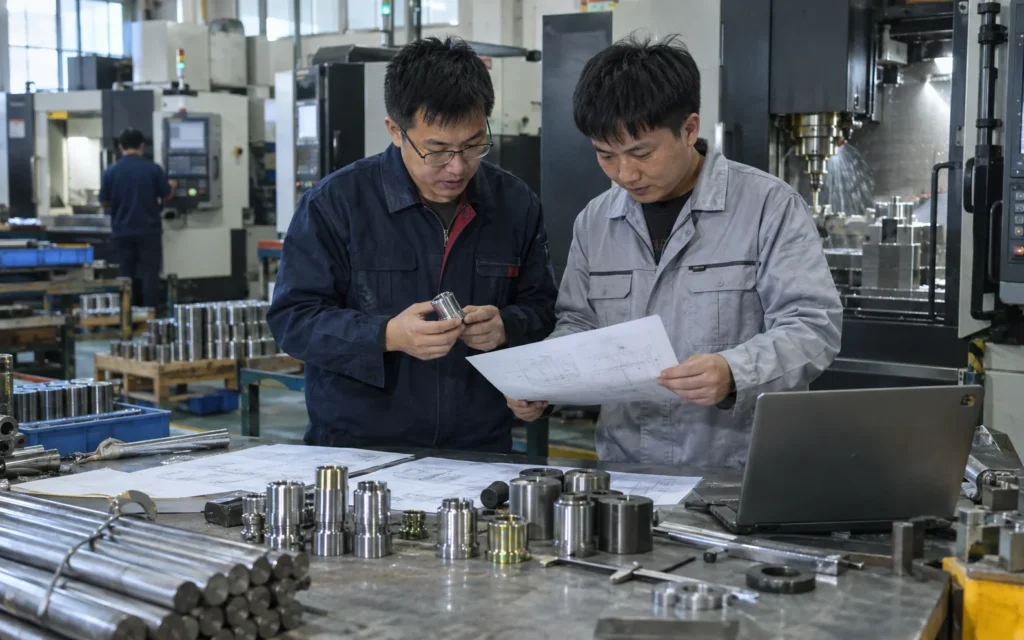
The price depends on part size, order quantity, machining complexity, zinc plating thickness, passivation type, masking requirements, inspection standards, and packaging needs. For 1214 and 1215 CNC steel parts, the total cost includes raw material, CNC machining, deburring, surface preparation, plating, quality control, and logistics.
Pricing Variables for CNC Machining and Plating
Zinc plating is usually economical, but the final price can vary significantly depending on the component design and performance requirements. Small simple turned parts in high volume are typically much more cost-effective than low-volume complex parts with tight tolerances and selective plating.
Based on our internal data and market analysis, here is the breakdown:
| Cost Factor | Low-Cost Scenario | Higher-Cost Scenario |
|---|---|---|
| Part geometry | Simple turned pins, spacers, sleeves | Deep grooves, blind holes, thin walls, complex features |
| Quantity | High-volume batch production | Prototype or small-batch orders |
| Tolerance | General machining tolerance | Tight tolerance after plating |
| Coating thickness | Standard commercial zinc | Heavy zinc or special corrosion requirement |
| Passivation | Clear or blue-white | Black, yellow, high-performance trivalent systems |
| Masking | No masking required | Threads, bores, contact faces, or electrical areas masked |
| Inspection | Visual and basic dimensional checks | Coating thickness report, salt spray, PPAP-style documentation |
| Packaging | Bulk packed | Individually protected or export-grade packaging |
A practical quotation should define:
- Material grade: 1214 or 1215 steel
- Drawing revision and tolerance requirements
- Annual or batch quantity
- Required zinc thickness
- Passivation color and standard
- Salt spray requirement, if any
- Critical dimensions after plating
- Packaging and delivery requirements
Luckyhxs Pro Tip: When we quote zinc plated 1215 CNC lathe parts, the most important detail is whether dimensions apply before or after plating. Clarifying this early prevents costly rework and approval delays.
Key Features & Comparison
1214 and 1215 CNC steel parts are chosen for machinability, while zinc plating is chosen for affordable corrosion protection. Compared with untreated free-machining steel, zinc plated parts offer better storage life and visual quality. Compared with stainless steel, they often provide lower cost but less corrosion resistance in severe environments.
Material and Finish Comparison
Based on our internal data and market analysis, here is the breakdown:
| Option | Machinability | Corrosion Resistance | Cost Level | Appearance | Best Use Case |
|---|---|---|---|---|---|
| Untreated 1214 steel | Very good | Low | Low | Bare steel, prone to rust | Temporary-use parts, internal components |
| Untreated 1215 steel | Excellent | Low | Low | Clean machined surface, rust-prone | High-speed CNC turned parts requiring post-finish |
| Zinc plated 1214 steel | Very good | Moderate | Low to medium | Bright, clear, yellow, or black | Cost-effective corrosion protection |
| Zinc plated 1215 steel | Excellent | Moderate | Low to medium | Consistent commercial finish | High-volume precision lathe parts |
| Nickel plated free-machining steel | Good | Moderate to good | Medium to high | Decorative, harder surface | Wear and appearance-focused parts |
| Stainless steel alternative | Lower than 1215 in many grades | High | Medium to high | Natural corrosion-resistant surface | Outdoor or harsh chemical environments |
Key feature considerations include:
- 1215 is generally preferred for high-speed CNC turning because of excellent chip control and productivity.
- 1214 remains useful for precision machined parts where free-cutting behavior and cost efficiency are important.
- Zinc plating improves corrosion resistance but does not make the part equivalent to stainless steel.
- Passivation selection affects both color and protection level.
- Dimensional control must account for coating thickness, especially on threads and precision fits.
Luckyhxs Pro Tip: For most indoor industrial parts, zinc plated free machining steel gives the best cost-to-performance ratio. For outdoor or salt-exposed applications, I recommend reviewing stainless steel, zinc-nickel, or heavier protective coatings instead.
Cost & Buying Factors
When buying zinc plated 1214 and 1215 CNC steel parts, evaluate more than unit price. The best supplier should control machining accuracy, plating thickness, surface preparation, passivation quality, packaging, and inspection. A lower quote can become expensive if corrosion, thread fit, or coating adhesion problems appear later.
Supplier Selection and Quotation Checklist
Cost should be reviewed together with quality risk. Because zinc plating is a finishing process applied after machining, any issue in surface preparation, burr control, cleaning, or plating thickness can affect final function.
Use this buying checklist before placing an order:
- Confirm material grade
Specify 1214, 1215, or equivalent free-machining steel clearly on the drawing or purchase order. - Define critical dimensions
State whether dimensions are required before plating or after plating. - Specify plating standard
Include zinc thickness, passivation type, color, and any relevant industry standard. - Review corrosion expectations
If salt spray test hours are required, define the test method and acceptance criteria. - Check thread and fit requirements
Plating buildup can affect internal threads, external threads, bores, and mating features. - Ask about deburring control
Burrs can trap plating chemicals and cause local corrosion or assembly issues. - Confirm packaging method
Good packaging prevents white rust, scratching, and mixed-part contamination. - Request documentation if needed
Coating thickness reports, material certificates, and inspection reports should be agreed in advance.
Based on our internal data and market analysis, here is the breakdown:
| Buying Factor | Why It Affects Cost | Recommended Action |
|---|---|---|
| Drawing clarity | Reduces engineering questions and rework | Provide 2D drawings and 3D files |
| Tolerance level | Tight tolerance increases machining and inspection time | Apply tight tolerances only where functional |
| Plating thickness | More thickness can increase cost and fit risk | Match thickness to environment |
| Passivation type | Specialty finishes may cost more | Select based on corrosion and appearance needs |
| Order quantity | Larger batches reduce setup cost per part | Combine orders when possible |
| Inspection level | More documentation adds labor | Define only necessary reports |
| Packaging | Better packaging reduces corrosion risk | Use VCI or moisture-resistant packing for export |
Luckyhxs Pro Tip: I recommend sending the application environment with the RFQ, not just the drawing. Knowing whether the part is used indoors, in packaging, near moisture, or in outdoor equipment helps us recommend the right zinc plating specification.
Conclusion
Zinc plating is a practical, economical way to protect 1214 and 1215 CNC steel parts from rust while preserving the productivity advantages of free-machining steel. For the best results, define material, tolerance, plating thickness, passivation, corrosion expectations, and packaging before production begins.
Final Recommendation for Reliable Zinc Plated Parts
For free-machining steel turned parts, the best outcome comes from treating machining and plating as one integrated manufacturing plan. The CNC process must deliver accurate, clean, burr-controlled components, and the plating process must provide consistent coverage, adhesion, appearance, and corrosion protection.
A reliable project specification should include:
- Material grade: 1214 or 1215 steel
- CNC machining tolerances and critical features
- Zinc plating thickness range
- Passivation color and corrosion requirement
- Masking requirements, if any
- Thread fit and gauge requirements
- Packaging method for storage or export
- Inspection and documentation needs
Luckyhxs supports custom 1214 and 1215 CNC steel parts, zinc plating services, 1215 CNC lathe parts, and precision free-cutting steel parts for applications where accuracy, cost control, and corrosion protection must work together.
Luckyhxs Pro Tip: If you are unsure which zinc plating specification to use, start by sharing the drawing, quantity, and operating environment. We can help match the finish to the real corrosion risk instead of overpaying for unnecessary coating performance.