
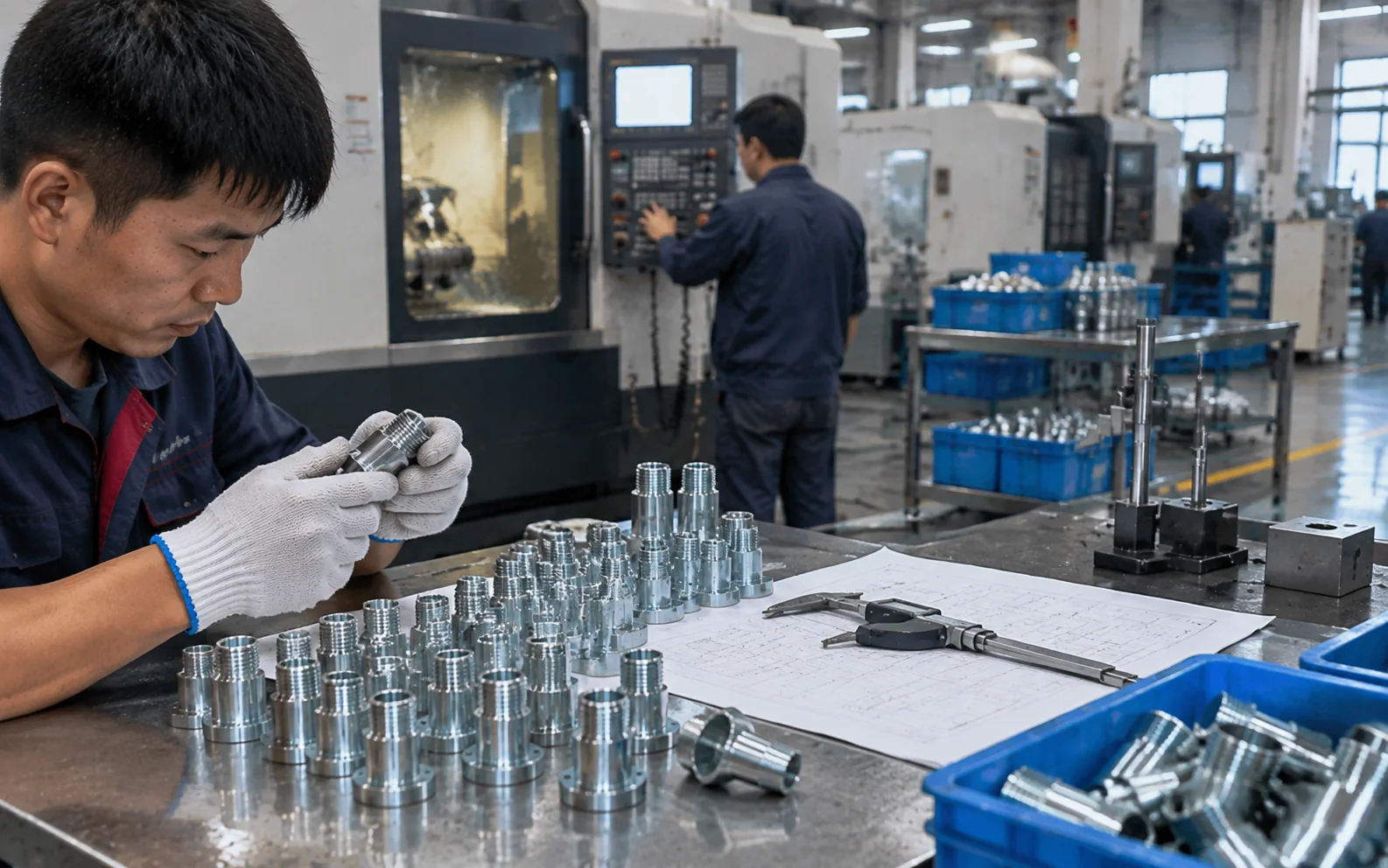
CNC machined steel parts often require a protective surface finish, and choosing between black oxide and zinc plating depends on corrosion exposure, dimensional tolerance, appearance, friction needs, and cost targets. Black oxide is thin, dark, and dimensionally stable, while zinc plating provides stronger sacrificial corrosion protection. For steel CNC turned parts, free-machining steel CNC lathe parts, and steel turn-mill parts, the better finish is the one that matches the application environment.
Black Oxide vs Zinc Plating for CNC Steel Parts: Key Differences
CNC machined steel parts are precision components made by milling, turning, or turn-mill machining, often requiring a protective surface finish. Black oxide is a thin conversion coating, while zinc plating is a metallic coating. The main difference is that zinc protects better against corrosion, while black oxide preserves dimensions and gives a matte black appearance.
Finish Definitions for CNC Steel Components
CNC machined steel parts include shafts, bushings, pins, threaded inserts, valve components, fasteners, spacers, and custom mechanical parts made from carbon steel, alloy steel, or free-machining steel. These parts often need post-processing because bare steel can oxidize quickly, especially in humid or outdoor environments.
Black oxide and zinc plating solve different engineering problems:
- Black oxide chemically converts the steel surface into a black iron oxide layer. It is extremely thin and commonly used when dimensional precision, low light reflection, and a clean black appearance matter.
- Zinc plating deposits a layer of zinc onto the steel. Zinc acts as a sacrificial barrier, corroding before the steel underneath, which makes it much stronger for corrosion resistance.
Based on our internal data and market analysis, here is the breakdown:
| Finish | Type | Typical Appearance | Dimensional Impact | Main Strength |
|---|---|---|---|---|
| Black oxide | Conversion coating | Matte or satin black | Very low | Preserves precision |
| Zinc plating | Electroplated metal coating | Silver, blue-white, yellow, black | Low to moderate | Corrosion protection |
| Bare steel | No finish | Metallic gray | None | Lowest cost |
| Phosphate | Conversion coating | Gray to black | Low | Paint/oil retention |
For high-precision steel CNC turned parts, black oxide is often selected when the coating must not interfere with thread fit, bearing surfaces, grooves, or tight-tolerance diameters. For parts exposed to moisture, salt spray, storage humidity, or outdoor use, zinc plating is usually the safer choice.
Luckyhxs Pro Tip: When we quote CNC steel parts, I always ask where the part will be used before recommending zinc plating or black oxide. Indoor precision assemblies often benefit from black oxide, but parts that ship globally, sit in warehouses, or face moisture usually need zinc plating or a stronger corrosion-resistant finish.
How Black Oxide and Zinc Plating Protect CNC Steel Parts
Black oxide works by converting the steel surface into a thin black oxide layer, usually followed by oil or wax sealing. Zinc plating works by depositing zinc onto the steel, where it protects as both a barrier and sacrificial coating. This is why zinc generally outperforms black oxide in corrosion resistance.
Surface Protection Mechanisms
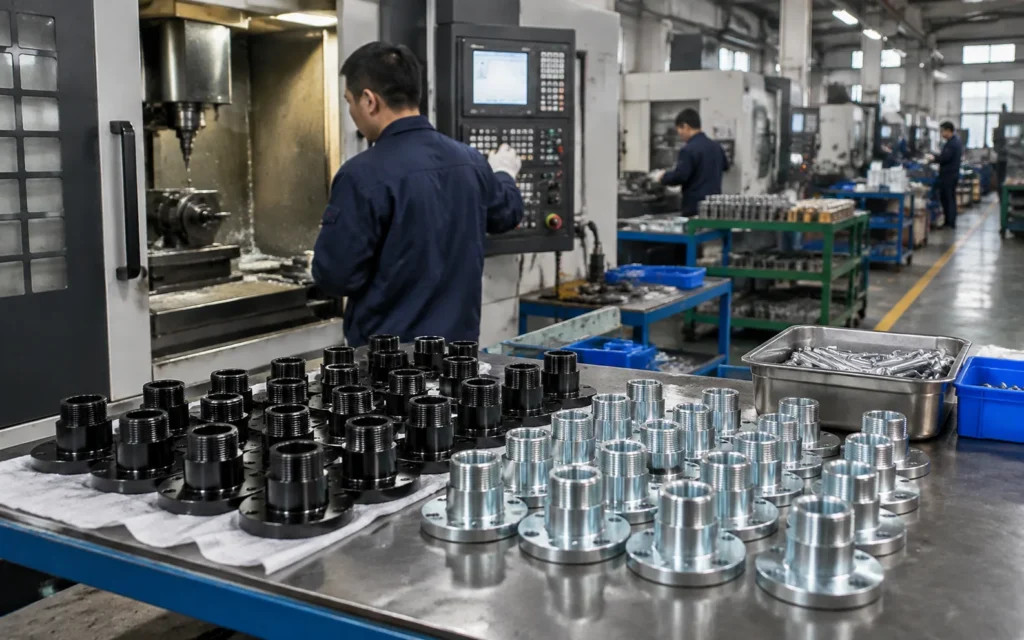
Black oxide and zinc plating protect steel in fundamentally different ways. Black oxide does not build a thick external layer; instead, it chemically changes the surface. Zinc plating adds a new metallic layer over the part.
The typical workflow is:
- CNC machining Steel CNC turned parts or steel turn-mill parts are machined to drawing requirements, including threads, grooves, flats, bores, and critical diameters.
- Cleaning and degreasing Cutting oil, coolant, chips, and oxide contamination must be removed before finishing.
- Surface activation The steel surface is prepared chemically so the finish can bond correctly.
- Black oxide or zinc plating process
- Black oxide forms a black conversion layer on the steel surface.
- Zinc plating uses electroplating to deposit zinc onto the part.
- Post-treatment
- Black oxide is usually sealed with oil, wax, or corrosion inhibitor.
- Zinc plating may receive chromate passivation, trivalent conversion coating, or sealing.
- Inspection Finished parts are checked for appearance, thickness, thread fit, corrosion requirements, and dimensional compliance.
Based on our internal data and market analysis, here is the breakdown:
| Factor | Black Oxide | Zinc Plating |
|---|---|---|
| Protection method | Conversion layer plus oil | Sacrificial zinc layer |
| Typical thickness | Extremely thin | Thicker than black oxide |
| Corrosion resistance | Low to moderate | Moderate to high |
| Thread fit impact | Minimal | Must be controlled |
| Appearance | Uniform black | Silver, yellow, clear, black options |
| Best use | Precision indoor parts | Corrosion-exposed steel parts |
For free-machining steel CNC lathe parts, finish selection should be confirmed early because sulfurized steels may require proper cleaning and process control to avoid inconsistent appearance or plating adhesion issues.
Luckyhxs Pro Tip: I recommend confirming the finish before final tolerance review. If a customer requests zinc plating after machining dimensions are already locked, we may need to adjust thread allowances, hole sizes, or coating thickness expectations to avoid assembly problems.
Is zinc plating better than black oxide?
Zinc plating is better than black oxide when corrosion resistance is the main requirement. It provides sacrificial protection, making it more suitable for humid, outdoor, warehouse, or transportation environments. However, black oxide is better when the priority is tight dimensional control, black appearance, reduced glare, and minimal coating buildup.
Performance Comparison by Application
The answer depends on what “better” means for the part. In black oxide vs zinc coating decisions, zinc usually wins for corrosion protection, but black oxide often wins for precision and appearance control.
Based on our internal data and market analysis, here is the breakdown:
| Requirement | Better Choice | Reason |
|---|---|---|
| Maximum corrosion resistance between the two | Zinc plating | Sacrificial zinc protects the steel |
| Tight thread or shaft tolerance | Black oxide | Minimal dimensional change |
| Matte black appearance | Black oxide | Natural dark conversion finish |
| Outdoor or humid environment | Zinc plating | Better rust delay |
| Low reflectivity | Black oxide | Reduces glare |
| Low-cost basic protection | Depends | Black oxide may be economical; zinc may reduce field risk |
| Parts needing oil retention | Black oxide | Porous surface holds oil better |
| Long storage before assembly | Zinc plating | Better warehouse corrosion resistance |
Zinc plating is commonly used for brackets, threaded fasteners, shafts, pins, hardware, and machine components that may experience moisture. Black oxide is common for tooling components, firearm-style hardware, precision fixtures, gears, couplings, knobs, and machine parts used indoors.
When comparing black oxide vs zinc corrosion resistance, zinc plating is usually the stronger option. But for highly precise CNC machined steel parts, even a small plating thickness can affect fit, especially on close-tolerance bores, threads, and sliding features.
Luckyhxs Pro Tip: If a drawing says “black finish” but the part must survive outdoor exposure, I do not assume black oxide is enough. I usually recommend black zinc plating, e-coating, nickel plating, or another finish that gives the black appearance with better corrosion protection.
What are the downsides of black oxide coating?
The main downside of black oxide is limited corrosion resistance. It relies heavily on oil, wax, or sealant, so protection decreases if the surface dries out, is handled frequently, or is exposed to moisture. It is excellent for appearance and precision, but it is not ideal for harsh or outdoor environments.
Limitations of Black Oxide on CNC Steel Parts
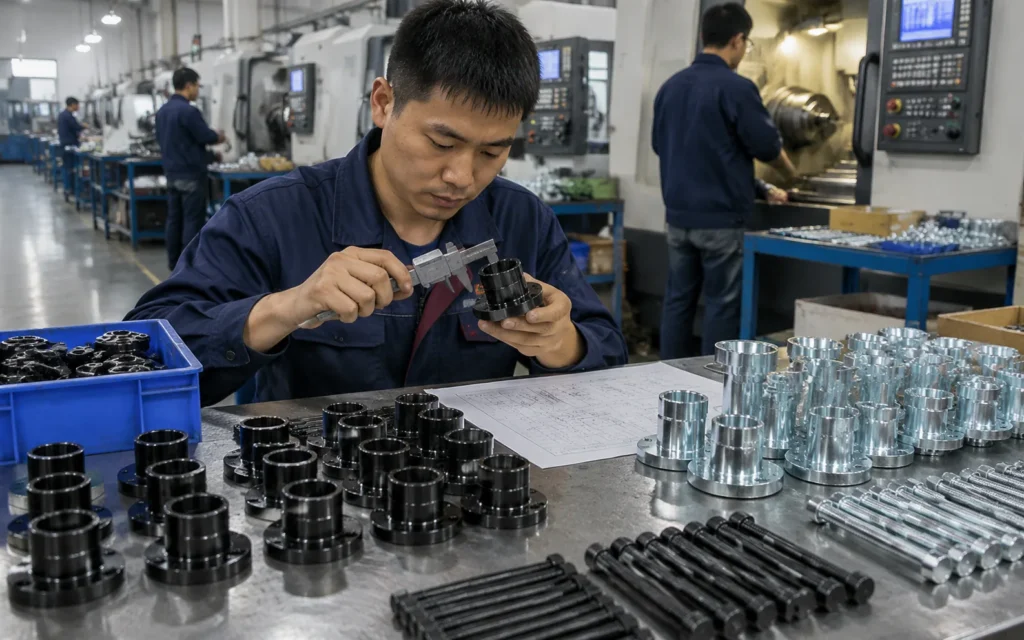
Black oxide is useful, but it should not be treated as a high-performance anti-rust coating. It is a very thin conversion layer, so it does not isolate the steel from the environment as effectively as zinc, nickel, powder coating, or paint.
Common disadvantages include:
- Lower corrosion resistance Black oxide alone offers limited protection. Its performance depends strongly on the oil or sealant applied after treatment.
- Not ideal for outdoor use Rain, salt air, condensation, and humidity can quickly reduce protection.
- Requires careful handling Fingerprints, abrasion, and cleaning solvents can remove protective oil.
- Possible color variation Steel alloy, heat treatment, surface roughness, and machining marks can affect final blackness.
- Limited wear protection Black oxide is not a hard wear coating like nitriding, hard chrome, or DLC.
- Post-finish oil may affect cleanliness Oiled black oxide may not be suitable for medical, optical, electronics, or clean assembly applications.
Based on our internal data and market analysis, here is the breakdown:
| Downside | Practical Impact | Mitigation |
|---|---|---|
| Limited rust protection | Rust risk in humidity | Use oil, wax, or choose zinc |
| Oil dependency | Protection fades after cleaning | Specify sealed black oxide |
| Cosmetic variation | Batch-to-batch appearance differences | Control material and surface finish |
| Poor outdoor durability | Field corrosion complaints | Use zinc, nickel, e-coat, or paint |
| Minimal wear resistance | Not suitable as wear coating | Consider nitriding or hard coating |
For steel CNC turned parts with cosmetic black requirements, black oxide works well when the assembly is indoor, lubricated, and protected from condensation. For parts exposed to aggressive environments, it should be avoided unless combined with other protective methods.
Luckyhxs Pro Tip: When customers request black oxide for export parts, I always ask about packaging. VCI bags, protective oil, and dry packing can make a major difference, especially if the parts spend weeks in ocean freight or warehouse storage.
What are the downsides of zinc plating?
The main downsides of zinc plating are coating thickness control, possible thread fit issues, cosmetic variation, hydrogen embrittlement risk on high-strength steels, and lower dimensional precision compared with black oxide. Zinc plating is excellent for corrosion resistance, but it must be specified carefully for precision CNC machined steel parts.
Engineering Risks of Zinc Plating
Zinc plating is widely used because it provides strong value and good corrosion resistance, but it is not automatically suitable for every CNC steel component. The added coating thickness can affect dimensions, especially on threaded, sliding, press-fit, or closely mating surfaces.
Key concerns include:
- Dimensional buildup Zinc plating adds measurable thickness. On external threads, shafts, and tight bores, this can change fit.
- Uneven thickness Electroplating can build more heavily on edges, corners, and exposed surfaces, while recessed areas may receive less coating.
- Hydrogen embrittlement High-strength steels may absorb hydrogen during cleaning and plating. Baking after plating may be required.
- Appearance variation Zinc plating can vary in brightness, color tone, and staining depending on passivation and sealing.
- White rust risk Zinc protects steel, but zinc itself can form white corrosion products under poor storage or high humidity.
- Environmental and compliance requirements RoHS, REACH, trivalent chromate, and customer-specific finish standards must be confirmed.
Based on our internal data and market analysis, here is the breakdown:
| Zinc Plating Issue | Why It Matters | Recommended Control |
|---|---|---|
| Thickness buildup | May affect threads and fits | Define plating thickness and masking |
| Edge buildup | Can alter sharp features | Add radii or specify controlled plating |
| Hydrogen embrittlement | Risk for hardened steels | Require post-plate baking |
| White rust | Cosmetic and corrosion concern | Use passivation and proper packaging |
| Recess coverage limits | Internal features may be under-plated | Review geometry before finishing |
| Compliance | Some chemistries restricted | Specify RoHS/REACH-compliant finish |
For free-machining steel CNC lathe parts, zinc plating can be very effective, but plating adhesion and appearance depend on correct pre-cleaning, material condition, and surface quality after machining.
Luckyhxs Pro Tip: For plated threaded parts, I prefer confirming whether dimensions apply before or after plating. That one detail prevents many assembly failures, especially on small turned parts, custom fasteners, and precision steel shafts.
Key Features & Comparison
Black oxide and zinc plating both protect CNC machined steel parts, but they serve different priorities. Black oxide is thin, black, and dimensionally stable, making it suitable for indoor precision parts. Zinc plating provides better corrosion resistance and is better for shipping, storage, humidity, and outdoor exposure.
Side-by-Side Selection Table
Based on our internal data and market analysis, here is the breakdown:
| Feature | Black Oxide | Zinc Plating | Better Option |
|---|---|---|---|
| Corrosion resistance | Low to moderate | Moderate to high | Zinc plating |
| Dimensional impact | Very low | Low to moderate | Black oxide |
| Appearance | Matte/satin black | Silver, yellow, clear, black | Depends |
| Coating type | Chemical conversion | Electroplated metal | Depends |
| Outdoor suitability | Poor to limited | Better | Zinc plating |
| Indoor precision use | Excellent | Good if controlled | Black oxide |
| Thread compatibility | Excellent | Requires allowance | Black oxide |
| Sacrificial protection | No significant sacrificial action | Yes | Zinc plating |
| Oil retention | Good | Limited | Black oxide |
| Wear resistance | Limited | Limited | Neither for severe wear |
| Cost | Often economical | Economical to moderate | Depends on quantity/spec |
| Cosmetic consistency | Good but material-dependent | Good but process-dependent | Depends |
| Best for steel CNC turned parts | Precision, black appearance | Rust prevention | Application-specific |
| Best for steel turn-mill parts | Complex precision geometry | General corrosion protection | Application-specific |
The most important comparison is black oxide vs zinc corrosion resistance. Zinc plating generally provides better rust protection because zinc corrodes preferentially before the steel. Black oxide does not provide the same sacrificial protection, so it should be used where corrosion exposure is controlled.
A practical selection guide:
- Choose black oxide for indoor mechanisms, precision shafts, tooling components, low-reflection parts, and black cosmetic requirements.
- Choose zinc plating for parts needing better corrosion resistance during shipping, storage, handling, or field use.
- Choose another finish if the part requires severe outdoor durability, salt spray resistance, chemical resistance, or high wear performance.
Luckyhxs Pro Tip: If the customer specification only says “black zinc” or “black oxide,” I always verify the required salt spray hours, color expectation, and mating dimensions. Finish names alone are not enough for reliable CNC production.
Cost & Buying Factors
Black oxide is often cost-effective for precision indoor steel parts, while zinc plating may cost more depending on thickness, passivation, baking, masking, and inspection requirements. The cheapest finish is not always the best choice; corrosion risk, rejected assemblies, packaging, and field failures can cost more than the finish itself.
Pricing and Specification Factors
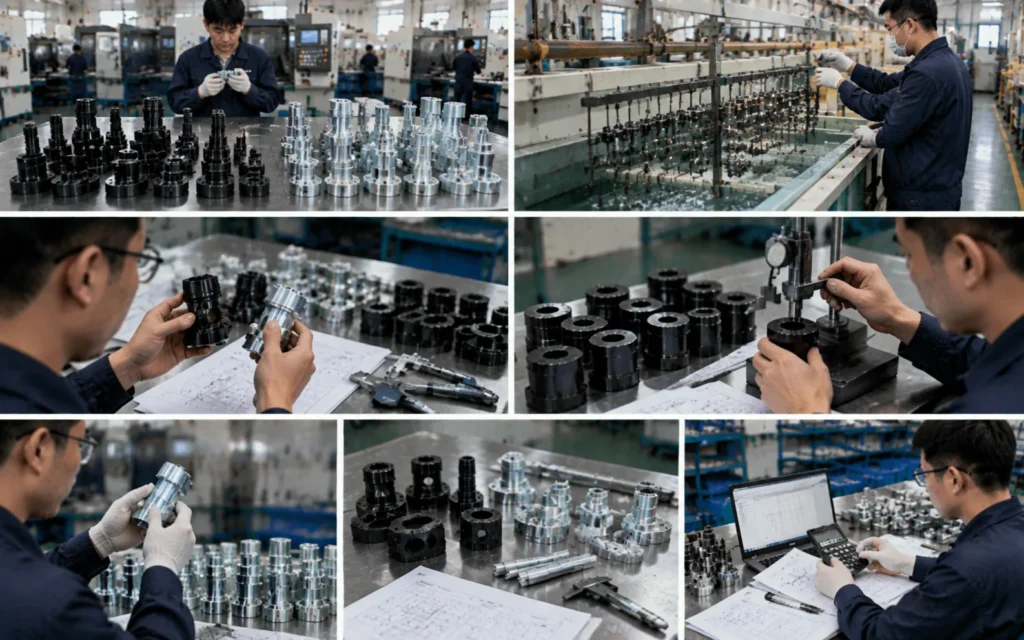
Finish cost depends on part geometry, material, batch size, tolerance requirements, and performance expectations. For CNC machined steel parts, the finishing quote should be reviewed together with machining tolerances and application requirements.
Based on our internal data and market analysis, here is the breakdown:
| Buying Factor | Black Oxide Impact | Zinc Plating Impact |
|---|---|---|
| Part quantity | Lower cost at batch volume | Lower cost at batch volume |
| Part size | Larger surface area increases cost | Larger surface area increases cost |
| Geometry complexity | Usually manageable | Recesses and corners may need review |
| Tight tolerances | Very favorable | May require allowance or masking |
| Threads | Minimal issue | May need controlled thickness |
| Corrosion requirement | Limited performance | Better value for protection |
| High-strength steel | Usually lower embrittlement concern | Baking may be required |
| Packaging | Important for rust prevention | Still important to prevent white rust |
| Cosmetic requirement | Good black finish | Multiple color/passivation options |
Before choosing zinc plating or black oxide, buyers should confirm:
- Operating environment Indoor dry use, humid storage, outdoor exposure, salt spray, chemical contact, or high-temperature operation.
- Critical dimensions Threads, bores, bearing surfaces, press fits, grooves, and sliding diameters should be reviewed before finishing.
- Material grade Carbon steel, alloy steel, hardened steel, and free-machining steel may require different finishing controls.
- Corrosion standard If salt spray hours are required, specify the exact standard and acceptance criteria.
- Appearance standard Define whether the finish is functional, cosmetic, matte, bright, black, yellow, or clear.
- Compliance needs RoHS, REACH, trivalent chromate, and customer-specific requirements should be listed on the drawing or purchase order.
Luckyhxs can support finish selection during the quotation stage by reviewing drawings, tolerance zones, production quantity, material type, and end-use conditions.
Luckyhxs Pro Tip: When a buyer is unsure, I recommend sending the drawing plus the working environment. We can often identify finish risks before production, such as plated thread interference, black oxide rust risk, or the need for special packaging.
Conclusion
Zinc plating is usually better for corrosion resistance, while black oxide is better for tight-tolerance, indoor, black-finished CNC steel components. Neither finish is universally superior. The best choice depends on exposure, fit, appearance, material, and cost. For reliable results, finishing should be engineered before machining is finalized.
Practical Final Recommendation
For most CNC machined steel parts, the decision can be simplified as follows:
- Choose zinc plating if corrosion resistance is the top priority.
- Choose black oxide if dimensional stability and black appearance are the top priorities.
- Choose black zinc, nickel plating, phosphate, e-coating, powder coating, nitriding, or stainless steel if neither standard zinc nor black oxide meets the full requirement.
Based on our internal data and market analysis, here is the breakdown:
| Application Scenario | Recommended Finish |
|---|---|
| Indoor precision steel shaft | Black oxide |
| Warehouse-stored steel turned part | Zinc plating |
| Outdoor bracket or hardware | Zinc plating or stronger coating |
| Matte black machine component | Black oxide |
| Black part needing corrosion resistance | Black zinc or e-coating |
| High-strength steel part | Finish review required |
| Tight threaded CNC lathe part | Black oxide or controlled zinc |
| Export shipment with humidity risk | Zinc plating plus protective packaging |
For steel CNC turned parts, free-machining steel CNC lathe parts, and steel turn-mill parts, Luckyhxs recommends making finish selection part of the design-for-manufacturing review. This helps control cost, prevent tolerance issues, and reduce corrosion risk after delivery.
If you are deciding between black oxide and zinc plating for a custom steel part, send the drawing, material, quantity, and working environment to Luckyhxs for a practical finish recommendation.
Luckyhxs Pro Tip: My final rule is simple: if the part must stay rust-free in uncertain conditions, lean toward zinc plating; if the part must keep exact dimensions and look black indoors, lean toward black oxide. For critical projects, test samples are always worth it.