
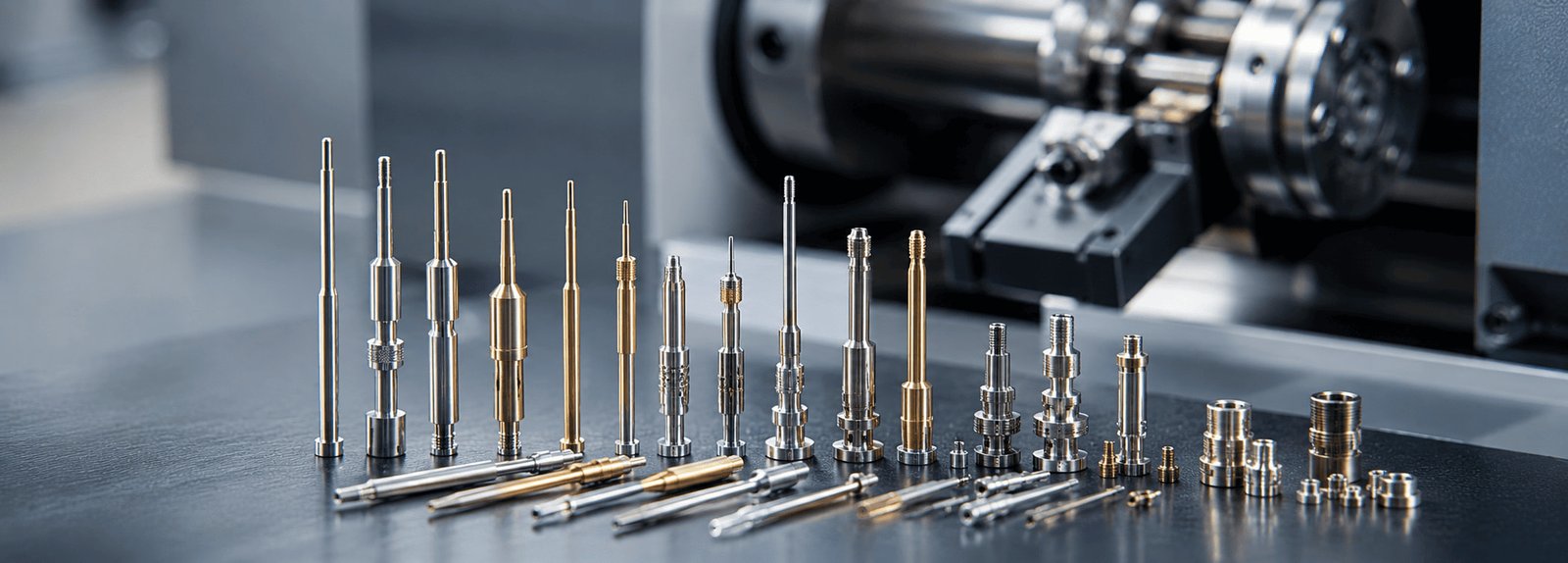
CNC turning and CNC milling are two common machining processes, but they are used for different part shapes. CNC turning is mainly used for round or cylindrical components such as shafts, pins, bushings, sleeves, and threaded parts. CNC milling is better for brackets, housings, plates, blocks, and parts with flat or multi-sided features.
For buyers, the right choice is not only about the machine. It depends on part geometry, material, tolerance, surface finish, quantity, and assembly requirements. This guide compares CNC turning vs CNC milling and explains which process is better for different CNC turning parts and CNC milling parts.
What is CNC Turning?
CNC turning is a machining process that uses a lathe to produce cylindrical parts by rotating the workpiece against a stationary cutting tool. It is highly efficient for creating symmetrical components such as shafts, pins, bushings, and sleeves. This process is commonly used in industries requiring high precision and repeatability.
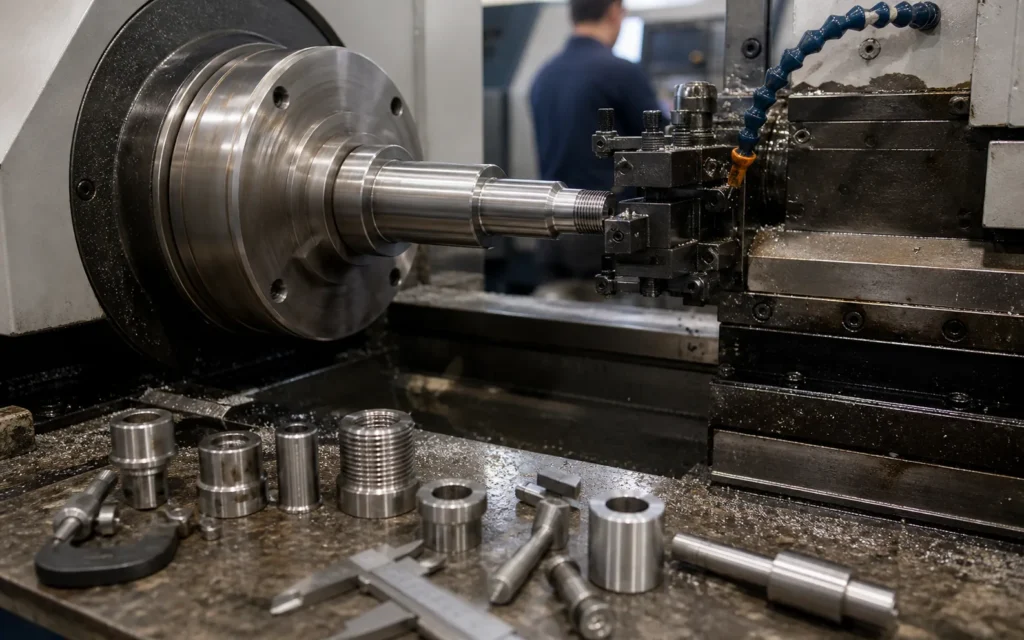
Core Technology: CNC turning involves the rotation of the workpiece along its axis while the cutting tool removes material to achieve the desired shape.
Applications: Commonly used for producing cylindrical parts, including shafts, pins, and bushings.
https://www.youtube.com/watch?v=ky-uR5v-9g4%5D
Lathe machines are central to CNC turning, enabling precise rotational machining.
In production, CNC turning is often selected for parts that share a centerline or require rotational accuracy. Typical CNC turning parts include motor shafts, locating pins, bushings, sleeves, spacers, threaded inserts, fittings, and small cylindrical components.
When tight diameters, thread fit, concentricity, or runout are important, precision CNC turning parts usually require careful drawing review and inspection planning. Materials such as stainless steel, aluminum, brass, copper, free-machining steel, and engineering plastics can all be used depending on the application.
What is CNC Milling?
CNC milling is a subtractive machining process in which a rotating cutting tool removes material from a stationary workpiece. It excels at creating complex geometries, flat surfaces, and intricate details, making it ideal for producing brackets, housings, and other non-cylindrical parts.
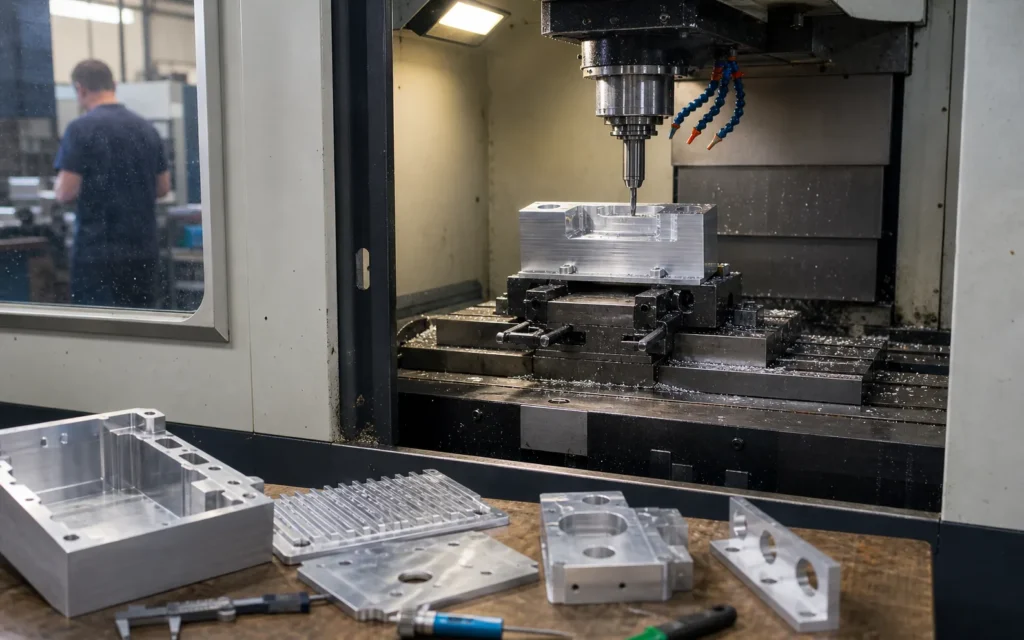
Core Technology: CNC milling uses multi-axis cutting tools that move along multiple directions to carve intricate shapes.
Applications: Best suited for creating non-cylindrical parts, such as brackets, housings, and custom components.
https://www.youtube.com/watch?v=VcYa05Qcc4o%5D
Milling machines are versatile tools that enable the creation of complex geometries.
CNC milling is suitable for parts that require flat surfaces, holes, pockets, slots, threads, and multi-sided machining. Common CNC milling parts include brackets, housings, mounting plates, enclosures, flanges, fixtures, and structural components.
For custom CNC milling parts, important review points include tool access, wall thickness, hole position, flatness, pocket depth, corner radius, surface finish, and inspection method. OEM CNC milling parts may also require stable batch consistency and clear control of critical dimensions.
Which Parts Are Better for CNC Turning or CNC Milling?
The easiest way to choose between CNC turning and CNC milling is to look at the part shape. If the part is mainly round, cylindrical, or threaded, CNC turning is usually the first option. If the part has flat faces, pockets, slots, or multiple machined sides, CNC milling is usually more suitable.
| Part Type | Better Process | Typical Examples |
|---|---|---|
| Round shafts | CNC Turning | Motor shafts, stepped shafts, drive shafts |
| Pins and spacers | CNC Turning | Locating pins, guide pins, precision spacers |
| Bushings and sleeves | CNC Turning | Bearing sleeves, cylindrical inserts, tube-like parts |
| Threaded parts | CNC Turning | Nuts, threaded inserts, fittings, connectors |
| Brackets | CNC Milling | Mounting brackets, support blocks, machine brackets |
| Housings and enclosures | CNC Milling | Sensor housings, aluminum enclosures, equipment covers |
| Plates and blocks | CNC Milling | Base plates, fixture plates, precision blocks |
| Complex cylindrical parts with side features | Turn-Mill Machining | Shafts with flats, cross holes, slots, or side drilling |
Some parts may require both processes. For example, a cylindrical connector with external threads and milled flats may be better produced by turn-mill machining instead of separate turning and milling operations.
Key Differences: CNC Turning vs CNC Milling
| Comparison Point | CNC Turning | CNC Milling |
|---|---|---|
| Workpiece Motion | The workpiece rotates | The workpiece is usually fixed |
| Cutting Tool Motion | The tool moves along the rotating part | The tool rotates and moves along multiple axes |
| Best Part Shape | Round, cylindrical, tubular, threaded parts | Flat, block-shaped, multi-sided, complex parts |
| Typical Parts | Shafts, pins, bushings, sleeves, fittings | Brackets, housings, plates, blocks, enclosures |
| Key Tolerance Focus | Diameter, roundness, concentricity, runout, thread fit | Flatness, hole position, pocket depth, wall thickness, datum control |
| Material Examples | Aluminum, stainless steel, brass, copper, plastics | Aluminum, stainless steel, brass, copper, plastics |
| Best Use Case | Custom CNC turning parts and precision cylindrical components | Custom CNC milling parts and structural components |
LuckyHXS Pro Tip: Choose CNC turning when the part is mainly round, cylindrical, or threaded. Choose CNC milling when the part requires flat surfaces, pockets, slots, holes, or complex multi-sided features. If the part needs both turned and milled features, turn-mill machining may be a better option.
Pros & Cons Comparison
| Feature | CNC Turning | CNC Milling |
|---|---|---|
| Precision | Excellent for cylindrical parts | Excellent for complex geometries |
| Material Efficiency | High | Moderate |
| Setup Complexity | Moderate | Higher |
| Versatility | Limited to rotational parts | Highly versatile |
How to Choose the Right Process and Supplier
Before choosing a supplier, buyers should first confirm the correct machining process. A round shaft, sleeve, pin, or threaded fitting may be more suitable for CNC turning. A bracket, housing, plate, or enclosure may be more suitable for CNC milling.
For custom CNC turning parts, the supplier should understand diameter tolerance, concentricity, runout, thread accuracy, surface finish, and material selection. This is important for precision CNC turning parts used in motors, automation equipment, medical devices, electronics, and industrial assemblies.
For custom CNC milling parts, the supplier should review hole position, flatness, wall thickness, pocket depth, corner radius, and tool access. For OEM CNC milling parts or ODM CNC milling parts, stable inspection standards and repeat production control are also important.
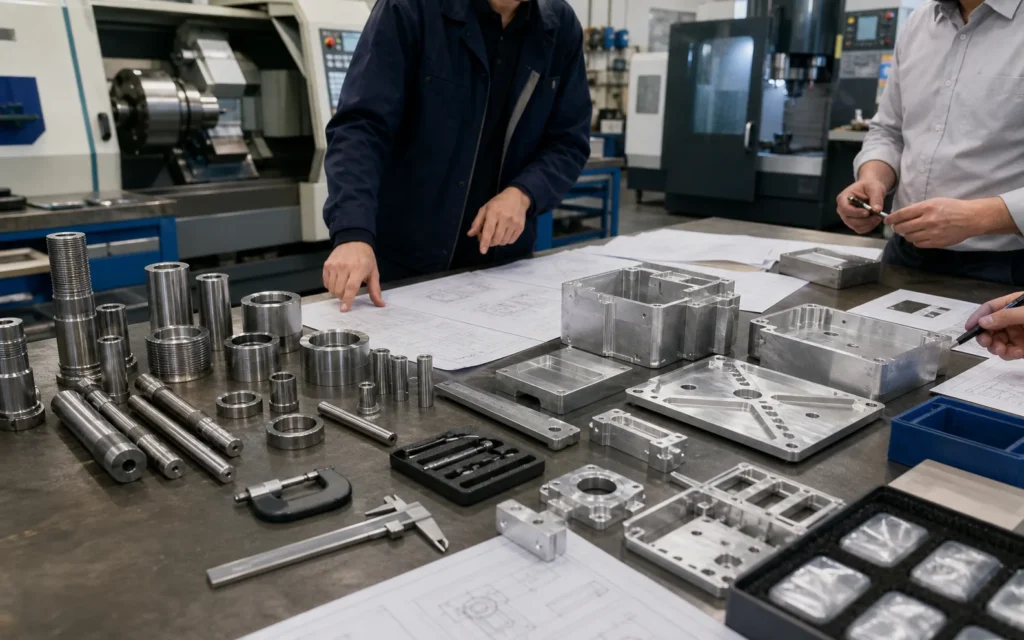
If you are comparing a CNC turning parts manufacturer or CNC milling parts supplier, do not look at unit price alone. A reliable supplier should review your drawing, material, tolerance, quantity, surface finish, inspection requirements, and production plan before quoting.
Conclusion
CNC turning and CNC milling are both important machining processes, but they are used for different part designs. CNC turning is better for shafts, pins, bushings, sleeves, threaded fittings, and other cylindrical CNC turning parts. CNC milling is better for brackets, housings, plates, blocks, enclosures, and parts with flat or complex features.
The best process depends on part geometry, material, tolerance, surface finish, quantity, and application requirements. Some parts may also require Swiss machining or turn-mill machining when they include small diameters, slender features, cross holes, milled flats, or multiple complex details.
LuckyHXS supports CNC turning, CNC milling, Swiss machining, turn-mill machining, and custom CNC machining for prototype samples and batch production. Send your drawings, material, quantity, tolerance, and surface finish requirements for project review.
FAQ
1. What materials are suitable for CNC turning and CNC milling?
Both processes can handle a wide range of materials, including metals, plastics, and composites. Learn more about engineering materials used in machining.
2. Can CNC machines combine turning and milling?
Yes, turn-mill machining centers can perform both processes, offering greater flexibility and efficiency.
3. Which process is faster: CNC turning or CNC milling?
CNC turning is generally faster for cylindrical parts, while milling may take longer due to its complexity.
4. What parts are best for CNC turning?
CNC turning is best for round and cylindrical parts such as shafts, pins, bushings, sleeves, spacers, threaded inserts, fittings, and connectors. These parts often require diameter control, roundness, concentricity, or thread accuracy.
5. What parts are best for CNC milling?
CNC milling is best for brackets, housings, plates, blocks, enclosures, flanges, fixtures, and structural parts. It is suitable for parts with flat surfaces, holes, pockets, slots, and multi-sided features.
6. How do I choose between CNC turning and CNC milling?
Choose CNC turning if the part is mainly round or cylindrical. Choose CNC milling if the part has flat surfaces, pockets, holes, or complex shapes. If the part requires both turned and milled features, turn-mill machining may be more suitable.